
How to Train a Parrot to Talk Proven, Simple Techniques for Fast Results
Proven Tips to Teach Your Parrot to Speak Fast
How to Train a Parrot to Talk using simple, proven techniques. Learn how to teach your parrot to speak faster with daily practice, bonding, clear words, and positive reinforcement. Perfect guide for beginners who want to train any type of parrot successfully.
Introduction
Parrots are intelligent, social, and highly vocal birds. Many beginners want to know how to train a parrot to talk, but don’t know where to start. Teaching a parrot to speak is not only entertaining, it also helps build trust, strengthen your bond, and enhance communication between you and your bird. Interestingly, just like cat meowing at night can signal communication or behavioral issues, understanding why your parrot vocalizes helps you respond effectively to their needs.
Different species learn at different speeds. For example:
If you want to know how to train an African Grey parrot to talk, you’ll be happy to know they are the best talkers in the world.
If you’re curious about how to train a Quaker parrot to talk, these parrots learn quickly and imitate sounds constantly.
Learning how to train a Senegal parrot to talk requires patience, but Senegals are very intelligent and capable of learning a strong vocabulary.
This guide covers EVERYTHING you need beginner-friendly techniques, expert-level tips, and species-specific strategies.
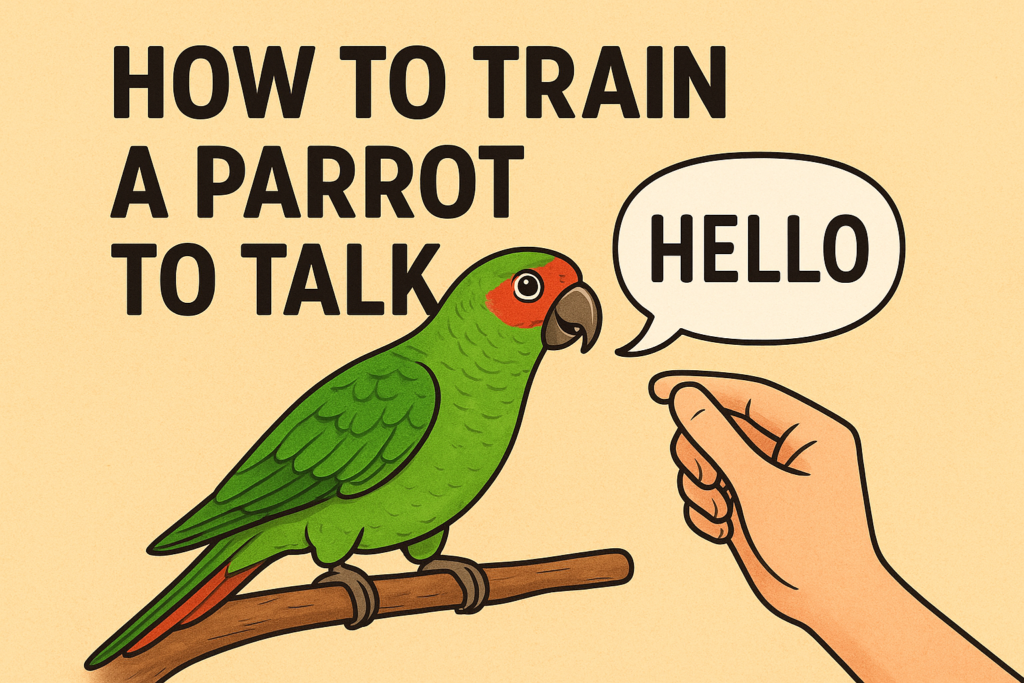
Why Parrots Talk: Understanding Parrot Speech Behavior
Before diving into how do you train a parrot to talk, it’s important to understand why parrots speak:
1. Parrots imitate sounds for bonding
They repeat your voice to feel closer to you.
2. They mimic frequently repeated words
The more they hear a word, the faster they learn it.
3. They talk to get your attention
Parrots are social, and talking helps them connect.
4. They learn best when calm, happy, and comfortable
A relaxed environment speeds up speech learning.
Understanding this psychology ensures faster and more effective training.
1. Create a Comfortable and Safe Environment
No parrot will learn to talk if it feels scared, stressed, or unsafe.
This is especially true when learning how to train an African Grey parrot to talk, as African Greys are emotional and sensitive.
Steps to create a calm environment:
Place the cage in a quiet but interactive area
Avoid loud noises or sudden movements
Spend time near your parrot daily
Talk gently to build trust
Offer treats, toys, and mental stimulation
A comfortable parrot = a talkative parrot.
2. Start with Simple and Clear Words
When teaching how to train a Quaker parrot to talk or any species, start with easy words.
Best beginner words:
Hello
Hi
Bye
Good morning
Your name
The parrot’s name
Say these words slowly, clearly, and repeatedly.
Quaker parrots (Monk Parakeets) love mimicking simple words and short phrases, so keep it fun and consistent.
3. Use Strong Positive Reinforcement
Positive reinforcement is the foundation of learning how to train a parrot to talk effectively.
Reward your parrot with:
Tasty treats
Head scratches
Verbal praise (Good job!)
Excited tones
Each time the parrot attempts a sound or word even if imperfect reward immediately.
This creates a powerful learning loop.
Senegal parrots respond especially well to food rewards since they are very treat-motivated.
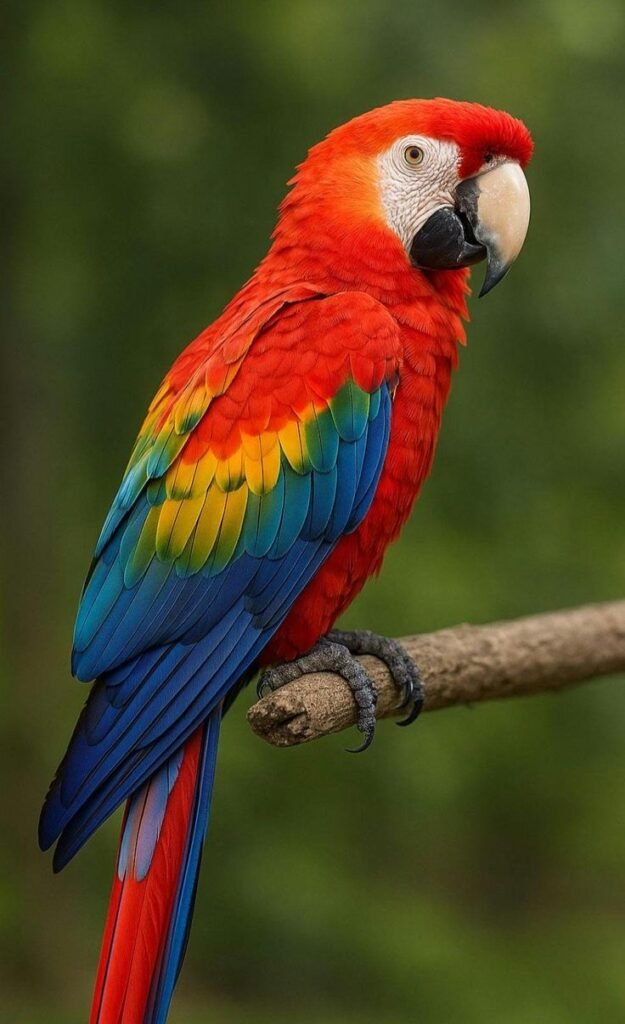
4. Repetition is the Secret to Success
Parrots learn through repetition.
Whether you’re focusing on how to train a Senegal parrot to talk or an African Grey, repeating words daily is key.
Suggested session plan:
10–15 minutes per session
2–3 sessions per day
Repeat the same word 10–20 times
Add new words slowly
Short, frequent sessions work better than long ones.
5. Make Training Fun and Engaging
A happy parrot learns faster.
Turn training into playtime so your bird enjoys the process.
Fun training ideas:
Speak in a playful tone
Sing simple songs
Talk while feeding
Whisper words to encourage curiosity
Use excitement to motivate them
African Greys enjoy mental challenges, so games and puzzles improve speech development too.
6. Avoid Scolding or Negative Reinforcement
Never punish your parrot for not speaking.
This destroys trust, increases stress, and slows learning.
Avoid:
Yelling
Scolding
Tapping on the cage
Ignoring your parrot for mistakes
Forcing them to train
Patience is your greatest tool.
7. Speak Slowly with Clear Pronunciation
When learning how do you train a parrot to talk, clarity matters.
Parrots replicate sounds exactly as they hear them.
Speech training tips:
Speak slowly
Avoid background noise
Face the parrot directly
Use the same tone and word each time
African Greys and Quaker parrots imitate tone extremely accurately—so be consistent.
8. Use Voice Recordings for Extra Practice
Record yourself saying the target words and play the audio while you’re away.
This method works brilliantly for all species, especially African Greys that learn from repetition.
Recording tips:
Keep recordings short
Use the same word repeatedly
Play 10–20 minutes at a time
Don’t play recordings too loudly
This method reinforces daily training even when you’re not home.
9. Species-Specific Training TipsHow to Train an African Grey Parrot to Talk
African Greys (Congo + Timneh) are the best talkers.
They can learn 200–1000+ words.
Tips:
Provide daily mental stimulation
Use a wide variety of words
Keep training fun and varied
Give more verbal interaction than treats
Greys love talking and will learn phrases faster than most birds.
How to Train a Quaker Parrot to Talk
Quaker parrots are natural chatterboxes.
Tips:
Use short phrases early
Repeat words with excitement
Talk to them throughout the day
Reward frequently
Quakers respond well to energetic tones
Their fast learning style makes them perfect for beginners.
How to Train a Senegal Parrot to Talk
Senegal parrots are quieter but intelligent learners.
Tips:
Begin with very simple words
Use high-value treats
Keep sessions short
Be extremely patient
Speak softly—they imitate tone
Senegals may take longer, but they learn very clearly.
10. Be Extremely Patient and Consistent
Learning how to train a parrot to talk requires time.
Some birds talk within weeks.
Others take months.
Every parrot has its personality, confidence level, and pace.
Be consistent with:
Daily training
Repetition
Rewards
Speaking around the parrot
Patience creates long-term success.
11. How Long Does It Take to Train a Parrot to Talk?
One of the most common questions beginners ask is how long does it take to train a parrot to talk.
The truth is: every species learns at a different speed.
Average talking timelines:
African Grey Parrot: 2–6 weeks for first words
Quaker Parrot: 1–3 months for basic vocabulary
Senegal Parrot: 2–6 months depending on confidence
Budgies: Sometimes talk within a few weeks
Amazons: Fast learners once bonded
Factors that influence speed:
Daily training consistency
Age (younger birds learn faster)
How much talking they hear every day
Trust level between bird and owner
Stress-free environment
If you truly want to know how long does it take to train a parrot to talk, the answer is simple:
Most parrots show progress within 2–12 weeks if trained daily.
12. How Do You Train a Parrot to Talk Step-by-Step?
Beginners often search “how do you train a parrot to talk” in simple steps.
Here is the easiest beginner-friendly method:
Step 1: Start Bonding First
A parrot only imitates someone it trusts.
Step 2: Choose One Easy Word
Use words like “Hello,” “Hi,” or your parrot’s name.
Step 3: Repeat the Word 10–20 Times
Use the same tone each time.
Step 4: Reward Every Small Attempt
Even if the bird says half a sound, give praise or a treat.
Step 5: Keep Sessions Short
10 minutes, 2–3 times daily.
Step 6: Add New Words Slowly
Once the first word is learned, introduce the next one.
Step 7: Talk Throughout the Day
Real-life talking helps the bird learn even faster.
This simple method works for all species—African Greys, Quakers, Senegals, Amazons, Cockatiels, and more.
13. Extra Tips on How to Train an African Grey Parrot to Talk
African Greys are the world’s most intelligent talking parrots, with the ability to learn 200–1000+ words.
Expert tips:
Use clear, slow speech
Introduce new words often
Add phrases early (“Good morning,” “Come here”)
Keep them mentally stimulated with toys
Use positive reinforcement instead of food alone
If you want to know how to train an African Grey parrot to talk, remember—Greys learn from conversations, not just training sessions.
Talk around them as much as possible.
14. Extra Tips on How to Train a Quaker Parrot to Talk
Quaker parrots (Monk Parakeets) are natural chatterboxes.
They learn:
Words
Songs
Sounds
Household noises
Short phrases
Best techniques:
Use energetic tones (Quakers love excitement)
Repeat short words like “Hello,” “Bye-bye,” “Come here”
Talk to them while feeding
Praise them loudly when they attempt a sound
If you want the fastest method for how to train a Quaker parrot to talk, keep training fun and full of excitement. They learn best when happy.
15. Extra Tips on How to Train a Senegal Parrot to Talk
Many people think Senegals don’t talk but they can talk very well with the right approach.
Best strategies:
Use soft speech they imitate gentle tones
Keep sessions short (5–10 minutes)
Use high-value treats like sunflower seeds
Start with short, simple words
Build confidence through bonding
So if you are wondering how to train a Senegal parrot to talk, the secret is patience and soft, consistent communication.
16. How to Encourage Your Parrot to Talk Naturally
Sometimes parrots learn faster through natural exposure instead of structured training.
Ways to encourage talking:
Greet your bird every morning
Repeat the same daily routines (“Good night,” “Eat food”)
Use short commands consistently
Whisper new words to create curiosity
Let them hear words during quiet bonding time
Parrots often copy the words you say the most.
17. Why Some Parrots Talk But Others Stay Quiet
Even within the same species, some parrots talk a lot while others stay silent.
Reasons your bird may not talk yet:
It is shy or introverted
It is still bonding with you
The environment is noisy or stressful
You are teaching too many words at once
Training sessions are inconsistent
The bird prefers sounds over words
Every parrot has its own personality.
With patience, nearly all parrots learn to speak—even adults.
18. Final Bonus Tips for Faster Talking Results
To maximize results, follow these expert tips:
Train at the same time daily
Keep the environment quiet
Speak clearly and slowly
Reward every small improvement
Don’t overwhelm the bird with too many words
Use the parrot’s name often
Keep a positive tone
Using these techniques consistently will help your bird learn much faster—no matter the species.
When to See a Pet?
Conclusion
Training your parrot to talk is one of the most rewarding experiences for any bird owner. With consistency, patience, bonding, and the right techniques, you can teach your parrot new words naturally and effectively.
Now you fully understand:
How to Train a Parrot to Talk
How to Train an African Grey Parrot to Talk
How to Train a Quaker Parrot to Talk
How to Train a Senegal Parrot to Talk
And exactly how do you train a parrot to talk step-by-step
Start today and soon your bird will surprise you with new words!
FAQs How to Train a Parrot to Talk
1. How long does it take to train a parrot to talk?
It depends on species, age, and personality. African Greys may talk within weeks, while others take months.
2. Which parrot is easiest to train to talk?
African Grey Parrots, Budgies, Quakers, and Amazon parrots are top talkers.
3. Can adult parrots learn to talk?
Yes! Adults can learn too just be patient.
4. Should I train my parrot daily?
Short, daily 10–15 minute sessions work best.
5. Can a parrot learn multiple words?
Absolutely! Once the basics are learned, introduce new words slowly.
6. What words should I teach first?
Simple words like “Hello,” the parrot’s name, “Good boy,” and “Bye.”
7. Should I punish my parrot if it doesn’t speak?
Never. Punishment causes fear and slows learning.
Muntaha Farid is a passionate pet care writer specializing in dog behavior, pet health, and practical pet parenting tips. At PetNatureHub, she creates informative guides that help pet owners understand their pets’ needs, including nutrition, training, and daily care. Her mission is to make pet care simple, reliable, and accessible for every pet lover.
Pingback: Cat Meowing at Night