
Pseudomonas Dog Ear Infection: 6 Effective Treatments That Work
“Pseudomonas Dog Ear Infection is a chronic and painful condition in dogs that can cause redness, discharge, and itching.”
What Is a Pseudomonas Dog Ear Infection?
A Pseudomonas dog ear infection is a severe bacterial infection caused by Pseudomonas aeruginosa, a highly resistant organism that thrives in moist environments. This type of infection usually affects dogs with chronic ear issues and can be difficult to treat because the bacteria often resist common antibiotics.
Unlike mild ear infections, a Pseudomonas dog ear infection can damage the ear canal lining and cause intense pain, inflammation, and long-term complications if not treated properly. Early diagnosis and targeted treatment are essential to prevent the infection from spreading deeper into the ear.
“Causes of Pseudomonas Dog Ear Infection”
Has your dog been suffering from a long-lasting ear infection that keeps coming back? A Pseudomonas Dog Ear Infection is one of the most painful and persistent conditions in dogs, often becoming resistant to treatment and extremely frustrating for pet owners.
What many people don’t realize is that chronic discomfort caused by a Pseudomonas Dog Ear Infection can also trigger serious behavior problems. Dogs in constant pain may become anxious, restless, and destructive, making it harder to Stop Dog Pulling & Chewing despite consistent training efforts.
In this article, we share the real story of Penny, a 4-year-old Lagotto Romagnolo from Paris, who struggled with a resistant Pseudomonas Dog Ear Infection for over eight months. Along with her experience, you’ll discover practical treatment solutions, expert veterinary advice, and long-term management strategies that not only help control chronic ear infections but also reduce stress-related behaviors making it easier to Stop Dog Pulling & Chewing and restore your dog’s comfort and quality of life.Pseudomonas dog ear infection is treated with deep ear cleaning, culture-based antibiotic drops, and strict hygiene management. Identifying the exact bacteria through lab testing is essential to choose the right medication and prevent recurring infections.
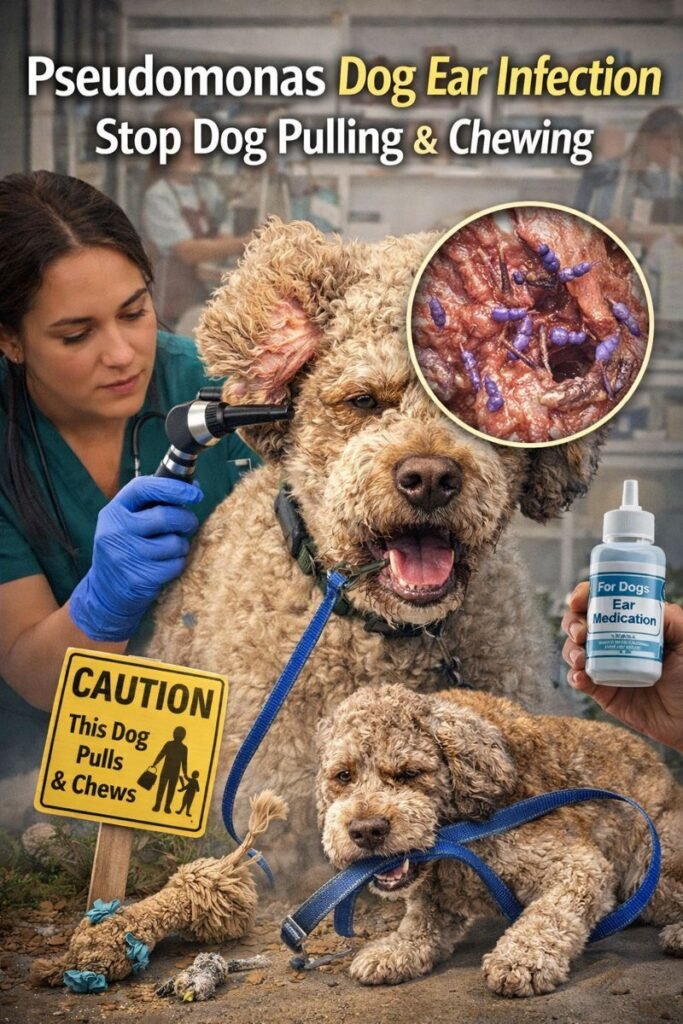
Penny’s Story
Common Symptoms of Pseudomonas Dog Ear Infection
Recognizing symptoms early can prevent serious complications. Dogs with this condition often show:
Thick green, yellow, or bloody discharge
Strong foul odor from the ears
Constant scratching or rubbing of ears
Head shaking or tilting
Redness and swelling inside the ear
Pain when the ear is touched
Loss of balance in severe cases
These symptoms indicate that the infection is advanced and requires immediate veterinary attention.
Step-by-Step Treatment Plan
Treating a Pseudomonas dog ear infection requires a structured approach:
1. Deep Ear Cleaning
Veterinarians perform thorough cleaning to remove debris and bacteria.
2. Culture & Sensitivity Test
This test identifies the exact bacteria and determines which antibiotics will work.
3. Targeted Antibiotic Drops
Unlike general infections, this condition requires specific medications.
4. Anti-Inflammatory Medication
Reduces swelling and pain inside the ear canal.
5. Regular Follow-Ups
Continuous monitoring ensures the infection is fully cleared.
A Dog With Persistent Ear Infection That Wouldn’t Heal
Penny’s chronic ear infection started in February:
Redness and inflammation in the ear
Strong smell and thick discharge
Constant itching and discomfort
Her regular vet assumed it was allergy-related, so her owners changed:
Food
Treats
Cleaning products
Environmental triggers
But nothing improved.
Finally, a veterinary dermatologist took a swab and discovered antibiotic-resistant bacteria:
Pseudomonas aeruginosa
Klebsiella pneumoniae
Both bacteria are highly resistant and difficult to eliminate from the ear canal.
A Strange Twist
Infection Disappeared on Holiday
While traveling in the Dolomites (mountains) for 2 weeks, Penny’s ear completely healed:
No redness
No discharge
No pain
But when she returned to Paris, the infection came back slowly.
This strongly suggests environmental triggers may be contributing.
Humidity, pollution, dust mites, or indoor irritants can worsen ear infections in dogs.
Why Chronic Ear Infections Keep Returning
According to veterinary dermatologists, recurring ear infections can be caused by:
| Root Cause | How It Worsens Infection |
|---|---|
| Allergies (food or seasonal) | Inflammation traps bacteria & yeast |
| Ear anatomy (hairy or narrow canals) | Poor airflow causes moisture buildup |
| Environmental bacteria | Reinfection after improvement |
| Resistant microbes | Topical meds become ineffective |
| Over-cleaning | Damages the protective ear barrier |
Lagotto Romagnolos have hair-filled ear canals, which increases infection risk.
“Treatment Options for Pseudomonas Dog Ear Infection”
Here’s what specialists commonly recommend:
Deep Ear Cleaning Under Anesthesia
Removes infected discharge and allows medication to reach inside.
Culture & Sensitivity Test (ESSENTIAL)
Identifies which antibiotic drops will actually work.
Proper Topical Antibiotic Drops
Examples vets may prescribe:
Silver sulfadiazine
Ciprofloxacin
Polymyxin B (if not resistant)
Oral antibiotics usually don’t help when the ear drum is intact.
Anti-Inflammatory Treatment
To reduce pain and swelling.
Strict Cleaning Routine
Products like Surosolve help reduce bacterial load.
Environmental Management
Since Penny improved in a cleaner mountain environment, her household should check:
Dust mites in bedding
Apartment humidity → ideal: 40–50%
Air pollution sensitivity
Mold near windows or bathroom
Indoor chemical exposure (cleaners, perfumes, candles)
Water entering ears during grooming
Try a HEPA air purifier, hypoallergenic bedding, and monthly professional ear cleaning.
When Is Surgery Needed?
Ear canal surgery (TECA or Lateral Canal Resection) is recommended only when:
Repeated infections
Canal becomes narrowed or calcified
Pain is constant
No topical medication is working
Since Penny’s ear drum and structure are normal, surgery is not the best first option.
Long-Term Management Tips for Chronic Dog Ear Infections
Keep ears dry avoid water entering ear canals
Use vet-approved grooming techniques
Monthly preventive cleanings
Maintain hydration + omega-3 rich diet
Address allergies with a veterinary dermatologist
Recheck ear cultures when infection returns
When to See a Pet Immediately
Head shaking or tilting
Strong foul odor
Discharge (yellow, brown, or green)
Visible swelling or bleeding
Loss of balance
Dogs hide pain, but ear infections are extremely painful prompt care is necessary.
Home Care Tips for Managing Infection
While veterinary treatment is essential, supportive care at home helps recovery:
Keep ears clean and dry
Use only vet-approved ear solutions
Avoid water entering ears during baths
Follow medication schedule strictly
Monitor symptoms daily
Consistency is key to preventing relapse.
Best Diet for Dogs with Chronic Ear Infections
Diet plays a major role in reducing inflammation and supporting healing.
Recommended foods:
Omega-3 rich fish (salmon)
Lean protein (chicken, turkey)
Anti-inflammatory foods (pumpkin, sweet potato)
Avoid:
Artificial additives
High-sugar treats
Common allergens (if diagnosed)
A balanced diet supports immune function and speeds recovery.
How Environment Affects Ear Infections
Penny’s case proves how environment impacts this condition.
Risk factors:
High humidity
Dust mites
Air pollution
Mold exposure
Poor ventilation
Improving air quality and cleanliness can significantly reduce infection recurrence.
When to Consider Surgery
Surgery is only recommended in severe cases:
Chronic infections that don’t respond to treatment
Narrowed or damaged ear canal
Constant pain and inflammation
Procedures like TECA are last-resort options when all other treatments fail.
Prevention Tips for Long-Term Ear Health
Preventing infection is always better than treating it.
Clean ears regularly (not excessively)
Keep ears dry
Schedule routine vet checkups
Manage allergies effectively
Maintain proper grooming
These steps reduce the risk of future infections.
Final Thoughts: Hope for Dogs Like Penny
A Pseudomonas dog ear infection is one of the most challenging ear conditions in dogs, but it is manageable with the right approach. Early diagnosis, proper treatment, and consistent care are the keys to recovery.
Pet owners should stay patient and work closely with their veterinarian to ensure the best outcome. With proper care, even severe infections can be controlled, allowing your dog to live a healthy and comfortable life.
FAQs
Why won’t my dog’s ear infection go away?
Recurring infections usually mean underlying allergies or resistant bacteria.
How do you treat Pseudomonas in dog ears?
Deep cleaning + culture-based topical antibiotics are required.
Can environment trigger ear infections in dogs?
Yes, humidity, pollution, and indoor allergens can worsen symptoms.
Is chronic otitis painful for dogs?
Yes immediate vet care is recommended.
Muntaha Farid is a passionate pet care writer specializing in dog behavior, pet health, and practical pet parenting tips. At PetNatureHub, she creates informative guides that help pet owners understand their pets’ needs, including nutrition, training, and daily care. Her mission is to make pet care simple, reliable, and accessible for every pet lover.
Pingback: How to Stop Your Dog from Pulling on the Leash: Easy Training Tips for Every Puppy