
Cat Suddenly Aggressive: 9 Shocking Causes & Proven Solutions
Is your cat suddenly aggressive? Learn the real causes, from stress aggression in cats to territorial aggression indoors, plus expert tips to calm your cat fast.
Cats are usually loving, calm, and gentle companions which is why it can be shocking when a cat suddenly becomes aggressive without warning. One moment your cat is purring in your lap, and the next, it may hiss, swat, bite, or run away as if scared. These sudden behavior changes are often linked to stress, fear, or unmet needs, which can also lead to destructive habits such as scratching furniture. Learning how to stop cat scratching furniture is an important part of managing feline stress and preventing aggression.
Sudden aggression in cats is one of the most common behavior issues reported by pet owners, especially in the UK and the USA. If your cat suddenly becomes aggressive, don’t worry this guide will help you understand the reasons, triggers, and practical solutions to calm your cat and stop cat scratching furniture caused by anxiety or frustration.
In this in-depth article, we’ll explore:
Why your cat suddenly aggressive behavior appears
How to identify the main triggers
How territorial aggression in cats indoors affects multi-pet homes
How stress aggression in cats impacts behavior
Medical, hormonal, emotional, and environmental causes
What you can do to calm and fix the problem
Let’s dive in.
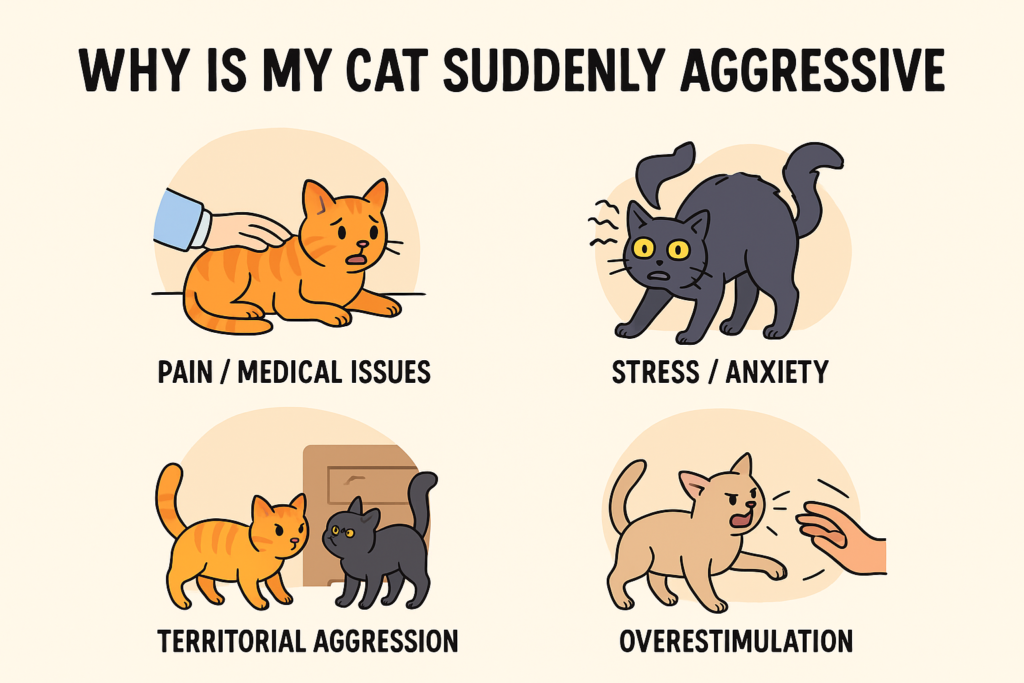
What Does Sudden Aggression Look Like in Cats?
Before understanding the cause, it’s important to identify the signs. Sudden aggression can show in several forms:
Hissing or growling
Swatting or scratching
Biting without warning
Puffing up (arched back, raised fur)
Dilated pupils
Hiding after attacking
Running toward another pet aggressively
Stiff body posture
Tail flicking rapidly
If your cat suddenly aggressive behavior started recently, it’s important to look at possible triggers.
1. Pain or Medical Issues
One of the top reasons cats show sudden aggression is pain. Since cats hide discomfort naturally, they may attack when touched in a painful area.
Possible medical conditions that cause aggression:
Dental disease
Arthritis
Ear infections
Wounds
Urinary tract infections
Thyroid issues
Digestive issues
Neurological problems
Why it leads to aggression:
When a painful area is touched, the cat reacts instinctively often aggressively to protect itself.
What to do:
If the aggression appeared suddenly and without any behavioral history, visit a vet first. Medical issues must be ruled out before assuming it’s behavioral.
2. Stress & Anxiety The Root of “Stress Aggression in Cats”
Cats are sensitive animals. Even small changes can cause anxiety, which leads to aggression.
Common stress triggers:
New furniture
A new person in the home
Moving houses
Loud noises
A new cat or dog
Lack of stimulation
Boredom
Being left alone too long
How stress causes aggression:
When cats feel overwhelmed, their brain releases hormones that increase fear and defensive reactions. This is known as stress aggression in cats, where the cat becomes aggressive because it feels unsafe.
Signs of stress aggression:
Hiding
Over-grooming
Sudden biting
Following you and then attacking
Using the litter box less
Solution:
Create safe spaces (high shelves, hiding spots)
Follow a routine cats love consistency
Give mental stimulation (toys, puzzles)
Play with your cat daily
Avoid shouting or scolding
Using pheromone diffusers also helps reduce anxiety.
3. Territorial Aggression in Cats Indoors
Some cats are naturally territorial. In indoor environments, where space is limited, territorial conflict becomes intense.
This is especially common in:
Multi-cat homes
Apartments
Small spaces
Households with new pets
Why it happens:
Cats mark certain areas as “theirs.” When another cat (or even a human) enters their territory, they may attack.
This behavior is known as territorial aggression in cats indoors.
Common triggers:
Adding a new cat
New smells on clothing
Rearranged furniture
A new baby
Outdoor cats seen through windows
Competition for food or attention
Signs of territorial aggression:
Stalking other cats
Blocking doorways
Biting another pet
Hissing and tail puffing
Attacking certain areas of the house
How to fix it:
Create separate zones for each cat
Provide multiple litter boxes, bowls, and beds
Slow introduction between pets
Play therapy to reduce tension
Avoid forcing cats to share spaces
4. Redirected Aggression
This is one of the biggest reasons a cat suddenly aggressive reaction happens.
What is it?
Your cat sees, hears, or smells something that upsets them but can’t reach it.
So they redirect their aggression onto whoever is closest (another cat, or even you).
Example:
Your cat sees a stray cat outside the window can’t reach it and suddenly attacks your leg.
How to fix it:
Block visual access to outdoor triggers
Use curtains or frosting on windows
Reduce loud noise exposure
Give time for your cat to calm down
Avoid touching them when they’re overstimulated
5. Overstimulation or Petting-Induced Aggression
Some cats enjoy petting but have a low tolerance for long sessions.
Signs of overstimulation:
Tail flicks
Skin twitching
Sudden jump-up
Quick snap bite
Why it happens:
Repetitive touching sometimes becomes uncomfortable, and cats react aggressively to stop it.
Solution:
Pet for shorter periods
Watch for early warning signals
Avoid touching sensitive areas (belly, tail base)
6. Fear-Based Aggression
A scared cat may attack to protect itself.
Common fear triggers:
Sudden loud noises
New guests
Being cornered
Being picked up unexpectedly
Solutions:
Allow escape routes
Avoid cornering the cat
Use calm, soft movements
Let the cat approach you first
7. Hormonal or Sexual Aggression
Unneutered cats especially males can become aggressive due to hormones.
Fix:
Neutering/spaying reduces 80% of hormonal aggression.
8. Age-Related Aggression in Cats
Older cats suffering from:
Cognitive decline
Vision loss
Hearing loss
may become defensive or aggressive.
Fix:
Keep them comfortable, predictable, and reduce stress triggers.
How to Calm a Suddenly Aggressive Cat (Step-by-Step)
1. Don’t punish the cat
Punishment increases fear and aggression.
2. Give space
Let the cat calm down on its own.
3. Identify the trigger
Look at what happened right before the aggression.
4. Reduce stress
Use:
Pheromone diffusers
Play sessions
Good routine
Quiet environment
5. Visit a pet
If aggression is out of character, a medical issue may be the cause.
6. Provide enrichment
Cats need daily stimulation.
7. Use slow introductions for new pets
Never force interaction.
When to See a Pet or Behavior Expert
Visit a professional if:
Aggression is sudden and severe
Your cat growls constantly
The cat attacks humans repeatedly
There is blood drawn
The aggression is worsening
Sudden behavior change without reason
Final Thoughts
Sudden aggression is not a sign of a “bad cat.” It’s your cat trying to communicate something pain, fear, anxiety, territorial stress, or overstimulation.
By understanding:
why your cat suddenly aggressive,
how stress aggression in cats affects mood, and
how territorial aggression in cats indoors impacts multi-pet households,
you can help your pet feel safe, calm, and happy again.
With a little patience and the right approach, nearly all types of cat aggression are fixable.
FAQs: Cat Suddenly Aggressive
1. Why is my cat suddenly aggressive?
A cat may become aggressive suddenly due to pain, stress, fear, or environmental changes. Medical issues like arthritis or dental pain are common triggers. Emotional triggers like anxiety or overstimulation can also cause sudden aggression.
2. What is stress aggression in cats?
Stress aggression in cats occurs when a cat feels threatened, anxious, or overwhelmed. Common causes include loud noises, moving homes, new pets, or changes in routine. Stress triggers defensive or aggressive behavior.
3. What is territorial aggression in cats indoors?
Territorial aggression in cats indoors happens when a cat defends its perceived territory. This is common in multi-cat homes or small spaces, where one cat may attack another to assert dominance or protect resources.
4. How can I stop my cat from being aggressive suddenly?
Identify the trigger (stress, pain, territory).
Avoid punishment; use calm interaction.
Create safe spaces and enrich the environment.
Play therapy and routine can reduce stress.
Consult a vet if aggression persists or appears suddenly.
5. Could sudden aggression be caused by pain or illness?
Yes. Cats often hide pain, and sudden aggression may indicate medical issues such as infections, arthritis, or dental problems. A vet check-up is important to rule out health causes.
6. Can neutering/spaying reduce aggressive behavior?
Yes. Hormonal aggression is common in unneutered cats, especially males. Neutering or spaying often reduces territorial and sexual aggression.
7. When should I see a professional about my cat’s aggression?
Seek professional help if:
Aggression is frequent, severe, or escalating
Your cat attacks humans or other pets
There are sudden changes in behavior
You notice pain, blood, or injuries
Muntaha Farid is a passionate pet care writer specializing in dog behavior, pet health, and practical pet parenting tips. At PetNatureHub, she creates informative guides that help pet owners understand their pets’ needs, including nutrition, training, and daily care. Her mission is to make pet care simple, reliable, and accessible for every pet lover.
Pingback: how to get a cat to stop scratching furniture
Pingback: Critical Winter Health Risks for Cats and How to Avoid Them
Pingback: Animal Welfare & Public Safety – Humane Solutions That Protect Animals and People