
Ultimate Chicken Care Guide: How to Raise Healthy Backyard Chickens
Learn how to care for chickens with our complete guide. From coop setup and feeding to health tips, keep your flock healthy, happy, and productive.
Introduction
Raising chickens in your backyard is one of the most rewarding experiences for both beginners and experienced poultry keepers. Not only do chickens provide fresh, nutritious eggs daily, but they also contribute to a sustainable and eco-friendly lifestyle by controlling pests, providing natural fertilizer, and reducing food waste. However, to maintain a healthy, productive flock, proper care is essential. Neglecting their needs can lead to stress, illness, poor egg production, and behavioral problems.
This Chicken Care Guide provides a comprehensive overview of everything you need to know about raising backyard chickens. From choosing the right breed to setting up the perfect coop, feeding and nutrition, seasonal care, and health management, this guide covers all the essential aspects. Whether you are planning to raise chickens for eggs, meat, or as pets, following these practical tips will help you build a thriving flock that is productive, healthy, and content.
Understanding Chicken Behavior
Understanding chicken behavior helps you manage your flock effectively:
Pecking Order:
Chickens establish a social hierarchy. Provide enough space and resources to reduce conflict.Enrichment:
Perches, free-ranging, and scattering feed prevent boredom and stress.Companionship:
Chickens are social animals. Keep at least 3–4 birds to prevent loneliness and encourage natural behaviors.
This behavioral insight is a key part of any comprehensive chicken care guide.
Backyard Chicken Care Essentials
Safe and Comfortable Housing
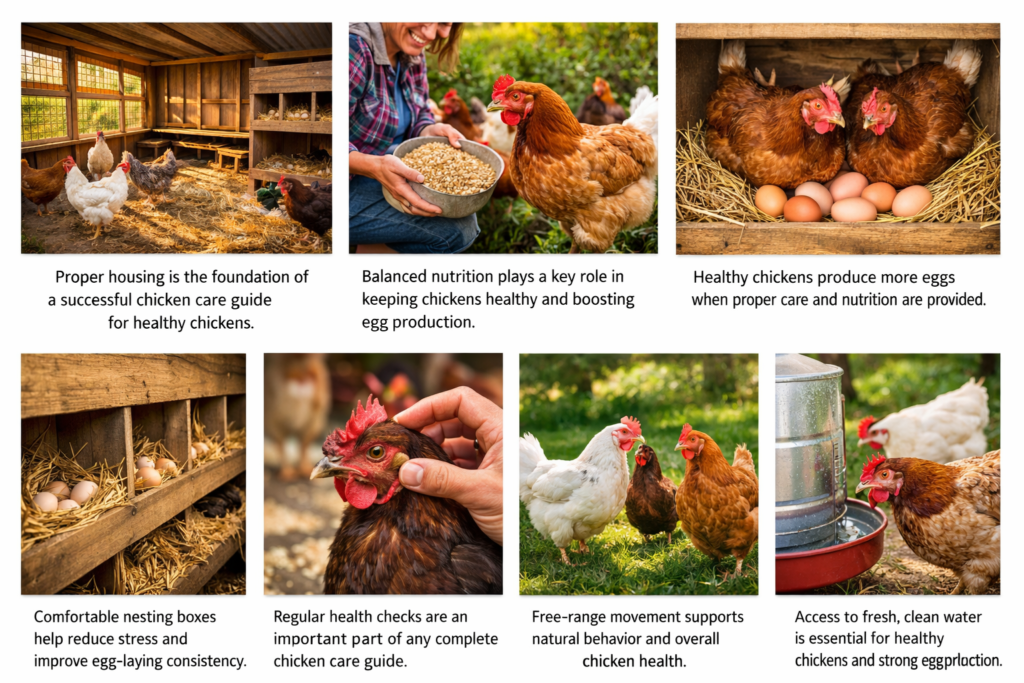
Backyard chicken care starts with providing a safe, clean, and well-ventilated coop. Proper housing protects chickens from predators, extreme weather, and common diseases. Each chicken should have enough space to move comfortably, along with clean nesting boxes to reduce stress and support regular egg laying.
Balanced Diet for Healthy Chickens
A balanced diet is essential for healthy chickens and strong egg production. Feed your chickens a high-quality layer feed and provide constant access to fresh, clean water. Adding calcium sources like oyster shells helps produce strong eggshells. Just as nutrition is vital for chickens, following proper Horse care tips is equally important for keeping your equine friends healthy, strong, and happy.
Proper Housing for Healthy Chickens
A safe and comfortable coop is the foundation of good chicken care. Proper housing protects your flock from predators, harsh weather, and common diseases.
Space Requirements:
Indoor coop: 2–3 sq ft per chicken
Outdoor run: 8–10 sq ft per chicken
Overcrowding can cause stress, feather pecking, and lower egg production.
Ventilation:
Adequate airflow prevents respiratory issues and ammonia buildup. Ensure windows or vents allow fresh air without drafts.Nesting Boxes and Roosts:
Provide one nesting box for every 3–4 hens. Roosting bars should be 2–3 feet off the ground, giving chickens a comfortable place to sleep.Predator Protection:
Use sturdy wire mesh and secure doors to protect against raccoons, foxes, and stray dogs.
Why Proper Chicken Care Is Important
Keeping chickens healthy goes beyond just feeding them. A proper chicken care guide focuses on all aspects of their well-being, including:
Providing safe and comfortable housing
Ensuring balanced nutrition
Maintaining health through preventive care
Understanding chicken behavior
Following a comprehensive chicken care guide helps prevent common problems like disease, stress, and low egg production.
Choosing the Right Chicken Breed
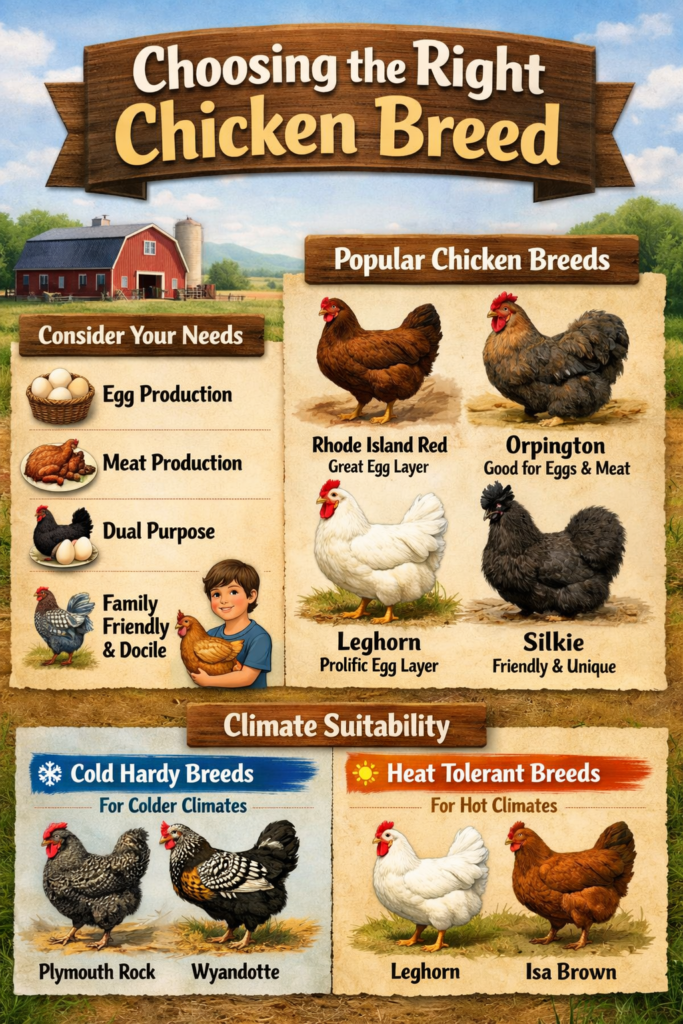
Selecting the right breed for your backyard is crucial for successful chicken keeping. Different breeds have different needs, temperaments, and productivity levels.
Factors to Consider:
Purpose: Decide if you want chickens for eggs, meat, or dual-purpose.
Climate adaptability: Some breeds handle cold better, while others tolerate heat.
Temperament: Friendly breeds are easier to manage, especially around children.
Popular Backyard Breeds:
Rhode Island Red: Hardy, excellent egg layers.
Leghorn: Prolific egg producers, ideal for large flocks.
Silkie: Small, fluffy, and very friendly; great for children.
Plymouth Rock: Calm and versatile, good for eggs and meat.
Orpington: Gentle temperament, great for beginners.
Choosing the right chicken breed is one of the most important decisions for backyard poultry keepers. The right breed ensures healthy birds, consistent egg production, and a flock that fits your lifestyle.
Egg-Laying Breeds
If your primary goal is fresh eggs, choose breeds known for high egg production. Leghorns, Rhode Island Reds, and Golden Comets lay eggs regularly and are hardy in most climates. These breeds are ideal for families or small-scale egg producers.
Meat Breeds
For those raising chickens for meat, fast-growing breeds like Cornish Cross and Jersey Giants provide quality meat in a shorter time. These breeds are usually larger, so make sure your coop and run have enough space.
Dual-Purpose Breeds
Dual-purpose breeds offer the best of both worlds—good egg production and suitable meat. Breeds such as Orpingtons, Plymouth Rocks, and Australorps are popular among backyard farmers because they are hardy, friendly, and productive
Nutrition and Feeding
Proper nutrition is essential for healthy chickens. A balanced diet ensures strong growth, healthy feathers, and consistent egg production.
Commercial Feed:
Adult hens need high-quality layer feed for optimal egg-laying.Calcium and Protein:
Calcium strengthens eggshells. Offer crushed oyster shells or eggshells. Protein is essential for growth and feather maintenance.Fresh Water:
Always provide clean, fresh water. Check daily and refill as needed.Treats and Scraps:
Fruits, vegetables, and grains are good for enrichment, but avoid overfeeding treats, which can affect egg production.
This chicken care guide emphasizes the importance of proper nutrition for healthy and productive birds.
Daily Chicken Care
Daily observation and care are critical for a thriving flock.
Health Check:
Look for signs of illness, such as lethargy, unusual droppings, or loss of appetite. Healthy chickens are alert, active, and have bright eyes.Egg Collection:
Collect eggs daily to maintain clean nests and reduce egg-eating behavior.Coop Cleaning:
Remove soiled bedding and droppings daily. Deep clean the coop weekly to prevent disease.Grooming:
Chickens naturally preen, but provide dust baths and check for parasites like mites and lice.
Following these daily steps from the chicken care guide ensures your flock remains healthy and productive.
Health and Veterinary Care
Proper health management is crucial for a happy flock.
Vaccinations:
Consult a vet for recommended vaccines in your area.Parasite Control:
Regularly check for external (mites, lice) and internal (worms) parasites. Treat promptly if detected.Illness Management:
Isolate sick birds to prevent disease spread. Common signs include drooping wings, decreased appetite, or unusual behavior.
This part of the chicken care guide helps prevent common health problems and ensures long-term flock wellness.
Seasonal Care Tips
Chicken care varies with the seasons:
Winter Care:
Keep coops warm and insulated, add extra bedding, and provide additional feed for energy.Summer Care:
Provide shade, fresh water, and good ventilation. Heat stress can reduce egg-laying and affect health.
Following seasonal advice from this chicken care guide helps chickens stay healthy all year.
Conclusion
This chicken care guide provides all the essential tips to keep your flock healthy, happy, and productive. By focusing on proper housing, nutrition, daily care, health management, and understanding behavior, you can enjoy fresh eggs, quality meat, and the joy of raising backyard chickens. Following these guidelines ensures your chickens thrive, no matter the season, providing a rewarding experience for any poultry keeper.
(FAQ) Chicken Care Guide
1. What is the best way to start caring for backyard chickens?
Starting with proper housing is essential. Ensure your coop is safe, well-ventilated, and spacious enough for the number of chickens you have. Provide clean water, balanced feed, and nesting boxes. Regularly check your flock for signs of illness. This is the first step in any reliable chicken care guide.
2. How much space do chickens need?
Each chicken should have 2–3 square feet indoors and 8–10 square feet outdoors. Overcrowding can lead to stress, feather pecking, and reduced egg production. Space requirements are a key part of every chicken care guide.
3. What should I feed my chickens?
A balanced diet is crucial. Adult hens need high-quality layer feed with sufficient protein and calcium. You can also provide grains, vegetables, and occasional treats. Always keep fresh water available. Proper nutrition is emphasized in any comprehensive chicken care guide.
4. How often should I clean the coop?
Daily removal of droppings and soiled bedding is important to maintain hygiene. Deep cleaning of the coop should be done weekly or biweekly. Clean housing reduces disease risk and keeps your chickens healthy, which is a core tip in this chicken care guide.
5. How do I prevent diseases in chickens?
Regular health checks, vaccinations, parasite control, and good hygiene are essential. Isolate any sick birds immediately. Preventive measures form a key section of every chicken care guide to ensure long-term flock health.
6. How can I keep chickens happy and reduce stress?
Provide enrichment like perches, dust baths, and free-range space. Maintain a stable pecking order by giving adequate food, water, and nesting boxes. Happy chickens are healthier and more productive, and this is a main focus of any quality chicken care guide.
7. Can chickens live together with other pets?
Chickens can coexist with some pets, like dogs or cats, if introduced carefully. Avoid direct contact at first and supervise interactions. Protect chickens from predators as advised in this chicken care guide.
8. How do seasonal changes affect chicken care?
Winter requires warm, insulated housing and extra feed for energy. Summer care involves providing shade, ventilation, and plenty of water. Seasonal tips are essential in a complete chicken care guide for maintaining healthy chickens year-round.
Muntaha Farid is a passionate pet care writer specializing in dog behavior, pet health, and practical pet parenting tips. At PetNatureHub, she creates informative guides that help pet owners understand their pets’ needs, including nutrition, training, and daily care. Her mission is to make pet care simple, reliable, and accessible for every pet lover.
Pingback: Expert Horse Care Tips Every Owner Must Know