
Best Diet for Healthy Pets: 10 Expert Nutrition Tips for a Longer Life
Learn the best diet for healthy pets with expert tips. Discover balanced nutrition for dogs, cats, and small pets to boost health and longevity.
Feeding your pets the best diet for healthy pets is one of the most important responsibilities of a pet owner. Proper nutrition supports physical strength, emotional balance, and Pet Mental Health, helping pets stay active, calm, and confident. Just like humans, pets need a balanced intake of proteins, fats, vitamins, minerals, and water to live a long, happy, and healthy life. Whether you own a dog, cat, rabbit, or other small animal, understanding species-specific dietary needs is essential when choosing the best diet for healthy pets.
A well-planned feeding routine strengthens immunity, supports digestion, and improves skin and coat health. Pets that receive the best diet for healthy pets are more energetic and less likely to suffer from obesity, joint pain, or digestive issues. Nutrition also plays a direct role in Pet Mental Health, reducing anxiety, preventing lethargy, and supporting better behavior. Providing the best diet for healthy pets helps maintain both physical wellness and emotional stability throughout every stage of life.

Why a Healthy Diet is Important for Pets
A proper diet impacts every aspect of your pet’s life from energy levels and coat health to digestion and immunity. Here’s why feeding the best diet for healthy pets is crucial:
Boosts Immunity: Balanced nutrition helps pets fight off diseases.
Maintains Ideal Weight: Overfeeding or improper diets lead to obesity, increasing risks of diabetes, heart issues, and joint problems.
Improves Longevity: Pets with proper nutrition live longer and enjoy a better quality of life.
Supports Growth and Development: Especially vital for puppies, kittens, and young
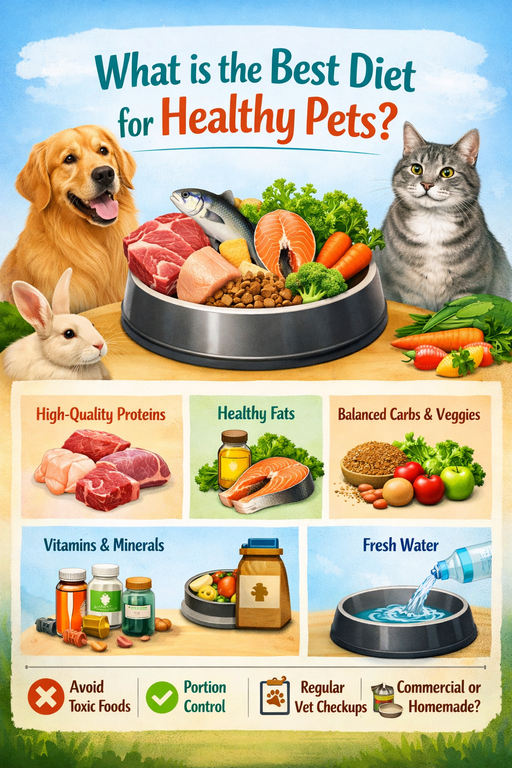
Understanding Pet Nutritional Needs
Different pets have different dietary requirements. Here’s a breakdown:
1. Proteins
Proteins are the building blocks of life. They help in muscle development, tissue repair, and energy production.
Dogs: High-quality animal proteins like chicken, beef, or fish.
Cats: Obligate carnivores; require animal proteins.
Small Pets: Rabbits and guinea pigs need plant-based proteins plus high fiber.
2. Fats
Fats are essential for energy, skin health, and a shiny coat. Omega-3 and Omega-6 fatty acids are particularly important.
Sources: fish oil, chicken fat, and certain plant oils (for herbivores).
3. Carbohydrates
Carbohydrates provide energy but should be given in moderation. Excess carbs may lead to weight gain.
Good sources: whole grains, vegetables, and legumes.
4. Vitamins and Minerals
Vitamins (A, B, C, D, E, K) and minerals (calcium, phosphorus, zinc) support bones, vision, and immunity.
Sources: fruits, vegetables, and supplements (if recommended by a vet).
5. Water
Hydration is vital. Fresh, clean water must always be available. Dehydration can lead to kidney problems, urinary issues, and weakness.
Best Diet for Dogs
Dogs are omnivores and can eat both meat and plant-based foods.
High-Quality Commercial Dog Food: Meat should be the first ingredient; avoid fillers like corn and soy.
Home-Cooked Meals: Lean meats, vegetables (carrots, pumpkin), and grains (rice, oats).
Healthy Treats: Fruits like apples, blueberries, or small pieces of cooked meat. Avoid chocolate, onions, and grapes.
Feeding Tips:
Puppies need more protein and calories than adults.
Senior dogs benefit from lower-calorie diets rich in joint-supporting nutrients like glucosamine.
Best Diet for Cats
Cats are obligate carnivores; their diet must mainly consist of meat.
Protein-Rich Foods: Chicken, turkey, fish, and beef.
Wet Food: Maintains hydration and supports urinary tract health.
Avoid: Foods high in carbs, onions, garlic, chocolate, and dairy.
Special Considerations:
Taurine is essential for cats’ health.
Kittens need more fat and protein than adult cats.
Best Diet for Small Pets
Rabbits
High-fiber diet: unlimited hay, fresh vegetables, occasional fruits.
Avoid processed foods and sugary treats.
Guinea Pigs
Require daily Vitamin C (bell peppers, broccoli, leafy greens).
High-fiber hay and fresh water are essential.
Hamsters
Mix of grains, seeds, small fruits, and vegetables.
Avoid sugary snacks and chocolate.
Tips for Feeding Exotic Pets
Exotic pets like birds, reptiles, and fish need specific diets:
Birds: Fresh fruits, vegetables, high-quality pellets. Avoid avocado and chocolate.
Reptiles: Live insects, fresh vegetables, or species-specific food.
Fish: Species-specific flakes, pellets, or live foods.
Always research the dietary requirements of exotic animals before feeding.
Foods to Avoid
Certain human foods are toxic to pets:
Chocolate
Onion and garlic
Grapes and raisins
Avocado (for dogs and birds)
Alcohol
Caffeine
Even small amounts can cause serious health issues.
Homemade vs. Commercial Pet Food
Both have pros and cons:
Commercial Pet Food
Pros: Convenient, nutritionally balanced, regulated by pet food authorities.
Cons: Some brands contain fillers and artificial additives.
Homemade Diet
Pros: Control over ingredients, can be tailored to specific health needs.
Cons: Risk of nutritional imbalance if not properly planned.
It’s best to consult a vet or pet nutritionist when preparing homemade meals.
Tips for a Healthy Feeding Routine
Consistent Schedule: Feed your pets at the same times daily.
Portion Control: Follow recommended portion sizes to prevent obesity.
Regular Vet Checkups: Ensure your pet’s diet meets their specific needs.
Supplements: Only give if advised by your vet.
Maintain a Consistent Feeding Schedule
Pets thrive on routine. Feeding them at the same times every day helps regulate their metabolism, improves digestion, and reduces begging or anxiety around food.
Dogs and Cats: Typically benefit from 1–2 meals per day for adults; puppies and kittens often need 3–4 meals.
Small Pets: Rabbits and guinea pigs should have constant access to hay and water, with vegetables and pellets served at regular times.

Signs Your Pet is Not Eating a Healthy Diet
Weight loss or gain
Dull coat or excessive shedding
Low energy or lethargy
Digestive issues (vomiting, diarrhea, constipation)
Frequent illnesses or infections
If you notice these signs, consult your veterinarian immediately.
Conclusion
Providing the best diet for healthy pets is key to their overall well-being. By understanding nutritional needs, offering balanced meals, avoiding harmful foods, and maintaining a proper feeding routine, you can help your pets live long, happy, and healthy lives.
Every pet is unique; their diet may vary based on age, breed, size, and health conditions. Prioritize quality nutrition, keep a consistent feeding schedule, and seek professional advice when necessary. Investing in your pet’s diet is an investment in their health, happiness, and longevity. Start today and watch your pets thrive!
FAQ: Best Diet for Healthy Pets
1. What is the best diet for healthy pets?
The best diet for healthy pets varies depending on the species, age, and health condition. In general, a balanced diet includes high-quality proteins, healthy fats, essential vitamins and minerals, and adequate water. Dogs can have a mix of animal proteins and vegetables, while cats need primarily animal proteins. Small pets like rabbits and guinea pigs require high-fiber, plant-based diets, and exotic pets such as birds or reptiles have species-specific dietary needs.
2. Can I feed my pet homemade food?
Yes, homemade meals can be healthy for pets if properly balanced. Homemade diets allow you to control the ingredients and avoid fillers or artificial additives. However, improper planning can lead to nutritional imbalances. It’s best to consult a veterinarian or pet nutritionist to create a diet that meets your pet’s specific requirements.
3. Are commercial pet foods safe?
High-quality commercial pet foods are convenient, nutritionally balanced, and regulated by pet food authorities. Look for brands that list meat as the first ingredient and avoid fillers like corn, soy, or artificial additives. Always check labels for essential nutrients appropriate for your pet’s age and breed.
4. How often should I feed my pet?
Feeding schedules depend on your pet’s species and age. Puppies and kittens usually require 3–4 meals a day, while adult dogs and cats can be fed 1–2 times daily. Small pets like rabbits, guinea pigs, and hamsters benefit from continuous access to hay and fresh water, along with measured portions of vegetables or pellets. Consistency in feeding times helps regulate digestion and prevents overeating.
5. What foods should I avoid feeding my pets?
Certain human foods are toxic to pets and must be avoided. These include chocolate, grapes, raisins, onions, garlic, alcohol, caffeine, and avocado (for dogs and birds). Even small amounts can cause serious health problems, so it’s important to stick to pet-safe foods and treats.
6. How can I tell if my pet’s diet is unhealthy?
Signs of an unhealthy diet include sudden weight loss or gain, dull or thinning coat, low energy levels, digestive issues such as vomiting or diarrhea, and frequent illnesses. If you notice any of these signs, consult your veterinarian immediately to adjust your pet’s diet.
7. Do pets need supplements?
Supplements should only be given if recommended by a veterinarian. Most high-quality commercial pet foods already contain essential vitamins and minerals. Supplements may be necessary for pets with specific health conditions, dietary deficiencies, or during growth stages, such as in puppies, kittens, or pregnant animals.
8. Can a healthy diet improve my pet’s lifespan?
Yes! Pets that receive a balanced, nutritious diet often live longer, healthier lives. Proper nutrition strengthens the immune system, maintains healthy weight, supports organ function, and reduces the risk of chronic diseases. Feeding the best diet for healthy pets ensures better overall well-being and quality of life.
Muntaha Farid is a passionate pet care writer specializing in dog behavior, pet health, and practical pet parenting tips. At PetNatureHub, she creates informative guides that help pet owners understand their pets’ needs, including nutrition, training, and daily care. Her mission is to make pet care simple, reliable, and accessible for every pet lover.
Pingback: pet mental health
Pingback: 7 Natural Flea Treatment for Cats at Home (Safe & Easy Remedies)