
Holiday Pet Safety Tips: Keep Your Pets Safe During Festive Celebrations
Holiday pet safety tips to protect dogs and cats from fireworks, toxic foods, decorations, and stress during festive celebrations.
Introduction
Holidays bring joy, family gatherings, delicious food, and festive decorations but they can also be stressful and dangerous for pets. Following holiday pet safety tips ensures your furry friends remain safe, healthy, and calm during celebrations. By practicing pet safety during holidays, you can prevent accidents, illness, and stress for dogs, cats, and other pets.
Whether you celebrate Christmas, Diwali, Eid, or New Year, holiday pet care should always be part of your planning. These holiday pet safety tips cover everything from avoiding toxic foods to managing noise, decorations, and emergency preparedness.
That’s why following holiday pet safety tips is essential for protecting your pets and supporting their Pet Mental Health. With a little preparation, awareness, and proactive care, you can ensure your furry friends enjoy the holidays safely, comfortably, and happily. Maintaining holiday pet care routines, providing safe spaces, and offering pet-friendly holiday treats are key steps to keeping pets happy during festive chaos.
In addition to preventing accidents and stress, proper holiday pet safety tips promote good Pet Mental Health, ensuring pets feel included in the celebrations without compromising their well-being. From securing decorations and avoiding toxic foods to creating calm environments and providing mental stimulation, small adjustments can make a big difference in their overall happiness and health.
This guide covers everything you need to know to keep your pets safe during Christmas, Diwali, Eid, New Year, and other festive occasions while supporting their Pet Mental Health.
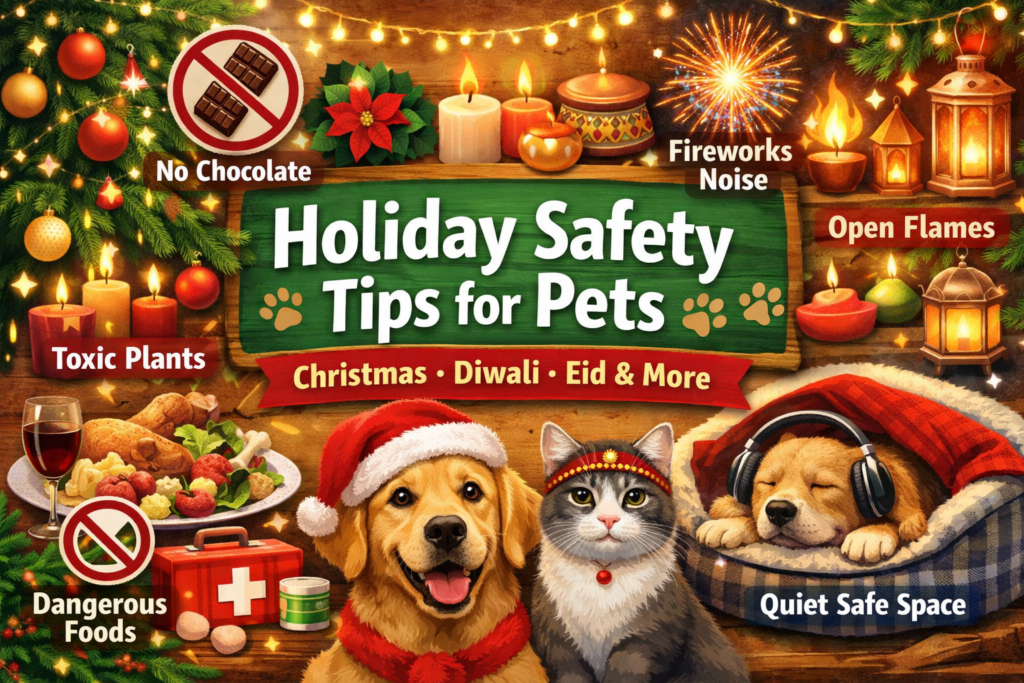
Why Holiday Pet Safety Is Important
Pets thrive on routine and calm environments. Holidays disrupt their schedules with loud noises, unusual foods, and new visitors. Many emergencies during holidays involve:
Stress and anxiety
Firework injuries
Toxic food ingestion
Decorative accidents
Implementing holiday pet safety tips reduces these risks and ensures your pets enjoy a safe and comfortable festive season.
Common Holiday Hazards for Pets
Loud Noises & Fireworks
Fireworks are a major source of stress. Pets may panic, hide, or attempt to escape. Protect your pet by following these holiday pet safety tips:
Keep pets indoors during fireworks
Close windows and curtains
Play calming music or white noise
Provide a quiet, safe space
By practicing pet safety during holidays, you prevent panic and injury.
2. Toxic Holiday Foods
Many festive foods are harmful to pets. Avoid feeding pets:
Chocolate
Grapes and raisins
Onions and garlic
Spicy or fatty foods
Artificial sweeteners like xylitol
Use holiday pet care measures to keep food out of reach and politely instruct guests not to feed your pets. Maintaining festive pet safety includes protecting pets from toxic foods.
3. Decorations and Electrical Cords
Holiday decorations are beautiful but can be dangerous. Holiday pet safety tips include:
Securing Christmas trees and ornaments
Avoiding tinsel and ribbons
Covering electrical cords
Keeping pets away from open flames
These pet safety during holidays measures prevent injuries caused by curiosity or accidents.
4. Guests & Overstimulation
Large gatherings can overwhelm pets. To ensure festive pet safety:
Provide a quiet room for your pet
Avoid forcing interactions
Supervise children around pets
Proper holiday pet care includes creating a safe environment for pets.
Seasonal Travel and Outdoor Hazards:
During the holiday season, pets may be exposed to additional travel- or outdoor-related risks that can affect their safety and well-being. Whether you are visiting family, attending festive events, or taking your pet on vacation, it’s important to plan ahead and follow holiday pet safety tips.
Common hazards include:
Escaping through open doors or gates during parties: Crowded gatherings and frequent door openings increase the risk of pets running away. Even normally calm pets can bolt out of curiosity or fear.
Exposure to extreme weather: Pets can suffer from cold, frostbite, or hypothermia during winter travels, while heat exhaustion and dehydration are risks during warmer climates or summer festivities.
Ingesting foreign objects outdoors: Outdoor areas, parks, or unfamiliar homes may have small objects, decorations, or foods that pets might ingest, leading to choking, blockages, or poisoning.
Traffic hazards: Busy streets, holiday parades, and crowded parking areas pose a risk to pets allowed off-leash or unattended.
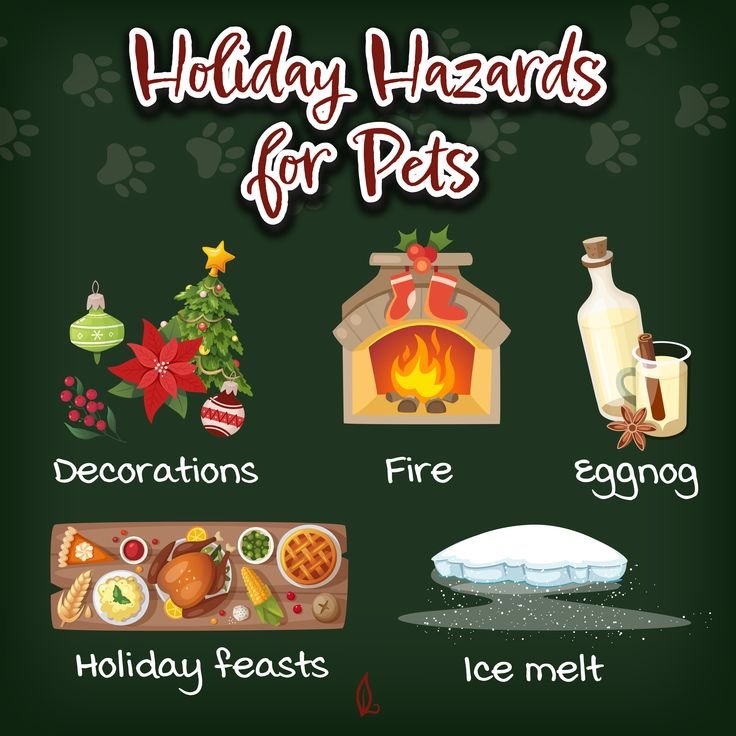
Christmas Pet Safety Tips
Christmas decorations and festive foods present unique hazards. Holiday pet safety tips for Christmas include:
Anchor trees securely and avoid tinsel for cats
Keep electrical cords and fragile ornaments out of reach
Avoid toxic plants like poinsettias, holly, and mistletoe
Providing pet-friendly holiday treats and maintaining holiday pet care routines keeps pets safe and happy.
Diwali Safety Tips for Pets
Diwali fireworks and celebrations can be stressful for pets. Holiday pet safety tips include:
Keep pets indoors and close curtains
Create a dark, quiet space
Use calming music or pheromone diffusers
Avoid feeding pets sweets or fried foods to maintain pet safety during holidays.
Eid Pet Safety Tips
Eid involves rich foods and gatherings. Holiday pet safety tips for Eid include:
Avoid giving cooked bones or spicy foods
Stick to your pet’s regular diet
Provide a calm space away from guests
By following these holiday pet care strategies, you ensure pets stay safe and comfortable.
Traditional sweets may contain:
Sugar
Ghee
Dry fruits
Artificial sweeteners
These ingredients can upset your pet’s stomach or cause toxicity.
New Year & Party Season Safety
New Year celebrations involve fireworks, alcohol, and noise. Holiday pet safety tips include:
Keep pets indoors during fireworks
Secure doors and gates to prevent escape
Keep alcohol, cigarettes, and party snacks out of reach
Practicing festive pet safety ensures pets remain safe and stress-free.
Eid Safety Tips for Pets
Eid celebrations often include rich foods and large gatherings.
Food Safety
Do not give cooked bones
Avoid spicy or oily dishes
Stick to your pet’s regular diet
Guest Management
Maintain feeding and walking routines
Provide a calm space away from guests
New Year and Party Season Safety
New Year celebrations bring fireworks, alcohol, and loud music.
Alcohol and Party Hazards
Alcohol is toxic to pets and should always be kept out of reach. Even small amounts can be dangerous.
Prevent Escaping
Ensure pets wear ID tags
Keep doors and gates closed
Microchipping adds extra protection
How to Reduce Holiday Stress in Pets
Reducing stress is a key part of holiday pet safety tips.
Maintain Routine
Try to keep:
Feeding times
Walk schedules
Playtime
Routine helps pets feel secure.
Provide Mental Stimulation
Mental stimulation plays a very important role in keeping pets calm, happy, and emotionally balanced—especially during busy holiday seasons. When homes are filled with guests, loud noises, fireworks, and unusual routines, pets can easily feel overwhelmed or anxious. Providing the right kind of mental engagement helps distract them from stress and gives them a healthy outlet for their energy.
Puzzle toys are one of the best tools for mental stimulation. These toys challenge your pet’s brain by encouraging problem-solving and focus. When pets work to figure out how to get treats from a puzzle toy, their attention shifts away from frightening sounds like fireworks or loud conversations. This mental focus can significantly reduce anxiety and boredom.
Use Calming Aids
Vet-approved calming products include:
Anxiety wraps
Pheromone diffusers
Natural calming treats
Always consult your veterinarian before using new products.
Holiday Travel Safety for Pets
If you’re traveling with your pet:
Use a secure carrier or seat belt harness
Never leave pets alone in cars
Carry food, water, and medications
If leaving pets at home, arrange a trusted pet sitter or boarding facility.
Emergency Preparedness During Holidays
Even with careful planning and all the precautions in place, emergencies can still happen. Holidays often involve unpredictable factors such as loud noises, unexpected visitors, new foods, and decorations that can pose risks to pets. Being prepared for these situations is crucial to ensure your furry friends remain safe, healthy, and calm throughout the festive season.
Why Emergency Preparedness Matters
Pets rely on us for protection and care, especially during times of stress. An emergency whether it’s a sudden injury, ingestion of something toxic, or severe anxiety from fireworks can happen in an instant. By planning ahead, you reduce the risk of panic and ensure a fast, organized response that could save your pet’s life.
How to Be Prepared:
Save Your Vet’s Contact Information:
Keep your veterinarian’s phone number in an easily accessible place. During the holidays, clinics may have special hours or emergency services, so knowing your vet’s after-hours contact can be invaluable. Consider storing this number in your phone, near your home phone, and sharing it with any family members or pet sitters.Know the Nearest Emergency Animal Clinic:
Locate the closest emergency veterinary hospital and keep its address and phone number handy. In some holiday scenarios, your regular vet may not be available, and timely access to an emergency clinic can make a critical difference in your pet’s outcome.
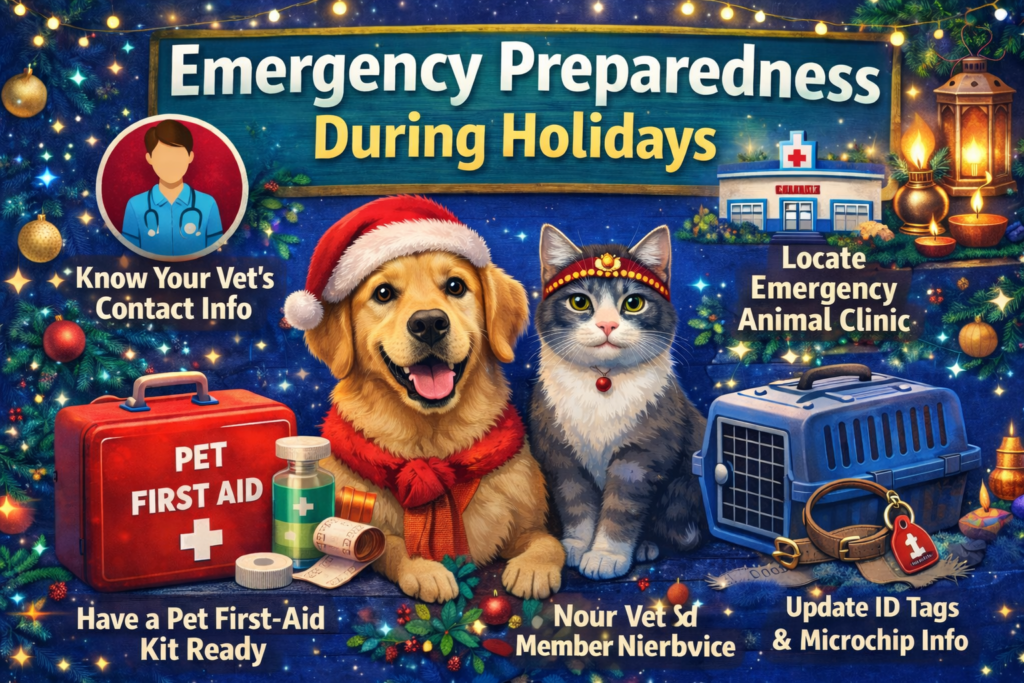
Keep a Pet First-Aid Kit Ready:
Having a well-stocked pet first-aid kit at home allows you to provide immediate care for minor injuries or stabilize your pet before reaching a vet. Your kit should include items such as antiseptic wipes, gauze, adhesive tape, bandages, tweezers, a digital thermometer, and any essential medications your pet requires. Familiarize yourself with basic first-aid procedures for pets so you can act quickly in an emergency.Create an Emergency Plan:
Discuss a clear emergency plan with family members and caregivers. Know where pets will be kept if fireworks or celebrations become overwhelming. Ensure everyone understands how to safely evacuate pets if needed. Having a plan reduces confusion and stress during unexpected situations.
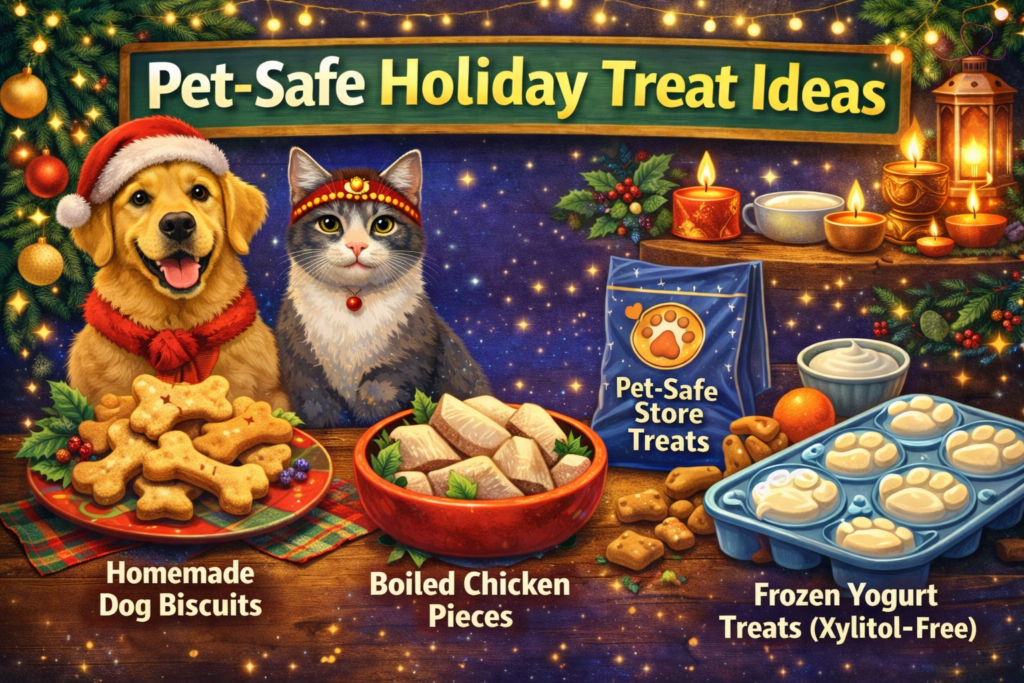
Pet-Safe Holiday Treat Ideas
Holidays are a time for celebration, and that often means plenty of delicious treats for humans. But not all festive foods are safe for pets. Chocolate, sugar, fatty foods, and certain spices can cause digestive upset, toxicity, or even serious health problems. Fortunately, there are plenty of ways to let your furry friends enjoy the holiday season safely with pet-friendly treats. Here’s a detailed guide to some of the best options.
1. Homemade Dog Biscuits
Making treats at home allows you to control the ingredients and ensure your pet’s safety. Simple recipes using whole wheat flour, peanut butter (xylitol-free), pumpkin, or carrot can create delicious, healthy biscuits. You can even cut them into festive shapes like stars, hearts, or paw prints to make them feel special. Homemade dog biscuits are not only safe but also give pets something to chew and enjoy while family members are busy with celebrations.
2. Boiled Chicken Pieces
Plain, boiled chicken is an excellent high-protein treat for dogs and even cats. Avoid adding salt, spices, or sauces, which can upset your pet’s stomach. Chicken pieces are easy to portion and can be used as a reward during training or simply as a holiday snack. They are highly digestible and make a perfect alternative to rich, fatty human foods that could harm your pet.
3. Pet-Safe Store-Bought Treats
Many stores offer treats specially formulated for pets, including biscuits, chews, jerky, and dental treats. Look for products labeled “all-natural” or “grain-free” if your pet has sensitivities. Always check the ingredient list for harmful additives, sugar, chocolate, or xylitol. Pet-safe store treats are convenient, especially during busy holidays when baking at home may not be possible.
4. Frozen Yogurt Treats (Xylitol-Free)
Frozen yogurt treats are a fun and cooling snack, especially for warmer climates or pets that enjoy a cold snack. Use plain, unsweetened yogurt without xylitol or artificial sweeteners, which are toxic to pets. You can even mix in small pieces of fruit like blueberries or strawberries for added flavor. Freeze in small portions or use ice cube trays to create easy-to-serve treats that your pet will love.
5. Healthy Fruit & Veggie Snacks
Certain fruits and vegetables make excellent pet-friendly holiday treats:
Carrots and green beans for low-calorie crunch
Blueberries and apple slices for antioxidants
Pumpkin for digestive health
Always remove seeds, cores, and pits before serving. These snacks are nutritious and part of responsible holiday pet care.
Final Thoughts: Celebrate Safely With Your Pets
Holidays should be joyful for everyone, including pets. By following these holiday pet safety tips, you can protect pets from accidents, stress, and illness. Whether it’s Christmas, Diwali, Eid, or New Year, maintaining holiday pet care, providing pet-friendly holiday treats, and ensuring festive pet safety will make celebrations safe and memorable for your entire family.
(FAQ) Holiday Pet Safety Tips
1. What are the most important holiday pet safety tips?
The most important holiday pet safety tips include keeping pets away from toxic foods, securing decorations, providing a quiet space during fireworks, and maintaining their regular feeding and exercise routines. Always have emergency contacts and a first-aid kit ready.
2. How can I keep my pet calm during fireworks and loud holiday celebrations?
To reduce stress, keep pets indoors, close windows and curtains, play calming music, provide a cozy hiding spot, and use vet-approved calming aids or anxiety wraps. These are essential pet safety during holidays measures.
3. What foods should I avoid giving my pet during holidays?
Avoid chocolate, grapes, raisins, onions, garlic, spicy or fatty foods, and artificial sweeteners like xylitol. Stick to pet-friendly holiday treats such as homemade biscuits, boiled chicken, or frozen yogurt treats.
4. How can I provide mental stimulation for my pet during the holidays?
Use puzzle toys, chew toys, and treat-dispensing toys to keep pets engaged. Mental stimulation helps reduce anxiety and supports overall holiday pet care, keeping pets safe and entertained.
5. What should I include in a pet emergency kit for holidays?
A complete kit should include antiseptic wipes, bandages, gauze, adhesive tape, tweezers, a digital thermometer, essential medications, and your vet’s contact information. Being prepared is one of the key holiday pet safety tips.
6. Can pets safely participate in holiday festivities?
Yes, pets can enjoy holidays safely if you follow holiday pet safety tips: monitor interactions with guests, avoid hazardous foods, provide safe toys, and create calm spaces where pets can relax.
Muntaha Farid is a passionate pet care writer specializing in dog behavior, pet health, and practical pet parenting tips. At PetNatureHub, she creates informative guides that help pet owners understand their pets’ needs, including nutrition, training, and daily care. Her mission is to make pet care simple, reliable, and accessible for every pet lover.
Pingback: Pet Mental Health & Enrichment | Best Activities for Happy Pets