
Hidden Pet Dangers: 12 Shocking Household Risks Every Pet Owner Must Know
Hidden pet dangers revealed. Discover toxic foods, household hazards, and simple safety tips to protect your dog or cat from serious risks at home.
Introduction
Many pet owners believe their home is the safest place for their pets. However, the most common hidden pet dangers exist in almost every household, waiting to cause accidents, illnesses, or long-term health issues. Dogs, cats, and small pets are naturally curious they sniff, chew, and explore their environment. Understanding warning signs through Dog Body Language Explained can help owners recognize stress, fear, or discomfort early, reducing the risk of injuries caused by these most common hidden pet dangers.
In this guide, we will explore the most common hidden pet dangers found in homes and provide practical tips on how to prevent accidents and keep your pets healthy and safe. By combining home safety awareness with insights from Dog Body Language Explained, pet owners can better protect their animals from everyday risks.
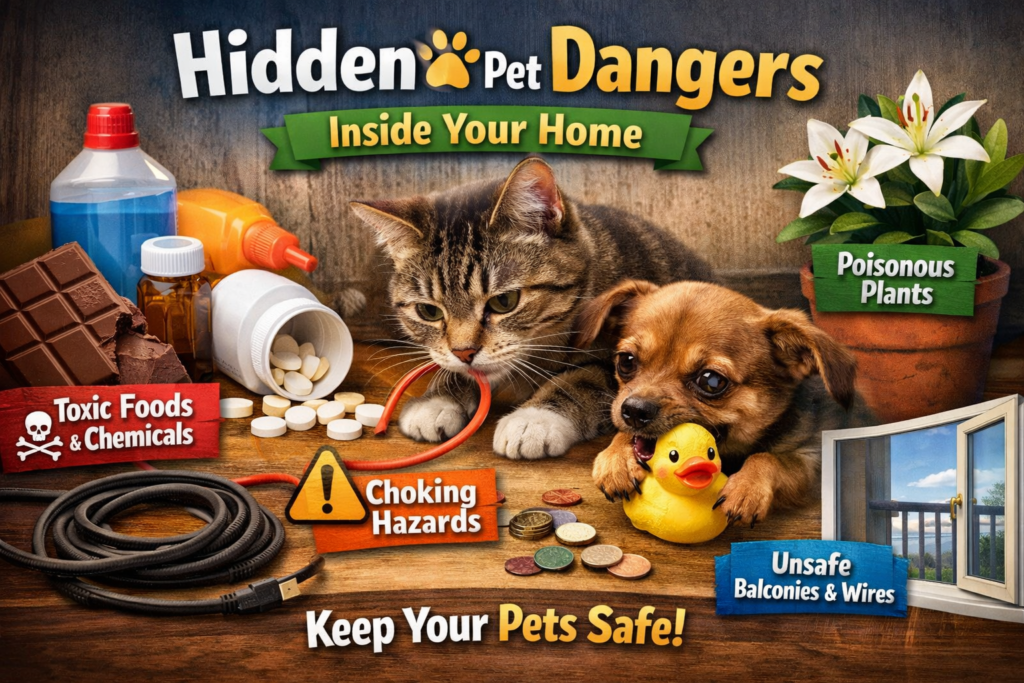
1. Kitchen Hazards
The kitchen is one of the most dangerous areas for pets. Many foods that are safe for humans can be toxic for pets:
Chocolate toxic to dogs and cats, can cause vomiting, diarrhea, and heart issues.
Onions & Garlic damage red blood cells, leading to anemia.
Grapes & Raisins can cause kidney failure in dogs.
Xylitol (sugar-free items) leads to low blood sugar and liver damage.
Cooked bones can splinter and cause choking or intestinal blockages.
Tip: Always store food in sealed containers and keep trash bins covered to prevent pets from accessing these dangerous items.
2. Cleaning Products & Chemicals
Cleaning products like bleach, floor cleaners, and detergents are highly toxic to pets. Even small amounts ingested or absorbed through the paws can lead to poisoning, burns, or skin irritation.
Tip: Use pet-safe cleaning products whenever possible, and ensure floors are dry and safe before allowing pets back into the area.
3. Electrical Wires & Cables
Curious puppies, kittens, and small pets love chewing on cords, which can cause:
Electric shocks
Burns
Fire hazards
Tip: Use cord protectors or hide loose wires to prevent accidents.
4. Toxic Indoor Plants
Many popular houseplants are poisonous to pets:
Lilies extremely toxic to cats
Aloe Vera can cause vomiting and diarrhea
Snake Plant leads to nausea and lethargy
Pothos & Dieffenbachia can cause oral irritation and digestive issues
Tip: Keep plants out of reach or replace them with pet-safe alternatives.
5. Human Medicines & Supplements
Human medications, even a single tablet, can be deadly for pets. Painkillers, antidepressants, and vitamins can cause organ damage or poisoning.
Tip: Store all medications in locked cabinets, out of reach of pets.
6. Small Objects & Choking Hazards
Coins, buttons, hair ties, toy parts, and other small items pose serious choking risks. Dogs often swallow small objects, which can lead to intestinal blockages requiring surgery.
Tip: Keep floors clean and small objects out of pets’ reach.
7. Windows, Doors & Balconies
Open windows, balconies, and unstable furniture are dangerous for pets. Falls from high places can be fatal.
Tip: Install safety grills, nets, or screens, and ensure furniture is stable
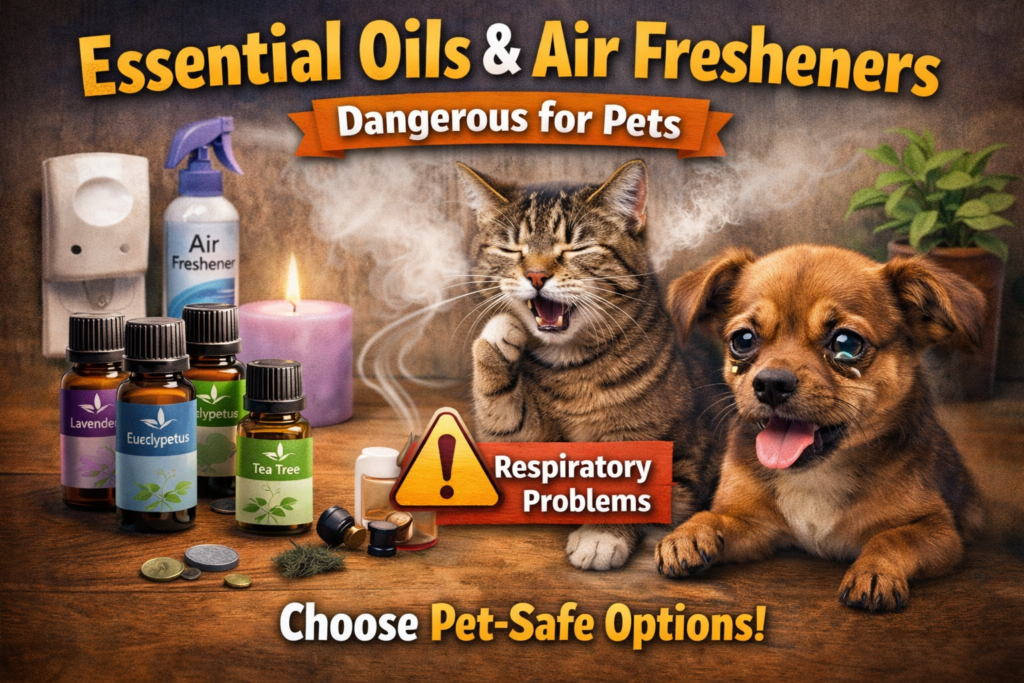
8. Essential Oils & Air Fresheners
Essential oils and air fresheners can trigger respiratory problems in pets, especially cats, birds, and small animals. Harmful oils include:
Lavender
Eucalyptus
Tea Tree
Peppermint
Citrus oils
Even natural oils can be toxic if inhaled or ingested. Air fresheners, scented candles, and plug-ins may release fumes that irritate pets’ lungs.
Tips:
Use only pet-safe alternatives.
Avoid diffusing oils in areas pets frequent.
Keep all scented products out of reach.
Ventilate rooms well.
9. Bathroom & Laundry Room Risks
Toilet chemicals, washing machines, and dryers are often overlooked dangers. Cats or small pets can hide inside machines, leading to injuries or death.
Tip: Always check machines before use and keep bathroom doors closed when not in use.
10. Furniture, Sharp Edges & Heavy Objects
Unstable furniture, sharp corners, or heavy decorative items can injure pets during play or accidents.
Tip: Stabilize furniture and cover sharp edges to prevent injuries.
How to Remove Hidden Pet Dangers From Your Home
Room Safety Audits: Regularly check each room for potential dangers.
Pet-Proof Products: Use cord covers, locked cabinets, and safety gates.
Supervision: Keep an eye on pets during play or while exploring new areas.
Education: Learn about toxic foods, plants, and household chemicals.
Emergency Plan: Keep a pet first-aid kit and vet contact information handy.
FAQ: Hidden Pet Dangers
1: What are hidden pet dangers in a home?
A: Hidden pet dangers are everyday household items or situations that pose risks to pets’ health or safety. These include toxic foods, cleaning chemicals, electrical cords, certain plants, small objects, medicines, and even essential oils. Being aware of these dangers helps prevent accidents, poisoning, and injuries.
2: Which foods are the most common hidden pet dangers?
A: Foods such as chocolate, grapes, raisins, onions, garlic, xylitol-containing products, and cooked bones are the most common hidden pet dangers in kitchens. Pets may eat these accidentally, leading to vomiting, kidney issues, or even life-threatening poisoning. Always store these foods out of reach.
3: Are essential oils and air fresheners dangerous for pets?
A: Yes. Essential oils like tea tree, eucalyptus, peppermint, citrus, and lavender can harm pets, especially cats and small animals. Air fresheners and scented candles may release fumes that irritate the respiratory system. Using pet-safe alternatives and ventilating rooms helps minimize these hidden pet dangers.
4: How can I prevent my pet from chewing on electrical cords?
A: Electrical cords are a major hidden pet danger. To prevent accidents, use cord protectors, hide loose wires behind furniture, and supervise pets in areas with exposed cords. Training pets to avoid chewing is also recommended.
5: Which houseplants are toxic to pets?
A: Many popular indoor plants are toxic. For example: lilies (deadly for cats), aloe vera, snake plant, pothos, and dieffenbachia. Exposure can cause vomiting, diarrhea, or more severe health issues. Always place plants out of reach or choose pet-safe alternatives.
6: Are small objects like buttons or coins dangerous for pets?
A: Absolutely. Small items pose choking hazards and can cause intestinal blockages if ingested. Dogs often swallow small objects accidentally, which may require surgery. Keep floors clean and small items away from pets’ reach.
Q7: How can I pet-proof my home?
A: Pet-proofing involves:
Conducting room safety audits
Using locked cabinets for chemicals and medicines
Installing safety gates and cord protectors
Keeping small objects and dangerous foods out of reach
Supervising pets and educating yourself about household risks
Pet-proofing eliminates most hidden pet dangers and ensures a safe environment.
8: What should I do if my pet is exposed to a hidden danger?
A: Immediately remove your pet from the source of danger and check for symptoms like vomiting, lethargy, or difficulty breathing. Contact your veterinarian or an emergency pet clinic for guidance. Quick action can save your pet’s life.
9: Why is awareness of hidden pet dangers important?
A: Awareness helps prevent accidents, poisoning, and injuries. Even common household items can pose serious risks to pets if ignored. Being proactive and creating a safe environment ensures your pets live a healthy, stress-free life.
Muntaha Farid is a passionate pet care writer specializing in dog behavior, pet health, and practical pet parenting tips. At PetNatureHub, she creates informative guides that help pet owners understand their pets’ needs, including nutrition, training, and daily care. Her mission is to make pet care simple, reliable, and accessible for every pet lover.
Pingback: Dog Body Language Explained: Ultimate & Easy Guide to Understanding Dog Emotions
Pingback: Signs of Stress in Small Pets: Hidden Warnings