
Dog Body Language Explained: 12 Powerful Signs to Understand Your Dog Better
Dog body language explained in detail. Learn tail wagging, ear positions, eye contact, and stress signals to understand your dog’s emotions and behavior.
Introduction
Dogs are highly emotional and intelligent animals, yet they don’t communicate through words. Instead, they rely on body language to express feelings such as happiness, fear, stress, excitement, or discomfort. Every tail wag, ear movement, posture shift, and facial expression carries meaning and can also warn owners about hidden pet dangers that may otherwise go unnoticed.
Many behavior problems occur simply because owners misunderstand their dog’s signals. Failing to recognize early warning signs can expose both pets and humans to hidden pet dangers, such as fear-based aggression or stress-related behavior. Learning how to read dog body language explained in a clear and practical way allows you to respond correctly, avoid dangerous situations, and build a strong emotional bond with your pet.
In this complete guide, dog body language explained step by step will help you understand your dog’s emotions, stress signals, and behavior patterns more clearly, while also teaching you how to identify hidden pet dangers in everyday life.
Why Understanding Dog Body Language Matters
Understanding dog body language is essential for every dog owner, whether you’re a beginner or experienced.
Key Benefits
Prevents fear-based aggression and biting incidents
Helps identify stress, anxiety, or illness early
Improves training success and obedience
Strengthens trust between you and your dog
Promotes better socialization with people and other pets
Dogs often give multiple warning signals before reacting. Recognizing these signals early can prevent serious behavior problems.
Dog Body Language Explained: How Dogs Communicate Through Signals
Dogs use a combination of physical signals rather than a single gesture. To understand them properly, you must observe the whole picture, not just one movement.
Main Communication Tools
Tail position and movement
Ear placement
Eye contact and facial expressions
Body posture and muscle tension
Vocal sounds (barking, whining, growling)
A relaxed dog looks very different from a fearful or stressed one, even if both are silent.
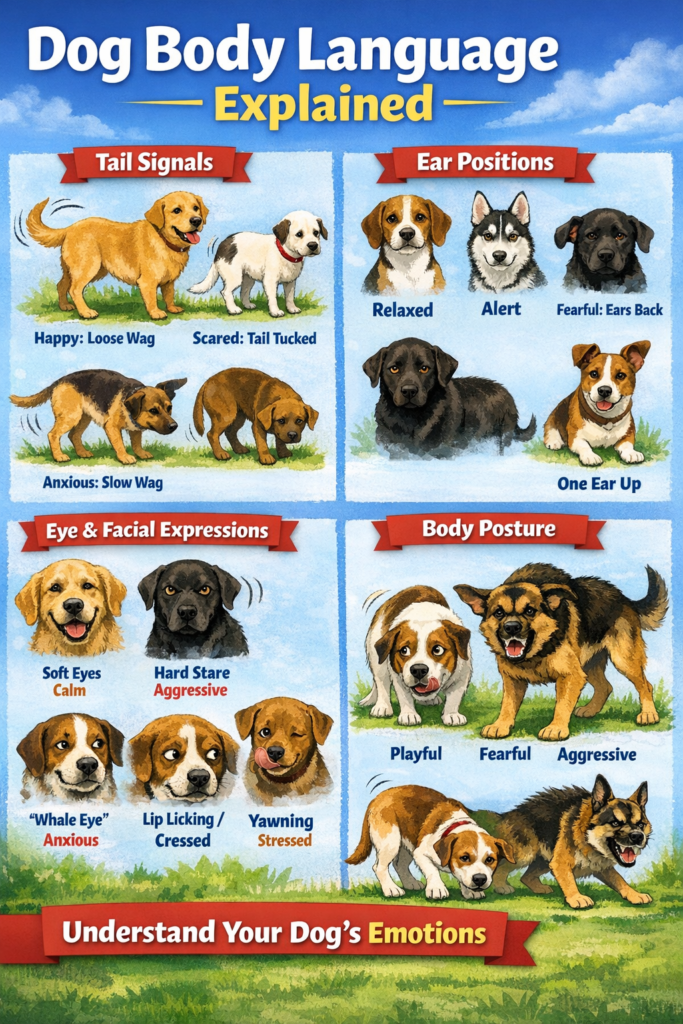
Dog Tail Language Explained
A dog’s tail is one of the most expressive parts of its body. However, tail wagging doesn’t always mean happiness.When dog body language explained correctly, owners can respond calmly, prevent fear-based reactions, and build stronger trust with their pets.
Different Tail Movements and Meanings
Loose, wide wag: Friendly, happy, relaxed
Fast, stiff wag: High arousal, tension, or stress
Slow wag: Uncertainty or insecurity
High tail position: Alert, confident, or possibly dominant
Low tail position: Nervous or unsure
Tail tucked between legs: Fear, anxiety, or submission
Important Tip: Always consider tail movement along with ear position, eyes, and posture.
Dog Ear Positions and What They Mean
Dogs move their ears to show attention, emotion, and intent. Ear shape varies by breed, so focus on changes from normal behavior.
Common Ear Signals
Relaxed ears: Calm and comfortable
Ears forward: Alert, curious, or focused
Ears pinned back: Fear, anxiety, or submission
One ear up, one down: Confusion or curiosity
Sudden changes in ear position often signal emotional shifts.
Dog Eye Contact and Facial Expressions
Eyes play a major role in dog communication.
Eye Signals Explained
Soft eyes: Relaxed, trusting, affectionate
Hard stare: Warning sign, potential aggression
Avoiding eye contact: Fear or submission
Whale eye (showing whites): Stress, anxiety, or discomfort
Facial expressions such as yawning, lip licking, and excessive blinking are often calming signals, not signs of sleepiness.
Understanding Dog Body Posture
A dog’s overall posture instantly reveals how it feels.
Relaxed Body Language
Loose muscles
Balanced weight distribution
Natural tail position
Open mouth, gentle expression
Fearful or Anxious Posture
Crouching or lowering the body
Tail tucked
Ears pinned back
Avoidance behavior
Aggressive or Defensive Posture
Stiff, tense muscles
Raised hackles (fur along the back)
Direct eye contact
Growling or snapping
Recognizing posture changes helps you act before problems escalate.

Signs of Stress and Anxiety in Dogs
Stress signals often go unnoticed until they turn into serious behavioral issues.
Common Stress Signs
Excessive panting (without heat or exercise)
Pacing or restlessness
Yawning or licking lips repeatedly
Shaking or trembling
Hiding or avoidance
Chronic stress can lead to destructive behavior, health problems, and anxiety disorders.
Playful vs Aggressive Dog Body Language
Many dog owners confuse play behavior with aggression.
Playful Signals
Play bow (front legs down, rear end up)
Loose, bouncy movements
Taking turns during play
Pausing frequently
Aggressive Signals
Stiff posture
Deep, continuous growling
Snapping or biting
No pauses or role reversals
Knowing the difference keeps playtime safe and enjoyable.
Dog Calming Signals Explained
Dogs use calming signals to reduce tension.
Common Calming Signals
Turning head away
Sniffing the ground
Yawning
Sitting or lying down suddenly
These signals mean your dog is trying to communicate discomfort or avoid conflict.
How to Respond to Dog Body Language Correctly
Responding properly builds trust and confidence.
Best Practices
Never punish warning signs
Give space when your dog shows discomfort
Use positive reinforcement
Create a safe and predictable environment
Observe patterns over time
Ignoring or punishing body language can lead to suppressed warnings and sudden reactions.
How Dog Body Language Improves Training
Understanding dog emotions improves training results.
Dogs learn faster when relaxed
Stress-free training builds confidence
Communication becomes clearer
Behavioral issues decrease naturally
Dogs that feel understood respond better to commands and social situations.
Conclusion
Understanding dog body language is essential for building a safe, trusting, and loving relationship with your dog. Dogs constantly communicate through subtle physical signals, and learning to recognize these signs helps prevent behavioral issues and strengthens your bond.
By observing your dog’s tail, ears, eyes, posture, and overall behavior, you become a more responsible and compassionate pet owner. The better you understand your dog’s body language, the happier and healthier your dog will be.With dog body language explained in a simple and practical way, every dog owner can create a safer, happier, and more confident environment for their pet.
FAQs Dog Body Language Explained
What does it mean when a dog licks its lips often?
It usually indicates stress, anxiety, or discomfort.
Is tail wagging always friendly?
No. Fast or stiff wagging may signal tension or overstimulation.
Why does my dog yawn during training?
Yawning often acts as a calming signal, not boredom.
How can I tell if my dog is afraid?
Signs include tucked tail, crouching posture, pinned ears, and avoidance.
Muntaha Farid is a passionate pet care writer specializing in dog behavior, pet health, and practical pet parenting tips. At PetNatureHub, she creates informative guides that help pet owners understand their pets’ needs, including nutrition, training, and daily care. Her mission is to make pet care simple, reliable, and accessible for every pet lover.
Pingback: Hidden Pet Dangers: Common Household Risks Every Pet Owner Must Know