
Signs of Stress in Small Pets: Hidden Warnings
Learn the most common signs of stress in small pets like hamsters, rabbits, and birds. Discover causes, symptoms, and proven ways to reduce pet stress naturally.
Signs of Stress in Small Pets
A Complete Guide for Caring & Responsible Pet Owners
Small pets such as hamsters, rabbits, guinea pigs, birds, and other pocket animals are gentle, sensitive creatures. Due to their small size and prey instincts, they often hide discomfort until stress becomes severe. One of the most common causes behind this behavior is lack of attention in pets, which directly contributes to the signs of stress in small pets going unnoticed. Understanding the Signs of Stress in Small Pets is essential for preventing serious health and behavioral problems.
Stress does not just affect mood—it can weaken immunity, shorten lifespan, and reduce overall quality of life. Many pet owners mistakenly believe small pets are “low-maintenance,” but in reality, lack of attention in pets can lead to anxiety, isolation, and visible signs of stress in small pets such as withdrawal or behavioral changes. These animals require regular interaction, mental stimulation, and careful observation to stay healthy and emotionally balanced.
This detailed guide will help you recognize stress symptoms early, understand the causes, and learn how to create a calm, safe life for your small pet.
What Is Stress in Small Pets?
Stress is a physical and emotional response to discomfort, fear, or environmental imbalance. For small pets, stress often comes from:
Loud noises
Improper handling
Unsafe cage conditions
Loneliness or boredom
Sudden environmental changes
Because small animals rely on survival instincts, they may show stress quietly rather than loudly expressing pain.
Recognizing early signs of stress in small pets can prevent illness and behavioral decline.
Common Signs of Stress in Small Pets
1. Sudden Changes in Behavior
One of the earliest signs of stress in small pets is a noticeable behavior shift.
Examples include:
Becoming aggressive or unusually shy
Refusing interaction
Freezing or hiding excessively
Avoiding eye contact
If your once-curious pet suddenly withdraws, stress is likely present.
2. Loss of Appetite or Overeating
Changes in eating habits are major stress indicators.
Refusing food or treats
Eating much less than usual
Stress eating or hoarding food
Stress affects digestion, and prolonged appetite loss can quickly become dangerous for small pets.
3. Excessive Hiding or Freezing
While hiding is natural, constant hiding is not.
Signs include:
Staying inside shelters all day
Freezing when approached
Avoiding movement
These behaviors suggest fear and environmental discomfort.
4. Repetitive or Abnormal Movements
Repetitive actions often indicate chronic stress.
Watch for:
Pacing
Bar biting
Circling
Head bobbing
These behaviors show mental distress and boredom.
5. Over-Grooming or Fur Loss
Stress grooming is common in small mammals.
Symptoms include:
Bald patches
Excessive licking
Feather plucking (in birds)
This behavior often worsens without intervention.
6. Aggression or Biting
A stressed small pet may become defensive.
Signs include:
Sudden biting
Lunging
Loud vocalizations
Aggression is often fear-based, not personality-based.
7. Changes in Sleeping Patterns
Stress disrupts rest cycles.
Sleeping more than usual
Being restless at night
Lethargy during active hours
Proper sleep is critical for small pet health.
8. Digestive Problems
Stress directly affects gut health.
Common issues:
Diarrhea
Constipation
Bloating
Digestive problems combined with other signs often point to stress.
9. Excessive Vocalization (or Silence)
Both extremes are warning signs.
Birds screaming excessively
Guinea pigs squealing frequently
Sudden silence in normally vocal pets
Vocal changes reflect emotional imbalance.
10. Weight Loss or Poor Appearance
Physical appearance often reveals stress.
Look for:
Dull fur or feathers
Weight loss
Sunken eyes
These are serious signs of stress in small pets and require immediate attention.
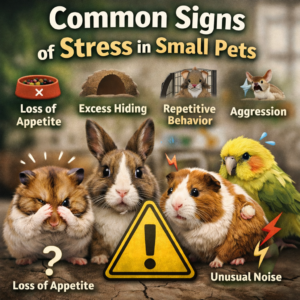
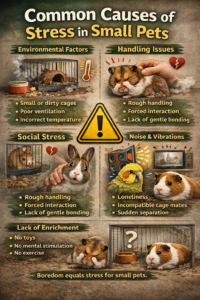
Common Causes of Stress in Small Pets
Environmental Factors
Small or dirty cages
Poor ventilation
Incorrect temperature
Harsh lighting
Handling Issues
Rough handling
Forced interaction
Lack of gentle bonding
Social Stress
Loneliness
Incompatible cage mates
Sudden separation
Noise & Vibrations
Loud music
TV noise
Children shouting
Household appliances
Lack of Enrichment
No toys
No mental stimulation
No exercise
Boredom equals stress for small pets.
How to Reduce Stress in Small Pets Naturally
1. Create a Safe & Quiet Environment
Place cages away from noise
Maintain stable temperatures
Use soft, natural bedding
2. Improve Cage Setup
Provide hiding spaces
Add tunnels and platforms
Clean regularly
A well-designed cage prevents many signs of stress in small pets.
3. Handle Gently & Consistently
Let pets approach you
Avoid sudden movements
Keep handling short
4. Offer Mental Stimulation
Rotate toys weekly
Use puzzle feeders
Encourage natural behaviors
5. Maintain a Routine
Feed at consistent times
Keep sleep cycles stable
Avoid sudden changes
6. Provide Proper Nutrition
Species-appropriate diets
Fresh water daily
Avoid harmful human foods
7. Monitor Health Regularly
Weekly weight checks
Observe behavior changes
Visit exotic vets if needed
Stress Signs by Small Pet Type
Hamsters
Bar chewing
Daytime activity
Aggressive handling response
Rabbits
Teeth grinding
Thumping
Refusing interaction
Guinea Pigs
Loud squealing
Hiding constantly
Sudden stillness
Birds
Feather plucking
Screaming
Loss of appetite
Understanding species-specific stress helps faster intervention.
When to See a Vet
Seek professional help if:
Stress lasts more than a few days
Weight loss occurs
Digestive issues persist
Self-injury appears
Stress can quickly become life-threatening for small pets.
Final Thoughts
Recognizing the signs of stress in small pets is one of the most important responsibilities of a caring pet owner. Because small animals cannot communicate verbally, they rely on us to notice subtle changes in behavior, appetite, and appearance.
By creating a calm environment, providing proper care, and responding early to stress signals, you can dramatically improve your pet’s happiness, health, and lifespan.
(FAQ) Signs of Stress in Small Pets
1. What are the most common signs of stress in small pets?
The most common signs of stress in small pets include sudden behavior changes, hiding more than usual, loss of appetite, aggression, repetitive movements, excessive grooming, and unusual vocalization. Small pets often hide discomfort, so even small changes should be taken seriously.
2. Why do small pets get stressed so easily?
Small pets are prey animals by nature, which makes them highly sensitive to their surroundings. Loud noises, frequent handling, dirty cages, lack of space, or sudden routine changes can quickly cause stress. Because of their size, even minor disturbances can feel threatening to them.
3. Can stress make small pets sick?
Yes, long-term stress can seriously harm a small pet’s health. Chronic stress weakens the immune system, causes digestive problems, leads to weight loss, and may shorten lifespan. Ignoring the signs of stress in small pets can result in severe medical issues over time.
4. Is hiding always a sign of stress in small pets?
Not always. Some hiding is normal behavior, especially for animals like hamsters and rabbits. However, constant hiding, refusal to come out, or freezing when approached can indicate fear or stress—especially if combined with appetite loss or aggression.
5. How does cage setup affect stress levels?
Cage setup plays a major role in stress. A cage that is too small, dirty, noisy, or lacking hiding spots can increase stress dramatically. A proper setup with clean bedding, tunnels, toys, and quiet placement helps prevent many signs of stress in small pets.
6. Can loneliness cause stress in small pets?
Yes, loneliness can cause stress in social animals like guinea pigs and birds. These pets often need companionship to feel secure. However, some pets like hamsters prefer living alone. Understanding your pet’s species-specific needs is essential to reduce stress.
7. Do stressed small pets become aggressive?
They can. Stress often leads to fear-based aggression. Biting, lunging, or loud warning sounds are ways small pets protect themselves when they feel unsafe. Punishment should never be used—calming the environment is the correct solution.
8. How can I reduce stress in my small pet naturally?
You can reduce stress naturally by:
Keeping the cage in a quiet, stable area
Providing hiding spaces and toys
Handling gently and consistently
Maintaining a regular feeding routine
Offering proper nutrition
These steps help reduce the signs of stress in small pets over time.
9. How long does it take for a stressed pet to recover?
Recovery time depends on the cause and severity of stress. Mild stress may improve within a few days once the environment is corrected. Chronic stress can take weeks to improve and may require veterinary support.
10. When should I take my small pet to a vet?
You should visit a vet if stress signs last more than a few days, if your pet stops eating, loses weight, has digestive problems, or shows self-harming behaviors like fur or feather loss. Early medical attention can prevent serious complications.
11. Can changes in routine stress small pets?
Yes. Sudden changes such as moving the cage, changing food, new pets, or new household members can trigger stress. Small pets thrive on routine and predictability, so changes should always be gradual.
12. Why is early detection of stress important?
Early detection of the signs of stress in small pets allows you to fix problems before they affect health. Stress is much easier to manage when caught early, leading to a happier, healthier pet.
Muntaha Farid is a passionate pet care writer specializing in dog behavior, pet health, and practical pet parenting tips. At PetNatureHub, she creates informative guides that help pet owners understand their pets’ needs, including nutrition, training, and daily care. Her mission is to make pet care simple, reliable, and accessible for every pet lover.
Pingback: Lack of Attention in Pets Causes, Signs, and Serious Health Effects