
Pet First Aid Basics: 10 Life-Saving Emergency Tips Every Pet Owner Must Know
Learn pet first aid basics with essential emergency tips, first aid kit items, and life-saving steps to protect your dog or cat in critical situations.
Pet First Aid Basics: Essential Life-Saving Tips Every Owner Must Know
Pets are not just animals they are beloved members of our families. Whether you own a playful dog or a calm indoor cat, emergencies can happen at any time. From accidental injuries to sudden illnesses, being unprepared can put your pet’s life at risk.
This is where pet first aid basics become essential. Knowing what to do in the first few minutes of an emergency can mean the difference between life and death.
In this complete guide, you’ll learn:
- Essential pet first aid skills
- How to handle emergencies
- What to include in a pet first aid kit
- Mistakes to avoid
- When to rush to a vet
What Are Pet First Aid Basics?
Pet first aid basics refer to the immediate care you provide to your pet before professional veterinary help is available.
The main goals are:
- Stabilize your pet
- Reduce pain and stress
- Prevent the condition from worsening
- Safely transport your pet to a veterinarian
Unlike humans, pets cannot tell us what’s wrong, which makes quick observation and action even more important.
Why Every Pet Owner Must Learn Pet First Aid
Many emergencies occur unexpectedly at night, during travel, or far from a clinic.
Learning pet first aid basics helps you:
- Save your pet’s life
- Stay calm during stressful situations
- Prevent complications
- Act quickly and confidently
- Reduce recovery time
Prepared pet owners are responsible pet owners.
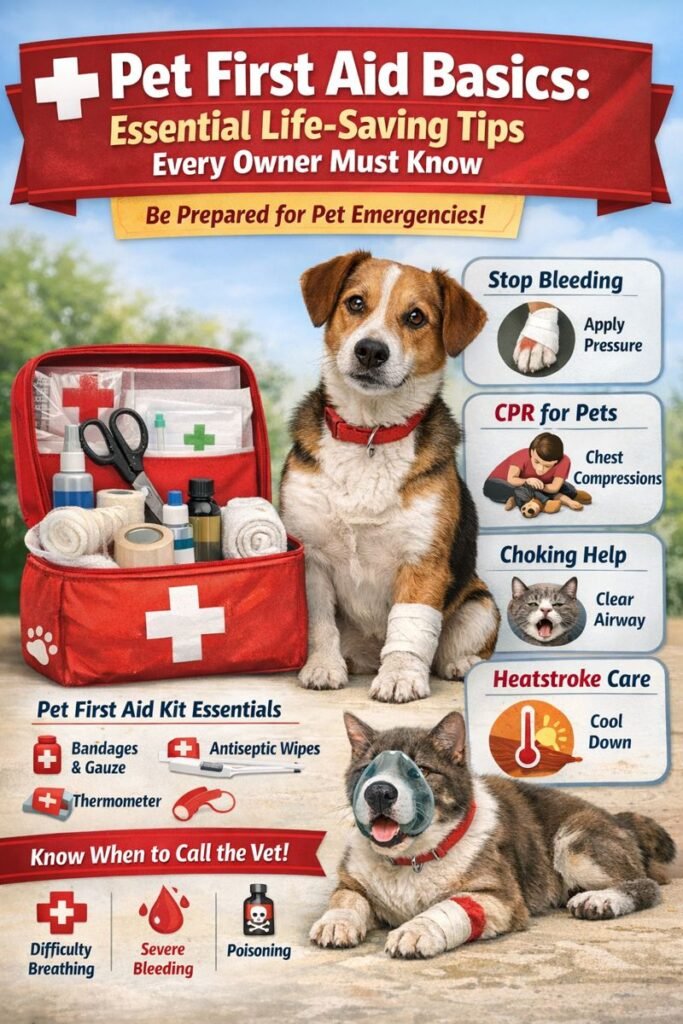
Pet First Aid Kit: Essentials Every Owner Should Have
A well-prepared pet first aid kit is a must for every home and travel bag.
Must-Have Items:
A well-stocked pet first aid kit is your first line of defense.
Must-Have Items:
- Sterile gauze pads and bandages
- Adhesive tape
- Antiseptic wipes or solution
- Hydrogen peroxide (only if advised by a vet)
- Disposable gloves
- Tweezers
- Blunt-tip scissors
- Digital thermometer
- Cotton balls and clean towels
- Muzzle (important for injured pets)
- Saline solution (for eye cleaning)
- Emergency contact numbers
Pro Tip:
Keep one kit at home and another in your car for travel emergencies.
Basic Pet First Aid Skills Every Owner Must Know
Handling Bleeding and Wounds
Cuts and injuries are among the most common pet emergencies.
What to do:
- Keep your pet calm
- Apply gentle pressure using gauze
- Clean with saline or clean water
- Bandage securely (not too tight)
Seek veterinary care if bleeding doesn’t stop within 5–10 minutes.
Choking in Dogs and Cats
Choking can quickly become fatal.
Signs include:
- Gagging
- Pawing at mouth
- Difficulty breathing
First aid steps:
- Carefully open the mouth
- Remove visible objects using tweezers
- Do NOT push objects deeper
CPR for Pets (Basic Awareness)
CPR can save your pet during cardiac arrest.
Basic steps include:
- Check breathing and pulse
- Lay pet on their side
- Perform chest compressions
- Give rescue breaths
Proper training is highly recommended before attempting CPR.
Heatstroke in Pets
Heatstroke is very common in hot climates.
Symptoms include:
- Heavy panting
- Drooling
- Weakness
- Vomiting
Immediate care:
- Move to a cool area
- Offer small amounts of water
- Use cool (not ice) towels
Shock in Pets
Shock can occur after injury or trauma.
Signs of shock:
Pale gums
Rapid breathing
Weak pulse
First aid steps:
Keep your pet warm
Lay them flat
Get emergency veterinary help immediately
Common Pet Emergencies to Be Prepared For
Understanding common emergencies improves response time:
Cuts and wounds
Broken bones
Poisoning
Burns
Allergic reactions
Seizures
Preparation saves valuable time during emergencies.
What NOT to Do in Pet First Aid
Avoid these common mistakes:
Giving human medicines to pets
Panicking or forcing restraint
Delaying veterinary care
Using alcohol on wounds
Incorrect actions can worsen your pet’s condition.
When to Contact a Veterinarian Immediately
Seek urgent veterinary care if your pet:
Is unconscious
Has difficulty breathing
Is bleeding heavily
Has seizures
Has ingested poison
Suffers severe injuries
Pet first aid is temporary and does not replace professional treatment.
Poisoning
Pets may ingest harmful substances like chocolate, chemicals, or plants.
Signs:
- Vomiting
- Seizures
- Drooling
What to do:
- Remove the source immediately
- Do NOT induce vomiting unless told by a vet
- Contact a veterinarian urgently
Burns and Scalds
Burns can occur from hot surfaces, fire, or chemicals.
First aid:
- Cool the area with clean water
- Do not apply creams or ice
- Cover with sterile dressing
Fractures and Broken Bones
Broken bones require careful handling.
Signs:
- Limping
- Swelling
- Pain
What to do:
- Keep pet still
- Use a splint if trained
- Transport carefully
Final Thoughts
Knowing pet first aid basics is an essential responsibility of every pet owner. Emergencies can happen anytime, but preparation can save lives. By learning these skills and keeping a pet first aid kit ready, you can protect your furry friend when it matters most.
Share this guide with other pet owners and help spread awareness about pet safety and emergency care.
FAQs Pet First Aid Basics
What should be included in a pet first aid kit?
A pet first aid kit should include bandages, antiseptic wipes, gloves, tweezers, thermometer, and emergency contact numbers.
Can I give human medicine to my pet?
No. Many human medicines are toxic to pets. Always consult a veterinarian.
Is pet CPR the same for dogs and cats?
No. Techniques vary depending on size and species. Proper training is advised.
How often should I check my pet first aid kit?
Every 3–6 months to ensure all supplies are up to date.
Muntaha Farid is a passionate pet care writer specializing in dog behavior, pet health, and practical pet parenting tips. At PetNatureHub, she creates informative guides that help pet owners understand their pets’ needs, including nutrition, training, and daily care. Her mission is to make pet care simple, reliable, and accessible for every pet lover.