
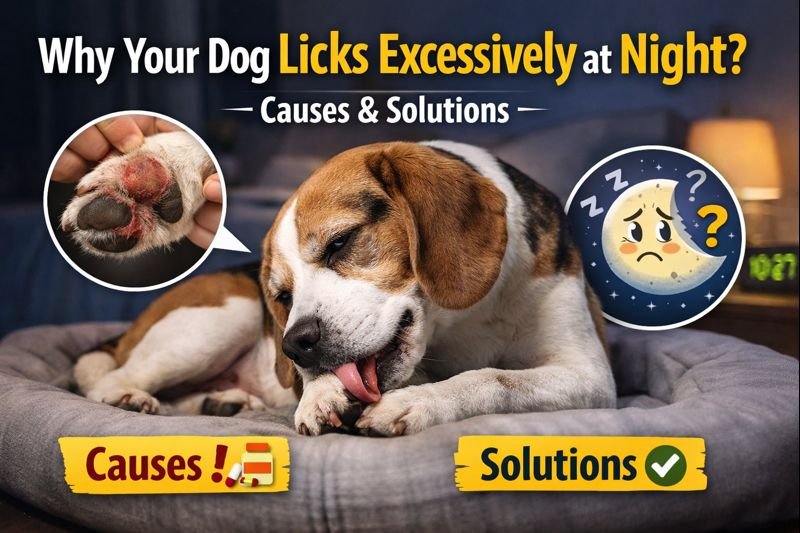
Why Your Dog Licks Excessively at Night Causes, Signs & Solutions
Why your dog licks excessively at night? Discover the causes, hidden health risks, and proven solutions to stop nighttime licking fast.
Why Your Dog Licks Excessively at Night (Causes & Solutions)
“Understanding why your dog licks excessively at night helps you address discomfort, prevent health issues, and keep your pet mentally stimulated. Dogs licking themselves occasionally is completely normal. However, when your dog starts licking excessively at night, it can worry even experienced pet owners. Night-time licking often feels more intense, repetitive, and harder to ignore especially when it disrupts your sleep.
Excessive licking at night is not random behavior. It is usually your dog’s way of communicating discomfort, stress, or an underlying health issue. Sometimes, it can even be a sign of boredom, which can be alleviated with toys for bored pets. Understanding the real causes behind this behavior is the first step toward helping your dog feel calm, comfortable, and safe.
In this guide, we’ll explore why dogs lick excessively at night, the most common medical and behavioral causes, and practical solutions you can apply immediately including ways to reduce boredom with the right toys.”
Is It Normal for Dogs to Lick at Night?
Yes occasional licking is normal. Dogs use licking as a form of:
Self-grooming
Relaxation
Emotional comfort
However, excessive licking, especially at night, is a red flag if:
It happens every night
Your dog focuses on one area
Skin becomes red, swollen, or hairless
Licking seems obsessive or compulsive
Nighttime licking is often more noticeable because dogs are less distracted and more aware of discomfort once the house becomes quiet.
Common Reasons Why Your Dog Licks Excessively at Night
1. Allergies (Most Common Cause)
Allergies are one of the leading reasons dogs lick excessively, particularly at night.
Types of allergies:
Food allergies (chicken, beef, dairy, wheat)
Environmental allergies (dust mites, pollen, mold)
Contact allergies (cleaning products, carpets)
At night, allergens like dust mites are more concentrated in bedding and carpets, triggering itching and discomfort.
Signs to watch for:
Paw licking
Belly or leg licking
Red or inflamed skin
Ear infections
Solution:
Switch to a limited-ingredient diet
Wash dog bedding weekly
Use hypoallergenic cleaning products
Consult your vet about allergy testing
2. Anxiety and Stress
Dogs often release emotional tension through repetitive behaviors. Nighttime can amplify anxiety because:
The environment is quiet
Owners are asleep
Dogs feel isolated
Common anxiety triggers include:
Separation anxiety
Changes in routine
Loud noises earlier in the day
Lack of attention or mental stimulation
Excessive licking acts as a self-soothing mechanism, similar to nail-biting in humans.
Behavioral signs:
Pacing at night
Whining or restlessness
Excessive licking of paws or legs
Solution:
Increase daytime exercise
Add mental enrichment toys
Maintain a consistent bedtime routine
Provide calming supplements (vet-approved)
3. Pain or Discomfort
Dogs instinctively hide pain, and licking is one of the few visible signs something may be wrong.
Your dog may lick:
Joints (arthritis)
Hips or legs
Abdomen (digestive discomfort)
A specific injury site
Pain often becomes more noticeable at night because the dog is no longer distracted by daily activity.
Warning signs:
Licking one specific spot
Limping or stiffness
Difficulty lying down
Sudden behavior changes
Solution:
Schedule a veterinary exam
Provide orthopedic bedding
Avoid home pain medications (dangerous for dogs)
Follow vet-recommended pain management
4. Dry Skin or Skin Infections
Dry skin, yeast infections, or bacterial infections can cause intense itching, especially at night when humidity and temperature change.
Causes include:
Over-bathing
Poor diet
Seasonal dryness
Underlying skin disease
Signs of skin issues:
Flaky skin
Bad odor
Hair loss
Red or moist patches
Solution:
Reduce bathing frequency
Use vet-approved moisturizing shampoos
Add omega-3 fatty acids to diet
Seek treatment for infections early
5. Digestive Issues or Nausea
Some dogs lick excessively due to stomach discomfort, acid reflux, or nausea. Nighttime licking may be accompanied by:
Lip smacking
Swallowing repeatedly
Restlessness
Grass eating during the day
This behavior often increases when dogs lie down after eating.
Solution:
Feed smaller meals
Avoid late-night feeding
Elevate food bowls
Consult your vet if symptoms persist
6. Boredom or Lack of Mental Stimulation
Dogs with excess energy and no mental outlet may develop repetitive nighttime behaviors, including licking.
This is common in:
Working breeds
Young dogs
Indoor dogs with limited activity
Solution:
Increase physical exercise
Add puzzle toys
Practice obedience or scent games
Rotate toys to prevent boredom
7. Compulsive Behavior (Canine OCD)
In rare cases, excessive licking becomes compulsive, similar to obsessive-compulsive disorder in humans.
This may result from:
Chronic stress
Long-term anxiety
Past trauma
Compulsive licking often causes lick granulomas thick, inflamed skin lesions.
Solution:
Behavioral training
Anxiety management
Veterinary behaviorist consultation
Medication in severe cases
Dog Licking Excessively at Night Due to Anxiety
Here’s a step-by-step approach:
Observe the Pattern
Time of night
Specific body part
Frequency
Check the Skin
Look for redness, swelling, or wounds
Improve Sleep Environment
Clean bedding
Comfortable temperature
Quiet sleeping area
Adjust Diet
High-quality food
Omega-3 supplements
Eliminate potential allergens
Reduce Anxiety
Evening walks
Calm music
Familiar bedtime routine
When Should You See a Pet?
Seek veterinary care if:
Licking lasts more than a week
Skin becomes damaged
Your dog seems in pain
Behavior worsens over time
Early diagnosis prevents chronic skin damage and emotional distress.
Final Thoughts
Excessive licking at night is your dog’s way of asking for help. Whether it’s allergies, anxiety, pain, or boredom, identifying the cause early can dramatically improve your dog’s comfort and quality of life.
By observing behavior closely and taking proactive steps, you can help your dog sleep peacefully and enjoy quieter nights yourself.“By identifying the causes of why your dog licks excessively at night, you can help your dog feel comfortable and calm.”
FAQs: Excessive Licking in Dogs at Night
Why does my dog only lick at night?
At night, dogs are less distracted, making discomfort, anxiety, or itching more noticeable.
Is paw licking at night normal?
Occasional paw licking is normal, but frequent licking may indicate allergies or stress.
Can anxiety cause excessive licking?
Yes. Anxiety is a major cause of nighttime licking and repetitive behaviors.
Should I stop my dog from licking?
Do not punish licking. Address the underlying cause instead.
Muntaha Farid is a passionate pet care writer specializing in dog behavior, pet health, and practical pet parenting tips. At PetNatureHub, she creates informative guides that help pet owners understand their pets’ needs, including nutrition, training, and daily care. Her mission is to make pet care simple, reliable, and accessible for every pet lover.
Pingback: Best Toys for Bored Pets