
Animal Welfare & Public Safety Human Solutions That Protect Animals and People
Animal Welfare & Public Safety focuses on humane animal care, responsible pet ownership, and effective policies that protect both animals and communities.
Animal welfare and public safety are deeply connected. When animals are treated humanely, communities become safer, healthier, and more compassionate. Poor animal management, neglect, or cruelty can lead to public safety risks such as animal attacks, spread of diseases, and overcrowded shelters.
Understanding the importance of Animal Welfare & Public Safety helps governments, communities, and pet owners create balanced solutions that protect both animals and people.
What Is Animal Welfare & Public Safety?
Animal welfare refers to the physical and emotional well-being of animals, including proper shelter, food, medical care, and humane treatment.
Public safety focuses on protecting people from harm, including risks caused by unmanaged or abused animals.
When animal welfare standards are ignored, public safety problems increase such as aggressive behavior, rabies outbreaks, and stray animal conflicts.
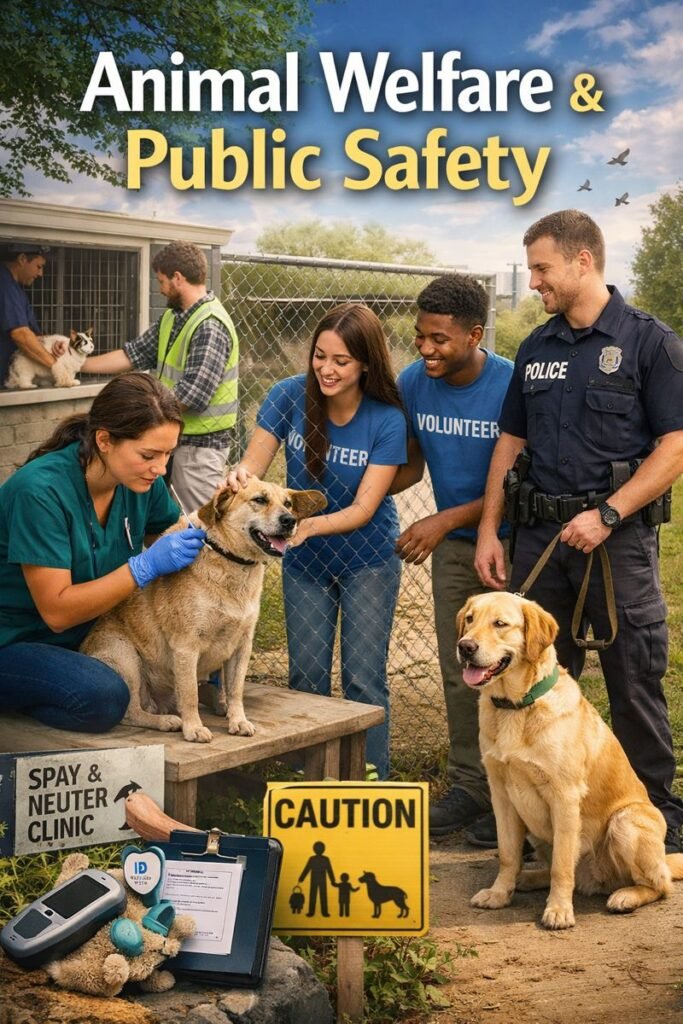
Why Animal Welfare Is Essential for Public Safety
1. Prevents Aggression and Attacks
Animals that are abused, hungry, or stressed are more likely to show aggressive behavior. Humane treatment reduces fear and violence, making public spaces safer.
2. Controls the Spread of Diseases
Vaccination, sterilization, and proper veterinary care help prevent zoonotic diseases like rabies that threaten human health.
3. Reduces Stray Animal Populations
Humane programs like spay and neuter reduce stray numbers naturally, lowering road accidents, bites, and conflicts.
4. Promotes Responsible Pet Ownership
Educating owners about care, training, and legal responsibilities ensures animals do not become a danger to the community.
Animal Welfare Laws and Public Safety Policies
Many countries are strengthening animal welfare laws to improve public safety, including:
Stricter penalties for animal cruelty
Mandatory pet registration and microchipping
Humane stray animal control programs
Regulations for breeders and pet sellers
These laws aim to prevent neglect while keeping neighborhoods safe.
Humane Stray Animal Management
Killing or forcefully removing stray animals often increases aggression and chaos. Modern animal welfare policies focus on:
Trap-Neuter-Vaccinate-Return (TNVR) programs
Building animal shelters for injured or aggressive animals
Community feeding with monitoring
Public awareness campaigns
These humane solutions protect both animals and residents.
Role of Communities in Animal Welfare & Safety
Communities play a vital role by:
Reporting cruelty or neglect
Supporting local shelters and rescue groups
Educating children about kindness toward animals
Avoiding harmful practices like poisoning or beating animals
Compassionate communities experience fewer animal-related safety issues.
How Pet Owners Can Support Public Safety
Responsible pet owners should:
Vaccinate and sterilize pets
Keep pets on leashes in public places
Provide proper training and socialization
Never abandon animals
Responsible ownership is a key pillar of animal welfare and public safety.
Technology Improving Animal Welfare & Safety
Modern tools like pet microchips, GPS trackers, and AI-based health monitoring devices help reduce lost pets, improve care, and enhance community safety.
Conclusion
Animal welfare and public safety are not opposing ideas they work best together. Humane treatment of animals leads to safer streets, healthier communities, and fewer conflicts. Governments, communities, and individuals must work collectively to create policies that protect animals while ensuring public safety.
A society that respects animals ultimately protects people too.
Animal welfare and public safety are not opposing ideas they work best together. Humane treatment of animals leads to safer streets, healthier communities, and fewer conflicts. Governments, communities, and individuals must work collectively to create policies that protect animals while ensuring public safety.
A society that respects animals ultimately protects people too.
FAQs Animal Welfare & Public Safety
Q1: How does animal welfare affect public safety?
Poor animal welfare increases aggression, disease spread, and stray populations, which directly threaten public safety.
Q2: Are humane stray animal programs effective?
Yes. Programs like sterilization and vaccination reduce aggression and control populations safely.
Q3: What laws protect animals and public safety?
Animal cruelty laws, pet registration rules, and breeding regulations protect animals and prevent safety risks.
Q4: How can individuals help animal welfare?
By adopting responsibly, supporting shelters, reporting abuse, and educating others.
Q5: Why is responsible pet ownership important?
Well-trained and cared-for pets are less likely to harm people or cause public disturbances.
Muntaha Farid is a passionate pet care writer specializing in dog behavior, pet health, and practical pet parenting tips. At PetNatureHub, she creates informative guides that help pet owners understand their pets’ needs, including nutrition, training, and daily care. Her mission is to make pet care simple, reliable, and accessible for every pet lover.