
Pet Weight Loss Guide: Safe & Effective Ways to Help Your Pet
Pet weight loss made simple. Learn safe diet plans, exercise tips, and expert advice to help dogs and cats lose weight naturally and stay healthy.
The Ultimate Guide to Helping Your Pet Lose Weight Safely and Naturally
Pet weight loss has become one of the most important topics in modern pet care. Across the world, veterinarians are reporting a steady rise in overweight and obese pets. While chubby cheeks and round bellies may look cute, excess weight can seriously harm your pet’s health, comfort, and lifespan.
Just like humans, pets gain weight when calorie intake exceeds energy use. However, pets depend entirely on their owners for food, exercise, and lifestyle choices. This means pet weight loss is not just a health goal it’s a responsibility.
In this complete guide, you’ll learn everything you need to know about pet weight loss, including causes of weight gain, health risks, safe weight loss strategies, diet plans, exercise routines, and long-term prevention tips for both dogs and cats.
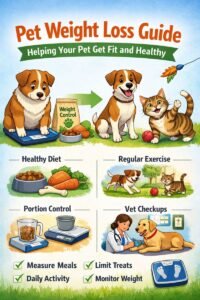
Why Pet Weight Loss Matters More Than You Think
Many pet owners underestimate the impact of extra weight. Obesity is not just about appearance it directly affects how your pet feels every day.
Health Problems Caused by Excess Weight in Pets
Overweight pets are at higher risk of developing:
Diabetes mellitus
Arthritis and joint degeneration
Heart disease
Breathing difficulties
Liver disease
High blood pressure
Reduced immunity
Shortened lifespan
Studies show that overweight pets can live up to 2 years less than pets maintained at a healthy weight. Proper pet weight loss can dramatically improve mobility, energy levels, and overall happiness.
How to Tell If Your Pet Is Overweight
Many owners believe their pet’s weight is “normal” simply because they are used to seeing them that way. A hands-on check is often more accurate than visual judgment.
Simple Ways to Check Your Pet’s Weight
Rib Test: You should be able to feel your pet’s ribs without pressing hard.
Waistline Check: When viewed from above, your pet should have a visible waist.
Abdominal Tuck: From the side, the belly should rise slightly behind the rib cage.
Common Signs Your Pet Needs Weight Loss
Difficulty walking or climbing stairs
Getting tired quickly
Heavy panting after mild activity
Reluctance to play
Lack of visible body shape
Sudden or gradual weight gain
If these signs are present, starting a pet weight loss plan is essential.
Main Causes of Weight Gain in Pets
Understanding why your pet gained weight is the first step toward safe and effective weight loss.
1. Overfeeding and Portion Control Issues
Many pet owners unintentionally overfeed. Measuring cups are often inaccurate, and portion sizes are rarely adjusted as pets age.
2. Too Many Treats
Treats add calories quickly, especially human food like bread, rice, cheese, or sweets. Even healthy treats can contribute to weight gain if given excessively.
3. Poor Quality Pet Food
Low-quality pet food contains fillers, excess carbohydrates, and unhealthy fats that promote weight gain while offering little nutrition.
4. Lack of Physical Activity
Indoor pets, apartment living, busy routines, and screen-time lifestyles reduce daily movement.
5. Spaying, Neutering, and Aging
Hormonal changes and slower metabolism can cause weight gain if diet and activity are not adjusted.
6. Medical Conditions
Hypothyroidism, hormonal imbalances, and joint pain may contribute to obesity and should be ruled out by a veterinarian.
Safe and Effective Pet Weight Loss Strategies
Pet weight loss should never be rushed. Slow, steady progress is safer and more sustainable.
1. Portion Control Is the Foundation
Measure every meal using a digital scale or proper measuring cup. Avoid free feeding, especially for indoor pets.
2. Switch to Weight Management Pet Food
Weight loss pet food is:
Lower in calories
Higher in protein
Rich in fiber for fullness
Balanced with essential nutrients
Always transition food gradually over 7–10 days.
3. Reduce Treat Intake
Treats should make up less than 10% of daily calories. Replace high-calorie treats with:
Carrot slices (dogs)
Cucumber
Small portions of boiled chicken (no seasoning)
4. Establish a Feeding Schedule
Scheduled meals help regulate metabolism and prevent boredom eating.
5. Increase Daily Physical Activity
Exercise burns calories and improves mental health.
Pet Weight Loss for Dogs
Dog weight loss is generally easier because dogs enjoy movement and structured routines.
Best Exercises for Dog Weight Loss
Daily brisk walks
Fetch games
Tug-of-war
Agility training
Swimming (excellent for joint health)
Start with short sessions and gradually increase duration.
How Often Should Dogs Exercise?
Small dogs: 30–45 minutes/day
Medium dogs: 45–60 minutes/day
Large dogs: 60–90 minutes/day
Always consider breed, age, and health conditions.
Pet Weight Loss for Cats
Cat weight loss requires extra caution. Rapid weight loss in cats can lead to fatty liver disease, which can be life-threatening.
Safe Weight Loss Tips for Cats
Feed measured meals, not free feeding
Use puzzle feeders
Encourage 3–5 short play sessions daily
Use interactive toys like feather wands or laser pointers
Never starve your cat. Weight loss must be gradual and controlled.
How Fast Should Pets Lose Weight?
Healthy pet weight loss follows specific guidelines:
Dogs: 1–2% of body weight per week
Cats: 0.5–1% of body weight per week
Faster weight loss increases the risk of muscle loss and organ damage.
Sample Pet Weight Loss Feeding Plan (General)
Always consult your veterinarian before changing diet.
Dogs
Morning: Measured weight-loss kibble
Evening: Same portion + vegetables
Treats: Healthy low-calorie options only
Cats
Multiple small meals
High-protein, low-carb wet food
No sudden food restriction
The Role of Mental Health in Pet Weight Loss
Pet weight loss is not just physical it’s emotional too. Pets may eat out of boredom, anxiety, or lack of stimulation.
Improve Mental Well-Being By:
Daily play sessions
Training exercises
Environmental enrichment
Interactive toys
A mentally stimulated pet is less likely to overeat.
When to See a Veterinarian for Pet Weight Loss
Seek professional help if:
Weight gain is sudden or extreme
Weight doesn’t decrease after consistent effort
Your pet shows pain or breathing issues
You suspect an underlying illness
Veterinarians can design a customized pet weight loss plan.
Maintaining a Healthy Weight After Weight Loss
Weight maintenance is just as important as weight loss.
Long-Term Weight Control Tips
Continue portion control
Adjust food as your pet ages
Weigh your pet monthly
Keep daily activity consistent
Avoid emotional feeding
Pet Weight Loss Is an Act of Love
Pet weight loss is not about restricting food it’s about giving your pet a longer, healthier, and happier life. With patience, consistency, and proper care, your pet can safely reach and maintain a healthy weight.
A healthy pet moves better, plays more, and enjoys life without pain. By committing to responsible pet weight loss, you’re investing in years of companionship, joy, and unconditional love.
Frequently Asked Questions (FAQs) About Pet Weight Loss
1. What is the best way to help my pet lose weight?
The best way to support pet weight loss is by combining portion control, a balanced weight-management diet, and regular exercise. Avoid overfeeding, reduce treats, and follow a consistent feeding and activity routine. Always aim for slow, healthy weight loss.
2. How do I know if my pet is overweight?
Your pet may be overweight if you can’t easily feel their ribs, they lack a visible waistline, or they get tired quickly during normal activity. Difficulty walking, heavy breathing, and reduced playfulness are also common signs that your pet may need weight loss.
3. How fast should pets lose weight safely?
Safe pet weight loss should be gradual. Dogs can safely lose about 1–2% of their body weight per week, while cats should lose no more than 0.5–1% per week. Rapid weight loss can be harmful, especially for cats.
4. Can overweight pets live a normal life?
Overweight pets can live normal lives, but their health and lifespan may be reduced. Obesity increases the risk of diabetes, joint problems, heart disease, and breathing issues. Proper pet weight loss can significantly improve quality of life and longevity.
5. What foods are best for pet weight loss?
High-protein, low-fat, and fiber-rich foods are ideal for pet weight loss. Weight-management pet food helps control calories while keeping pets full. Avoid table scraps and foods high in carbohydrates or unhealthy fats.
6. Is exercise important for pet weight loss?
Yes, exercise is essential for pet weight loss. Daily physical activity helps burn calories, strengthen muscles, and improve mental health. Dogs benefit from walks and playtime, while cats need short, interactive play sessions.
7. Are treats allowed during pet weight loss?
Treats can be given in moderation. They should make up less than 10% of your pet’s daily calories. Choose low-calorie treats or healthy alternatives such as vegetables for dogs or small protein-based treats for cats.
8. Can indoor pets lose weight?
Yes, indoor pets can lose weight with proper diet control and mental stimulation. Interactive toys, puzzle feeders, and scheduled play sessions help indoor pets stay active and support healthy pet weight loss.
9. When should I see a veterinarian for pet weight loss?
You should consult a veterinarian if your pet gains weight suddenly, struggles to lose weight despite effort, or shows signs of pain, fatigue, or breathing difficulty. A vet can rule out medical conditions and create a safe weight loss plan.
10. How can I prevent my pet from gaining weight again?
To prevent weight regain, maintain portion control, keep your pet active, limit treats, and monitor weight regularly. Consistency in feeding and exercise is the key to long-term pet weight management.
Muntaha Farid is a passionate pet care writer specializing in dog behavior, pet health, and practical pet parenting tips. At PetNatureHub, she creates informative guides that help pet owners understand their pets’ needs, including nutrition, training, and daily care. Her mission is to make pet care simple, reliable, and accessible for every pet lover.
Pingback: Critical Fatty Liver Disease in Pets: Symptoms, Causes & Treatment