
Types of Fatty Liver in Pets: Causes, Symptoms, and Treatment
Learn about the types of fatty liver in pets, including dogs and cats, their causes, symptoms, and effective treatment options to improve your pet’s liver health naturally.
Fatty liver in pets is a serious condition that occurs when excess fat builds up in the liver cells. Just like in humans, it can affect both dogs and cats, though cats are more commonly diagnosed with a severe form called Hepatic Lipidosis. Understanding the types of fatty liver in pets is essential for pet owners to provide timely care, prevent complications, and support overall health.
This article will cover:
Types of fatty liver in pets
Causes and risk factors
Symptoms to watch for
Diagnosis and treatment
Dietary and lifestyle strategies to help your pet
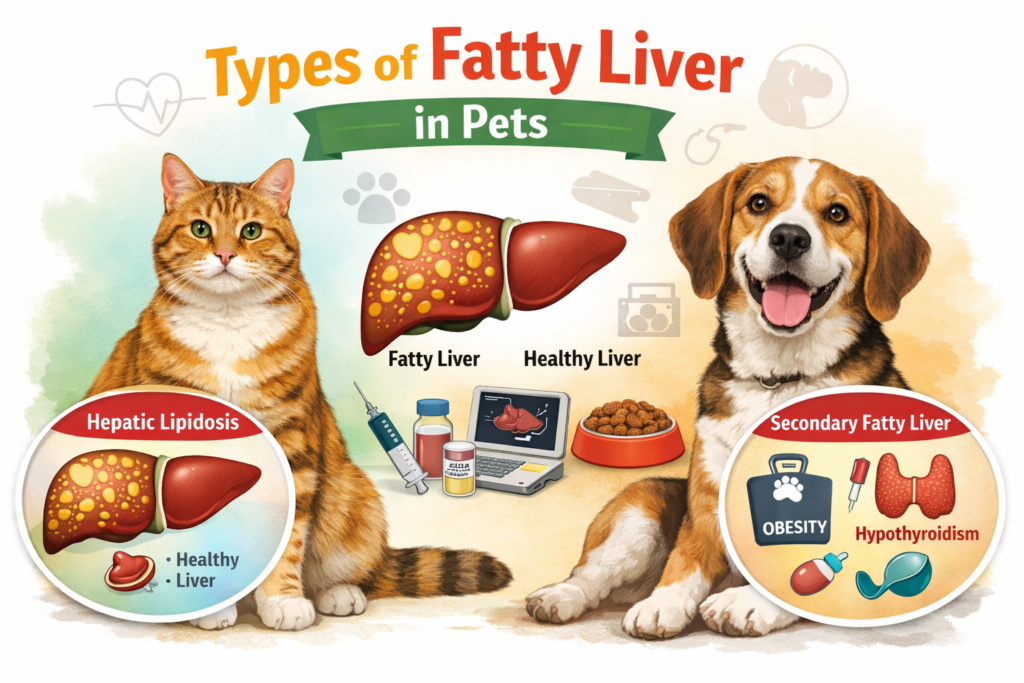
What is Fatty Liver in Pets?
Fatty liver, medically called hepatic steatosis, occurs when a pet’s liver stores too much fat. A healthy liver contains some fat, but when fat exceeds 5–10% of liver weight, it can cause liver dysfunction.
Pets, especially cats, can develop fatty liver rapidly if they stop eating due to stress, illness, or obesity. Dogs can also develop fatty liver, usually secondary to other health problems like diabetes, obesity, or hypothyroidism.
There are two main types of fatty liver in pets:
Primary Fatty Liver (Idiopathic / Hepatic Lipidosis) – Most common in cats
Secondary Fatty Liver – Often related to other diseases or conditions
1. Primary Fatty Liver (Hepatic Lipidosis)
Causes of Primary Fatty Liver in Cats
Primary fatty liver, also called Hepatic Lipidosis, is common in overweight cats that suddenly stop eating. The liver begins to convert stored fat into energy, but if the process is too fast, fat accumulates in liver cells, leading to liver failure.
Key triggers include:
Sudden food restriction or anorexia
Stress (moving homes, new pets, surgery)
Obesity or rapid weight loss
Illness or dental problems that make eating difficult
Symptoms of Hepatic Lipidosis
Symptoms often develop rapidly:
Loss of appetite
Weight loss
Vomiting
Lethargy and weakness
Yellowing of gums, eyes, and skin (jaundice)
Drooling or difficulty swallowing
If untreated, hepatic lipidosis can be fatal within weeks.
Diagnosis
Veterinarians may use:
Blood tests showing elevated liver enzymes
Ultrasound to detect fat in the liver
Liver biopsy in severe or unclear cases
Treatment
Immediate nutritional support is critical. Feeding tubes are often used if cats refuse to eat.
Fluid therapy to correct dehydration and electrolyte imbalance
Treat underlying conditions that caused anorexia
Gradual reintroduction of a high-protein, low-fat diet
2. Secondary Fatty Liver in Pets
Causes of Secondary Fatty Liver
Secondary fatty liver occurs in pets due to another disease or condition that affects liver metabolism. This is more common in dogs but can also occur in cats.
Common causes include:
Obesity and sedentary lifestyle
Diabetes mellitus
Hypothyroidism
Pancreatitis or other metabolic disorders
Chronic kidney disease or infections
Symptoms
Secondary fatty liver may progress slowly and include:
Mild lethargy
Decreased appetite
Vomiting
Diarrhea or constipation
Weight fluctuations
Behavioral changes (irritability, depression)
Symptoms Common to All Types of Fatty Liver in Pets
Regardless of the type, certain signs can indicate liver stress:
Fatigue or unusual tiredness
Vomiting or nausea
Loss of appetite or food refusal
Weight loss or poor coat condition
Yellowing of eyes, gums, or skin
Abdominal swelling in advanced cases
Complications of Untreated Fatty Liver in Pets
If left untreated, fatty liver in pets can lead to:
Liver failure – life-threatening without treatment
Secondary infections due to weakened immunity
Chronic illness affecting kidney, heart, or pancreas
Sudden death in severe hepatic lipidosis in cats
Early detection and treatment are critical for survival, especially in cats.
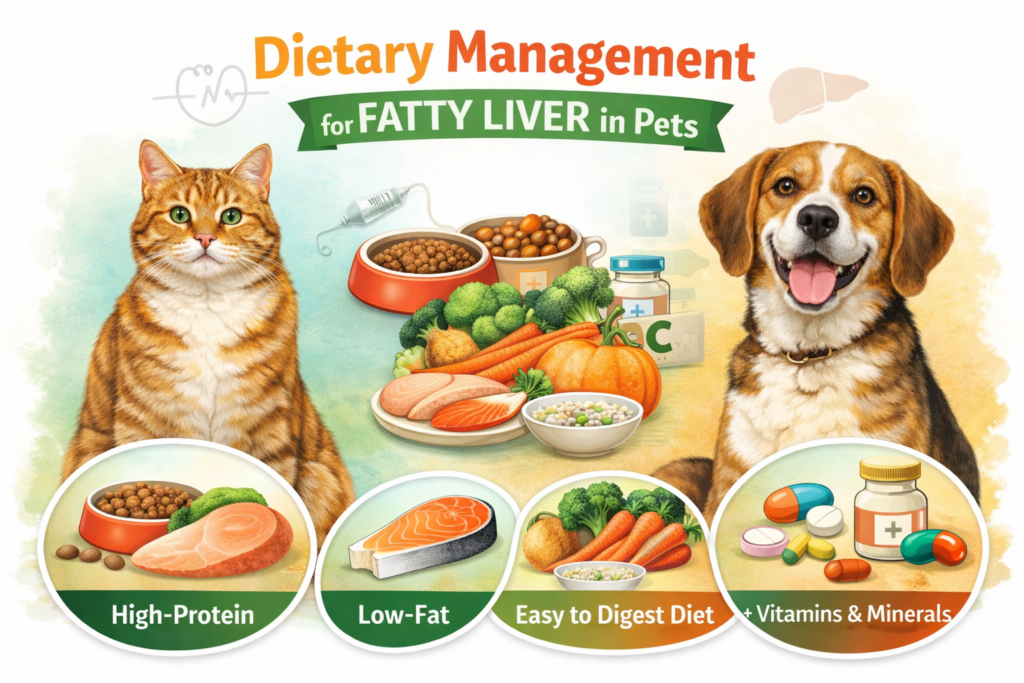
Dietary Management for Fatty Liver in Pets
Cats
Gradual refeeding with high-protein, low-fat diet
Use appetite stimulants if recommended by a vet
Offer small, frequent meals to encourage eating
Avoid sudden fasting or drastic diet changes
Dogs
Balanced, low-fat diet with high-quality protein
Include fiber-rich foods to support digestion
Maintain a healthy body weight to reduce liver stress
Avoid table scraps or fatty treats
Lifestyle and Home Care
Ensure your pet eats regularly and maintains a healthy weight
Reduce stress in cats by providing quiet, safe spaces
Encourage exercise in dogs to prevent obesity
Regular veterinary check-ups to monitor liver function
Medical Treatments
Liver supplements may be prescribed to support function
Medications to manage underlying conditions (diabetes, hypothyroidism)
Fluid therapy for dehydration and electrolyte balance
Hospitalization for severe cases, especially in cats with hepatic lipidosis
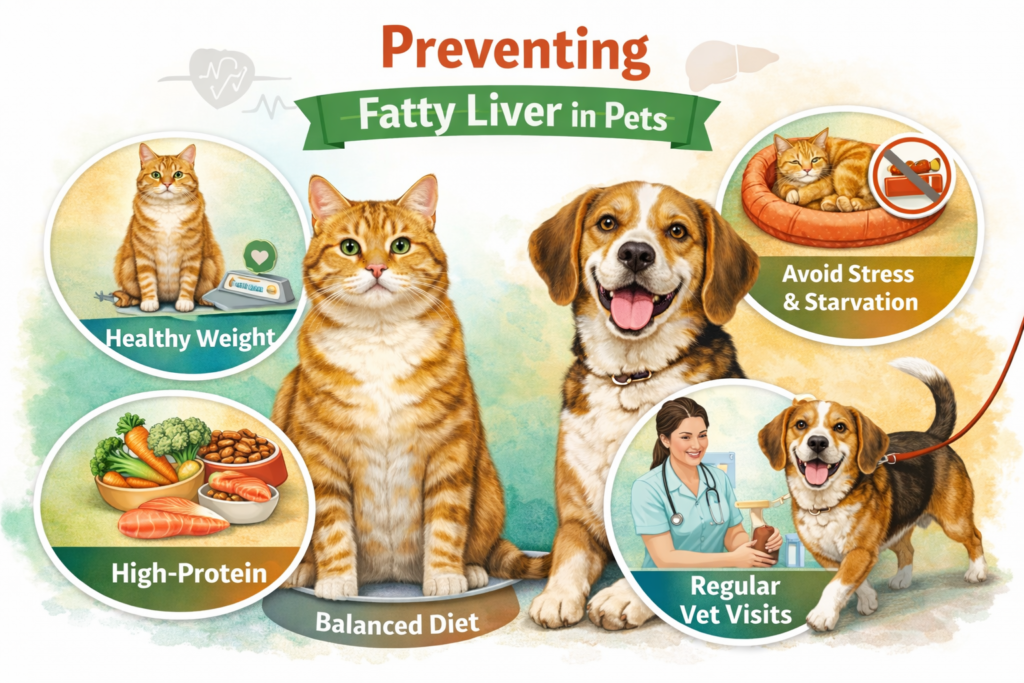
Preventing Fatty Liver in Pets
Maintain a healthy weight
Provide a balanced, high-quality diet
Avoid sudden fasting or starvation
Ensure pets eat daily, especially cats prone to anorexia
Treat underlying illnesses promptly
Schedule regular vet visits and liver function monitoring
FAQ (Frequently Asked Questions)
Q1: What is fatty liver in pets?
Fatty liver in pets, also called hepatic steatosis, occurs when excess fat accumulates in the liver cells. This can interfere with liver function and, if untreated, can lead to serious complications. Cats are especially prone to primary fatty liver, known as hepatic lipidosis, while dogs often develop secondary fatty liver due to obesity or metabolic disorders like diabetes.
Q2: What are the types of fatty liver in pets?
There are two main types:
Primary Fatty Liver (Hepatic Lipidosis): Common in overweight cats that suddenly stop eating. The liver accumulates fat rapidly, which can lead to liver failure.
Secondary Fatty Liver: More common in dogs and sometimes cats, caused by underlying health issues like diabetes, hypothyroidism, pancreatitis, obesity, or chronic kidney disease.
Q3: What causes fatty liver in pets?
Causes vary depending on the type:
Primary Fatty Liver in cats: Triggered by sudden fasting, stress, obesity, illness, or dental problems.
Secondary Fatty Liver in dogs or cats: Often linked to obesity, metabolic diseases, hormonal disorders, poor diet, or lack of exercise.
Rapid weight loss or anorexia is a major factor in cats, while chronic health conditions usually trigger fatty liver in dogs.
4: What are the symptoms of fatty liver in pets?
Symptoms may be subtle at first but worsen as the condition progresses:
Loss of appetite or refusal to eat
Lethargy and weakness
Vomiting or nausea
Weight loss or sudden changes in body condition
Jaundice (yellowing of gums, eyes, or skin)
Drooling, difficulty swallowing, or behavioral changes
In advanced cases, pets may experience abdominal swelling, dehydration, or organ failure.
Q5: How is fatty liver diagnosed in pets?
Veterinarians diagnose fatty liver using:
Blood tests to check liver enzymes (ALT, AST, ALP)
Ultrasound or imaging to detect fat accumulation in the liver
Liver biopsy in severe cases to assess liver health and inflammation
Early diagnosis is key, especially in cats, as hepatic lipidosis can progress rapidly.
Q6: Can fatty liver be treated or reversed in pets?
Yes, especially if detected early:
Nutritional support is critical; cats may need feeding tubes if they refuse to eat.
Dietary management with high-protein, low-fat foods for both cats and dogs.
Treatment of underlying conditions like diabetes, hypothyroidism, or pancreatitis.
Fluids and vitamins may be given to correct dehydration and support liver function.
With proper care, pets can recover fully, though advanced cases require intensive veterinary treatment.
Q7: How can I prevent fatty liver in my pet?
Preventive measures include:
Maintaining a healthy body weight
Feeding a balanced diet and avoiding high-fat foods
Encouraging regular exercise, especially for dogs
Ensuring cats eat daily and avoid sudden fasting
Regular vet check-ups to monitor liver function and overall health
Early detection and proper care are the best ways to prevent fatty liver and its complications.
Q8: Is fatty liver fatal in pets?
If left untreated, fatty liver can be life-threatening, particularly in cats with hepatic lipidosis. Dogs with secondary fatty liver usually have better outcomes if the underlying condition is treated. Timely veterinary intervention significantly improves survival and recovery.
Muntaha Farid is a passionate pet care writer specializing in dog behavior, pet health, and practical pet parenting tips. At PetNatureHub, she creates informative guides that help pet owners understand their pets’ needs, including nutrition, training, and daily care. Her mission is to make pet care simple, reliable, and accessible for every pet lover.