
Ultimate Dog Health & Wellness Guide 2026 – Nutrition, Care & Common Issues
Discover the complete dog health & wellness guide for 2026 including nutrition, exercise, dental care, common health issues, grooming, mental wellness, and preventive care tips for a longer, healthier life.
Dog Health & Wellness: Complete Guide for 2026 (Nutrition, Care & Prevention)
Dogs are more than pets they are family. Just like humans, dogs need proper nutrition, regular checkups, mental stimulation, preventive care, and a clean environment to live long, healthy lives. In today’s world, dog health & wellness has become a top priority for responsible pet owners, especially as more people adopt dogs and learn about their physical and emotional needs.
In this complete guide, we’ll explore every important aspect of dog health including nutrition, common health issues, exercise, mental health, grooming, supplements, senior care, and preventive lifestyle habits to ensure your furry friend lives a happier and healthier life.
Let’s begin!
1. Importance of Dog Health & Wellness
Dog health and wellness doesn’t only mean treating illness it means preventing disease before it starts and providing a balanced lifestyle that enhances longevity, mobility, emotional stability, and quality of life.
A well-maintained wellness routine:
Reduces vet bills
Prevents chronic diseases
Improves energy & mobility
Enhances mood & behavior
Increases lifespan
Every owner can take small steps daily that have big long-term benefits for their dog.
2. Dog Nutrition: Foundation of Health
Just like humans, dogs need a balanced diet that includes:
Proteins muscle development & repair
Healthy fats energy & coat health
Carbohydrates digestion & metabolism
Vitamins & minerals cellular and immune function
Water hydration and temperature regulation
Choosing the Right Dog Food
There are three main feeding styles:
Kibble (Dry Food) convenient, long shelf-life, affordable
Wet Food (Canned) digestible, tasty, hydrating
Raw / Fresh Diets biologically appropriate, nutrient-rich
Some owners combine multiple feeding styles for balanced nutrition.
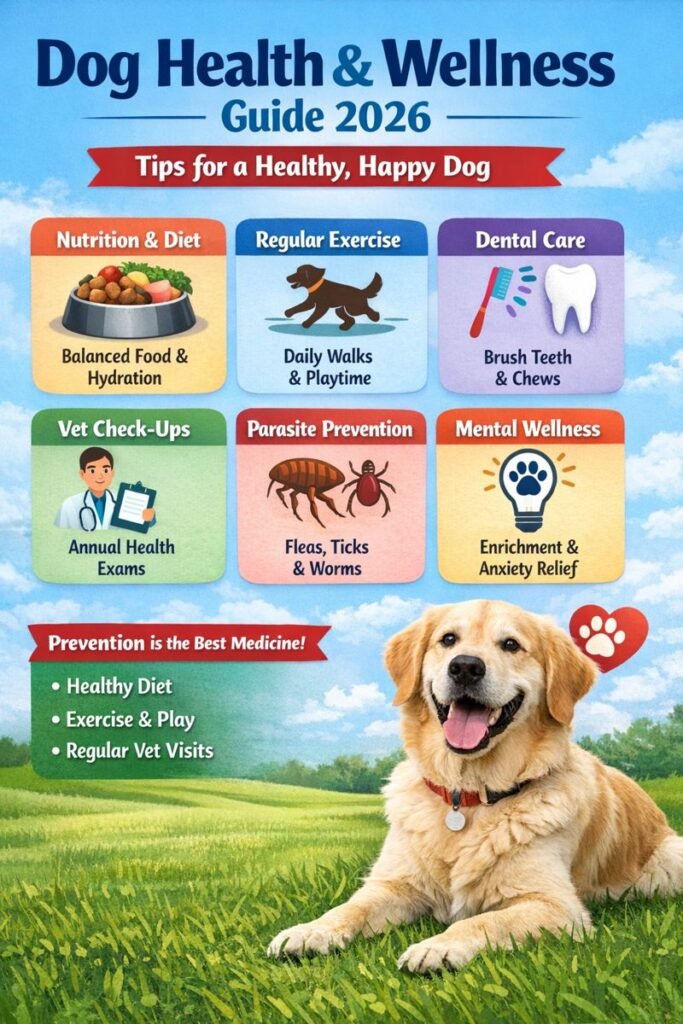
Breed & Age-Based Nutrition
Different dogs require different nutrition depending on:
Age (puppy, adult, senior)
Size (small vs large breeds)
Activity level
Health conditions
For example:
Puppies need higher protein & DHA for development
Adult dogs need balanced macros
Senior dogs need joint support & lower calories
Special Diets Based on Health Conditions
Many dogs today face dietary sensitivities such as:
Allergies
Skin problems
Sensitive stomach
Kidney issues
Diabetes
Obesity
In such cases, vets recommend:
Hypoallergenic formulas
Grain-free options (when appropriate)
Limited-ingredient diets (LID)
Veterinary prescription diets
3. Dental Health: Often Ignored but Critical
Dental disease is one of the most common health issues in dogs, especially small breeds. Poor dental hygiene leads to:
Bad breath
Gum disease
Tooth loss
Heart, liver, and kidney problems due to bacteria spread
How to Maintain Dog Dental Health
Brush teeth 3–4 times per week
Use dog dental chews
Provide chew toys for plaque removal
Schedule annual dental cleanings
If your dog has bad breath or yellow teeth, it’s time for a dental check-up.
4. Exercise & Physical Wellness
Exercise is non-negotiable for dogs. It helps with:
Weight control
Joint mobility
Digestive health
Mental stimulation
Behavioral improvement
How Much Exercise Does a Dog Need?
High-energy breeds (Huskies, Border Collies) 1.5–2 hours/day
Medium breeds (Beagles, Labs) 1 hour/day
Low-energy breeds (Bulldogs, Pugs) 20–40 minutes/day
Senior dogs light walks + joint-friendly play
Types of Activities
Walking
Fetching
Agility training
Swimming
Hiking
Treadmill training
Interactive toys
A tired dog is a happy and well-behaved dog!
5. Mental Health & Emotional Wellness
Dogs experience emotions like stress, anxiety, and boredom. When ignored, this leads to:
Destructive behavior
Excessive barking
Separation anxiety
Depression
Obsessive habits (tail chasing, licking)
Signs of Dog Anxiety
Pacing
Panting when not hot
Whining or crying
Hiding
Shaking
Chewing furniture
Barking excessively
How to Improve Emotional Wellness
Provide daily enrichment (puzzle toys, sniffing games)
Create a safe home environment
Avoid long isolation periods
Practice training for confidence
Use calming supplements (if needed)
Mental and emotional health is just as important as physical health.
6. Grooming & Skin Care
Dog grooming is a wellness activity not just cosmetic.
Grooming helps with:
Skin health
Temperature control
Shedding management
Parasite detection
Ear and paw hygiene
Essential Grooming Tasks
Brushing coat (daily/weekly depending on breed)
Bathing every 4–6 weeks
Nail trimming every 3–4 weeks
Ear cleaning to prevent infections
Paw pad inspection
Anal gland care (when needed)
Skin allergies, fleas, ticks, and dry skin are common grooming helps detect problems early.
7. Parasite Prevention
Parasites can cause life-threatening conditions.
Common parasites include:
Fleas
Ticks
Mites
Mosquitoes (heartworm risk)
Intestinal worms (roundworms, tapeworms)
Prevention Tips
Monthly flea & tick treatments
Deworming every 3–6 months
Keep bedding clean
Avoid tall grass during tick season
Use vet-approved parasite preventives
Prevention is much cheaper and safer than treatment.
8. Routine Veterinary Care
Regular vet visits catch diseases before they become serious.
Recommended Vet Care Schedule
Puppies (up to 1 year): Every 3–4 months
Adults (1–7 years): Once a year
Seniors (7+ years): Twice a year
Core Vaccinations Include
Parvovirus
Distemper
Rabies
Adenovirus
Leptospirosis (region-dependent)
Regular Tests Should Include
Blood tests
Stool tests for parasites
Dental evaluations
Heart and lung assessment
Weight & body condition scoring
Annual checkups save lives by detecting issues early.
9. Supplements for Better Wellness
Not every dog needs supplements — but they can help in many cases.
Popular supplements include:
Omega-3 (skin & coat)
Glucosamine + Chondroitin (joint mobility)
Probiotics (digestion & immunity)
Multivitamins
CBD oils (anxiety relief, pain management)
Always consult a vet before starting supplements.
10. Senior Dog Wellness
As dogs age, they require more care.
Common Senior Issues
Arthritis and joint pain
Hearing or vision loss
Heart disease
Dental decay
Weight gain or muscle loss
Cognitive dysfunction (dog dementia)
How to Improve Senior Dog Health
Provide orthopedic dog beds
Add joint supplements
Feed senior-specific diets
Use ramps for mobility
Adjust exercise intensity
Schedule more frequent vet visits
Senior dogs need comfort, patience, and special care.
11. Toxic Foods & Household Dangers
Many common foods are toxic to dogs including:
Chocolate
Grapes & raisins
Onions & garlic
Alcohol
Xylitol (sweetener)
Caffeine
Macadamia nuts
Other hazards include:
Cleaning chemicals
Rat poison
Certain plants (lilies, tulips, sago palm)
If you suspect poisoning:
Contact a vet immediately
12. Creating a Healthy Home Environment
A healthy environment reduces stress and accidents.
Tips for a dog-friendly home:
Keep harmful items out of reach
Provide cozy resting areas
Use non-toxic cleaning products
Maintain a stable daily routine
Ensure proper ventilation and temperature
Environmental wellness = comfort + safety.
13. Training as Health Support
Training isn’t just obedience it improves mental health and bonding.
Training benefits:
Reduces anxiety
Builds confidence
Improves communication
Prevents behavior problemsKey commands every dog should know:
Sit
Stay
Come
Drop it
Leave it
Heel
Positive reinforcement training is the healthiest method reward good behavior instead of punishing bad behavior.
Conclusion: Putting It All Together
Dog health & wellness is about balance — nutrition, exercise, hygiene, mental stimulation, and regular medical care. When a dog receives proper wellness support, they become:
Happier
More confident
Less stressed
Physically strong
Emotionally stable
Longer lived
Even small daily improvements — like better diet choices, more enrichment, or regular dental care — can significantly extend your dog’s lifespan and quality of life.
Remember, a healthy dog is not only physically active but emotionally secure, mentally stimulated, well-fed, and loved.
FAQs about Dog Health & Wellness
1. What does Dog Health & Wellness mean?
Dog Health & Wellness refers to a dog’s overall physical, mental, and nutritional well-being. It includes proper veterinary care, balanced nutrition, regular exercise, mental enrichment, grooming, disease prevention, and a safe living environment.
2. How often should I take my dog for a vet check-up?
Most vets recommend one check-up per year for healthy adult dogs. Puppies and senior dogs may require more frequent visits to support their Dog Health & Wellness routine.
3. What food is best for Dog Health & Wellness?
The best food depends on your dog’s age, breed, lifestyle, and allergies. High-quality dog food with balanced protein, fats, and essential vitamins supports long-term Dog Health & Wellness.
4. How can I tell if my dog is overweight?
You can check body condition by feeling your dog’s ribs (without pressing hard) and looking for a defined waist. Overweight dogs risk heart disease, joint pain, and reduced Dog Health & Wellness.
5. How much exercise does my dog need daily?
Most dogs need at least 30–60 minutes of physical activity per day. Exercise supports heart health, weight control, and overall Dog Health & Wellness.
6. What vaccines are important for Dog Health & Wellness?
Core vaccines include rabies, distemper, parvo, and adenovirus. Non-core vaccines may be recommended based on lifestyle. Vaccinations are essential for long-term Dog Health & Wellness.
7. Do dogs need mental stimulation for Dog Health & Wellness?
Yes! Mental enrichment (like puzzle toys, training, and play) helps reduce stress, prevents behavioral issues, and supports emotional Dog Health & Wellness.
8. How can I maintain my dog’s dental health?
Brush your dog’s teeth, provide dental treats, and schedule professional cleanings. Dental care prevents infections and improves overall Dog Health & Wellness.
9. What common health problems affect dogs?
Some common issues include allergies, obesity, dental disease, arthritis, ear infections, and digestive problems. Preventive care supports better Dog Health & Wellness.
10. How do I improve my dog’s lifespan?
Balanced nutrition, exercise, preventive vet care, weight control, vaccinations, grooming, and mental stimulation all help improve longevity and Dog Health & Wellness.
Muntaha Farid is a passionate pet care writer specializing in dog behavior, pet health, and practical pet parenting tips. At PetNatureHub, she creates informative guides that help pet owners understand their pets’ needs, including nutrition, training, and daily care. Her mission is to make pet care simple, reliable, and accessible for every pet lover.