
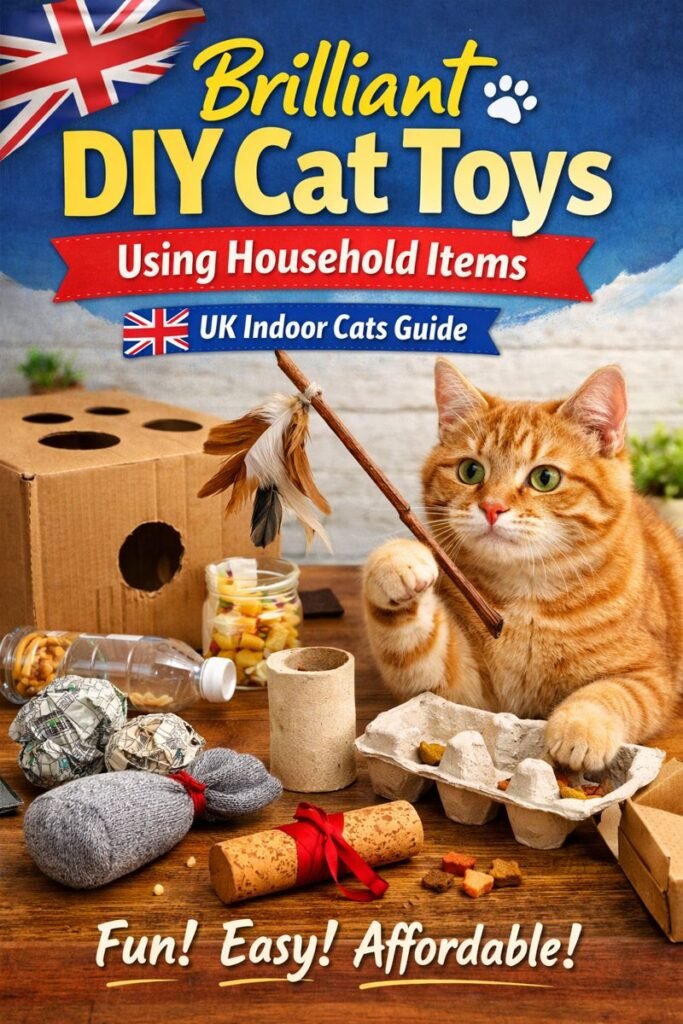
Brilliant DIY Cat Toys Using Household Items UK Indoor Cats Guide
Discover DIY cat toys made using everyday UK household items. Affordable, safe, and enrichment-focused ideas for indoor cats. Step-by-step guide for cat owners in the UK.
DIY Cat Toys Using UK Household Items A Complete Guide for Cat Owners
Cats are intelligent, curious, and instinct-driven animals. Whether you have an indoor cat in a London flat or a semi-outdoor cat in Manchester, one thing remains constant: cats need enrichment and stimulation to stay healthy. Playtime is not only fun it promotes physical fitness, relieves stress, prevents destructive behaviors, and strengthens the bond between cat and owner.
However, modern cat toys from pet stores can be expensive, wear out quickly, or may not always interest every cat. The good news? It is surprisingly easy to make DIY cat toys at home using simple UK household items that are affordable, safe, and environmentally friendly. In this professional guide, we’ll explore the benefits of DIY toys, suitable materials found in UK homes, step-by-step toy ideas, safety considerations, cost comparison, enrichment tips, and expert FAQs.
This article is designed for UK-based cat owners who want to improve the quality of life of their indoor cats without spending much.
Why DIY Cat Toys Matter for Cat Enrichment
Cats are natural hunters. In the wild, they stalk, chase, pounce, grab, bite, and bunny-kick their prey. Indoor cats rarely get the chance to express these instinctual behaviors. Lack of stimulation may lead to:
Boredom
Anxiety
Excessive meowing
Night zoomies
Scratching furniture
Overeating
Stress-based grooming
Creating DIY cat toys helps satisfy these natural instincts safely. It encourages cats to:
Chase
Hunt
Think
Explore
Grab
Chew
Play independently
Daily playtime also contributes to better weight maintenance and overall mood. For indoor cats common in UK flats and apartments DIY toys are especially beneficial.
Common UK Household Items Suitable for DIY Cat Toys
Most UK homes have multiple recyclable or reusable items ideal for DIY cat toys. Here are the most useful materials:
Toilet paper rolls
Kitchen roll tubes
Cardboard delivery boxes (Amazon, Tesco, Argos, ASDA etc.)
Brown paper bags (Sainsbury’s, Tesco etc.)
Wine corks
Bottle caps & plastic rings
Ribbon or shoelaces (supervised only)
Old socks & soft fabric scraps
Egg cartons
Cotton balls or newspaper
Empty plastic bottles
These materials are:
Safe (when used properly)
Eco-friendly
Readily available
Cost-free
Using recycled household supplies also reduces waste, which aligns well with the UK’s strong recycling culture.
10 Professional DIY Cat Toy Ideas (Step-by-Step)
Below are 10 professionally explained, pet-informed, and enrichment-focused DIY cat toys, easy to make at home.
1. Toilet Roll Treat Puzzle
Materials: Toilet roll tube, dry kibble
Best for: Smart cats, treat-motivated cats, slow feeding
Skill Level: Very easy
Instructions:
Take an empty toilet roll tube.
Fold both ends slightly inward to close the tube.
Leave a small opening on one side.
Insert small pieces of dry food or treats.
Place on the floor and let your cat roll it around.
Benefits: Stimulates hunting and foraging behavior while preventing fast eating.
2. Sock Kicker Toy
Materials: Old cotton sock, newspaper or stuffing, optional catnip
Best for: Cats that bite or bunny-kick
Skill Level: Easy
Instructions:
Fill a clean sock with newspaper, cotton, or scrap fabric.
Add catnip if your cat reacts to it.
Tie the end securely with a knot or rubber band.
Benefits: Supports grabbing and kicking behaviors, common hunting instincts.
3. Egg Carton Food Game
Materials: Egg carton, treats
Best for: Overeaters, puzzle-loving cats
Skill Level: Easy
Instructions:
Place treats in different carton cups.
Close the lid lightly.
Allow the cat to open and explore.
Benefits: Encourages problem-solving and slows down treat consumption.
4. Cardboard Maze
Materials: Cardboard boxes, tape, scissors
Best for: High-energy cats and kittens
Skill Level: Medium
Instructions:
Connect 2-3 cardboard boxes by cutting entry and exit holes.
Tape securely and remove sharp edges.
Place toys, balls, or treats inside for exploration.
Benefits: Provides physical exercise and mental stimulation.
5. Wine Cork Chase Toy
Materials: Clean wine cork, optional ribbon
Best for: Batting, chasing, tapping
Skill Level: Easy
Instructions:
Wash and dry a natural cork.
Add ribbon for visual attraction.
Toss on the floor and let the cat bat it around.
Benefits: Corks are lightweight, natural, and cats love the movement.
6. Paper Bag Hide & Seek
Materials: Brown paper bag
Best for: Shy cats and stalkers
Skill Level: Very easy
Instructions:
Open a paper bag and place it on the floor.
Add a crinkled paper ball inside to create sound.
Let your cat explore.
Safety Note: Avoid plastic bags due to suffocation risk.
7. Plastic Bottle Rattle
Materials: Empty plastic bottle, dry pasta pieces
Best for: Noisy play, night activity
Skill Level: Easy
Instructions:
Add pasta or beans to the bottle.
Close the cap tightly.
Allow the cat to bat and roll it.
Benefits: Satisfies curiosity and auditory stimulation.
8. Newspaper Crinkle Ball
Materials: Newspaper
Best for: Sound-sensitive cats
Skill Level: Very easy
Instructions:
Crumple newspaper tightly into a ball.
Ensure no loose ink or staples.
Toss for chase play.
Benefits: Creates crinkle sounds cats adore.
9. Ribbon Wand
Materials: Ribbon + stick (wooden chopstick)
Best for: Aerobic play & exercise
Skill Level: Easy
Instructions:
Tie ribbon securely to a wooden stick.
Move it like a bird or insect.
Allow supervised play only.
Benefits: Burns energy and strengthens muscles.
10. Treat Safari
Materials: Cardboard + treats
Best for: Foraging behavior
Skill Level: Easy
Instructions:
Place small treats in corners of boxes or under flaps.
Let the cat search and hunt.
Benefits: Mimics natural food hunting behavior.
Safety Guidelines for DIY Cat Toys
To maintain safety and well-being, keep these points in mind:
Avoid choking hazards (small beads, bells, elastic bands)
Remove staples, tape residue, and sharp edges
Do not leave string toys unattended
Discard toys once damaged
Keep plastic bags away
Clean materials before use
Use non-toxic items only
Supervised play is always recommended for kittens.
Cost Comparison DIY vs Store-Bought
| Toy Type | Store Price | DIY Cost |
|---|---|---|
| Wand Toy | £7–£14 | £0–£1 |
| Food Puzzle | £10–£25 | £0–£2 |
| Kicker Toy | £5–£9 | £0 |
| Ball Toys | £3–£6 | £0 |
Monthly savings can easily reach £20–£40 depending on the household.
This makes DIY cat toys a smart choice for UK households especially during rising living costs.
Eco-Friendly & Sustainable Benefits
By using recyclable and reusable items, DIY toys support:
Waste reduction
Sustainable living
Lower plastic consumption
Lower environmental impact
Since the UK strongly promotes recycling, this practice aligns with modern sustainability values.
Extra Enrichment Tips for Indoor Cats
To maximise enrichment:
Rotate toys weekly (prevents boredom)
Combine puzzle toys with feeding time
Provide vertical spaces (shelves & trees)
Add scratching posts
Create window perches for bird-watching
Provide scent-based enrichment (catnip or silvervine)
Schedule at least 10–20 minutes of daily playtime
Cats thrive when provided with varied sensory experiences.
Conclusion
DIY cat toys offer a cost-effective, eco-friendly, and enriching way to improve your cat’s physical and mental health. With simple household items commonly found in UK homes, owners can create toys that stimulate natural hunting instincts, reduce boredom, and strengthen the human-cat bond. From toilet roll puzzles to cardboard mazes, these ideas prove that you don’t always need expensive store-bought toys to keep a cat happy and active. With proper safety supervision and regular play, DIY cat toys can greatly enhance the life of indoor cats across the UK.
FAQs
Q1: Are DIY cat toys safe?
Yes—DIY cat toys are safe when made from clean, non-toxic materials and used with supervision.
Q2: Can indoor cats play with homemade toys?
Absolutely. Indoor cats benefit the most from enrichment activities, including DIY toys.
Q3: What materials should be avoided?
Avoid plastic bags, rubber bands, string without supervision, toxic plants, and sharp metal objects.
Q4: Do all cats respond to DIY toys?
Most cats do. However, preferences differ. Rotate toys to discover what your cat enjoys.
Muntaha Farid is a passionate pet care writer specializing in dog behavior, pet health, and practical pet parenting tips. At PetNatureHub, she creates informative guides that help pet owners understand their pets’ needs, including nutrition, training, and daily care. Her mission is to make pet care simple, reliable, and accessible for every pet lover.