
Natural Horse Breeding vs Artificial Insemination: Pros, Costs & Success Rates
Compare natural horse breeding vs artificial insemination. Learn pros, cons, costs, success rates, safety, and which breeding method is best for mares and stallions.
Natural Horse Breeding vs Artificial Insemination: Pros, Cons, and Best Choice for Horse Owners
Horse breeding has evolved significantly, giving breeders two main options: natural horse breeding and artificial insemination (AI). Each method has unique benefits, costs, and management requirements. Understanding the differences between natural horse breeding vs artificial insemination helps horse owners choose the safest and most effective breeding strategy for their mares and stallions.
In this guide, we’ll compare both methods, explore advantages and disadvantages, costs, safety, and which breeding approach is best for different situations.
What Is Natural Horse Breeding?
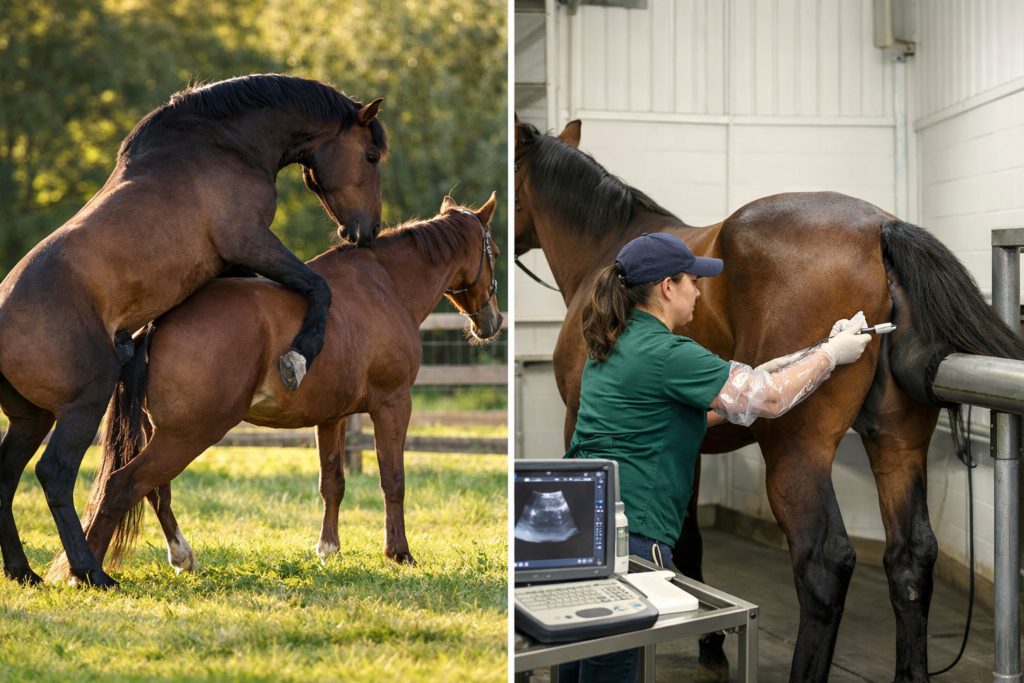
Natural horse breeding (also called live cover breeding) occurs when a stallion mates directly with a mare without human intervention beyond supervision. This is the traditional and most natural reproduction method in horses.
During estrus (heat), the mare is introduced to the stallion, and mating occurs physically.
Key Features of Natural Breeding
Direct mating between stallion and mare
No laboratory or semen processing
Higher conception rates in some cases
Common in small farms and traditional breeding programs
What Is Artificial Insemination in Horses?
Artificial insemination (AI) is a controlled breeding method where semen is collected from a stallion and manually placed into the mare’s reproductive tract by a veterinarian or trained technician.
AI allows breeders to use fresh, cooled, or frozen semen from stallions anywhere in the world.
Key Features of Artificial Insemination
No direct contact between stallion and mare
Semen collected and processed
Global genetic access
Requires veterinary expertise
Natural Horse Breeding vs Artificial Insemination: Key Differences
| Feature | Natural Horse Breeding | Artificial Insemination |
|---|---|---|
| Mating method | Direct live cover | Semen placement |
| Safety risk | Higher injury risk | Very low |
| Genetic access | Limited locally | Worldwide |
| Cost | Lower initial | Higher |
| Conception control | Less precise | Highly controlled |
| Disease risk | Possible | Minimal |
| Stallion travel | Required | Not needed |
Advantages of Natural Horse Breeding
Natural breeding remains popular for many horse owners, especially in rural or small-scale operations.
1. Higher Natural Fertility Signals
The stallion detects mare readiness through pheromones and behavior, which may improve timing.
2. Lower Technical Costs
No semen collection, shipping, or veterinary insemination fees.
3. Minimal Equipment Needed
Suitable for farms without breeding facilities or labs.
4. Traditional Breed Registry Acceptance
Some registries (like certain Thoroughbred authorities) only allow live cover breeding.
Disadvantages of Natural Horse Breeding
Despite being natural, live cover breeding carries several risks.
1. Injury Risk to Mare and Stallion
Kicks, bites, or falls can cause serious reproductive or limb injuries.
2. Disease Transmission
Direct contact can spread equine reproductive diseases.
3. Limited Genetic Diversity
Mares can only breed with locally available stallions.
4. Stallion Management Challenges
Handling aggressive breeding stallions requires expertise.
Advantages of Artificial Insemination in Horses
Artificial insemination has revolutionized modern horse breeding.
1. Safer for Horses
No physical mating reduces injuries to nearly zero.
2. Access to Elite Genetics Worldwide
Breeders can use champion stallion semen from any country.
3. Better Breeding Timing
Veterinarians can inseminate at optimal ovulation timing.
4. Reduced Disease Risk
Processed semen is screened and handled hygienically.
5. Multiple Mares from One Collection
One ejaculate can breed several mares.
Disadvantages of Artificial Insemination
AI also has limitations breeders should consider.
1. Higher Costs
Includes collection, processing, shipping, storage, and veterinary fees.
2. Requires Skilled Veterinarian
Incorrect insemination timing lowers success.
3. Frozen Semen Challenges
Some stallions’ semen freezes poorly, reducing conception rates.
4. Registry Restrictions
Certain breed registries prohibit AI (notably Thoroughbreds).
Success Rates: Natural Horse Breeding vs Artificial Insemination
Conception rates depend on mare health, timing, and semen quality.
Natural breeding: 60–75% per cycle
Fresh AI: 60–70%
Cooled semen AI: 50–65%
Frozen semen AI: 40–60%
When managed correctly, success rates are similar between methods.
Cost Comparison
Typical breeding cost factors:
Natural Breeding Costs
Stallion stud fee
Mare transport
Boarding at stallion farm
Artificial Insemination Costs
Semen purchase
Collection & processing
Shipping (cooled/frozen)
Veterinary ultrasound & insemination
AI usually costs more initially but saves travel and injury risks.
When to Choose Natural Horse Breeding
Natural breeding is best if:
Stallion is on same farm
Budget is limited
Breed registry requires live cover
Horses are experienced breeders
No access to veterinary AI services
When to Choose Artificial Insemination
AI is best if:
Want elite or distant genetics
Mare or stallion injury risk exists
Stallion cannot travel
Mare has breeding difficulties
Multiple mares need breeding
Disease control is priority
Health and Welfare Considerations
Animal welfare is a major factor in natural horse breeding vs artificial insemination decisions.
AI reduces:
Stress
Physical trauma
Aggression incidents
Disease spread
Modern equine reproduction specialists generally consider AI safer overall.
Which Breeding Method Is Best?
There is no universal best method. The right choice depends on:
Breeding goals
Budget
Stallion availability
Mare health
Registry rules
Safety priorities
Summary:
Traditional farms – Natural breeding
Modern sport breeding – Artificial insemination
Final Verdict
The debate over natural horse breeding vs artificial insemination ultimately comes down to safety, genetics, cost, and breeding goals. Natural breeding preserves tradition and simplicity, while artificial insemination offers modern efficiency, safety, and global genetics.
Most modern equine breeders increasingly choose AI for its welfare and genetic advantages—while natural breeding remains essential in certain breeds and traditional programs.
FAQs: Natural Horse Breeding vs Artificial Insemination
Is artificial insemination better than natural breeding in horses?
AI is generally safer and offers better genetic access, but natural breeding can be cheaper and required by some registries.
Do horses conceive more easily with natural breeding?
Not necessarily. With proper timing, AI success rates are similar.
Why is artificial insemination banned in Thoroughbreds?
To maintain traditional lineage verification and breeding integrity.
Is AI painful for mares?
No. It is a quick veterinary procedure similar to reproductive exams.
Can frozen semen produce healthy foals?
Yes. Foals from frozen semen are genetically normal and healthy.
Muntaha Farid is a passionate pet care writer who specializes in dog behavior, pet health, and practical pet parenting tips. At PetNatureHub, she writes detailed guides that help pet owners understand their pets needs, from nutrition and training to everyday care. Her goal is to make pet care simple, informative, and accessible for every pet lover.