
Safe Human Foods for Dogs and Cats (Vet Approved List 2026 Guide)
Discover safe human foods for dogs and cats with this complete vet-approved guide. Learn which fruits, vegetables, and meats are safe, portion sizes, and foods to avoid to keep your pets healthy.
Safe Human Foods for Dogs and Cats: The Complete Vet-Approved Guide (2026)
Every pet owner has faced this moment: you’re eating something delicious, and your dog or cat looks at you with those irresistible eyes. The question immediately comes to mind are there safe human foods for dogs and cats that I can share?
The answer is yes but only certain foods, in specific amounts, and prepared the right way.
In this complete guide, you’ll learn everything about safe human foods for dogs and cats, including:
Which foods are truly safe
Which foods are toxic
Portion sizes
Differences between dogs and cats
Feeding mistakes to avoid
Let’s dive in.
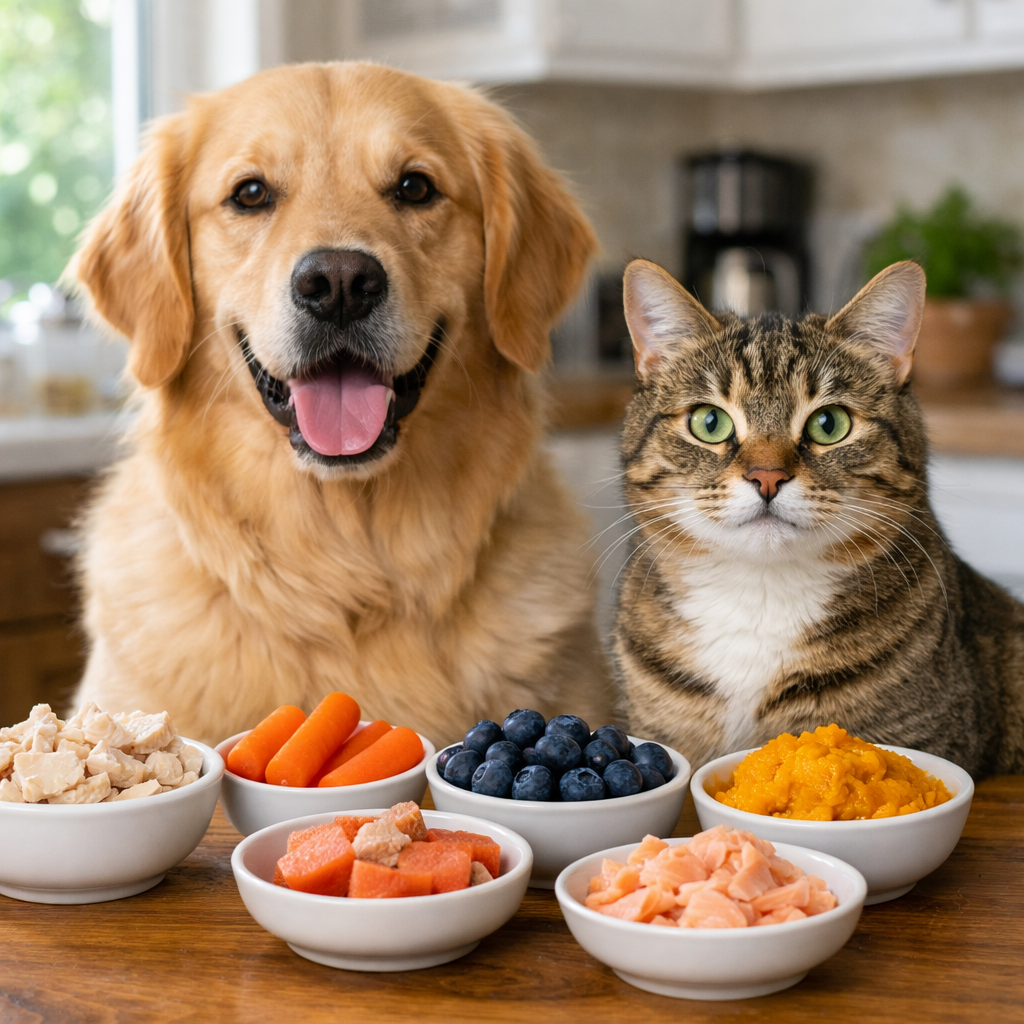
Why Understanding Safe Human Foods for Dogs and Cats Is Important
According to the American Veterinary Medical Association, diet-related illness is one of the most common preventable health issues in pets.
Many pet owners unintentionally cause problems because:
They assume “natural” equals safe.
They give leftovers with seasoning.
They don’t know which ingredients are toxic.
Knowing proper safe human foods for dogs and cats helps prevent:
Digestive upset
Obesity
Pancreatitis
Kidney damage
Emergency vet visits
Are Dogs and Cats the Same When It Comes to Human Food?
No this is critical.
Dogs:
Dogs are omnivores. Their digestive systems can process certain vegetables, fruits, and grains.
Cats:
Cats are obligate carnivores. Their bodies require animal protein and specific nutrients like taurine.
This difference means not all safe human foods for dogs and cats are equally suitable for both.
Safe Human Foods for Dogs
Below is a detailed breakdown of dog-safe options.
| Food | Why It’s Safe | Nutritional Benefit | How to Serve | Frequency |
|---|---|---|---|---|
| Plain Chicken | Lean protein | Muscle support | Boiled, shredded | 1–2x/week |
| Carrots | Low calorie | Beta-carotene | Raw or steamed | Few slices |
| Apples (no seeds) | Fiber-rich | Vitamin C | Small cubes | Occasionally |
| Blueberries | Antioxidants | Brain support | 3–4 berries | 1–2x/week |
| White Rice | Easy digestion | Energy source | Plain cooked | Upset stomach |
| Pumpkin (plain) | Digestive aid | Fiber | 1 tbsp | As needed |
These are among the most recommended safe human foods for dogs and cats, particularly for dogs.
Safe Human Foods for Cats
Cats require higher protein and fewer carbs.
| Food | Why It’s Safe | Nutritional Benefit | How to Serve | Frequency |
|---|---|---|---|---|
| Cooked Chicken | High protein | Muscle health | Plain, shredded | Occasionally |
| Cooked Turkey | Lean meat | Protein source | No skin | Rare treat |
| Salmon (cooked) | Omega-3 | Skin & coat | Small flakes | 1–2x/month |
| Scrambled Eggs | Complete protein | Amino acids | Fully cooked | Small portion |
| Plain Pumpkin | Fiber | Digestive help | 1 tsp | As needed |
When offering safe human foods for dogs and cats, cats should always get much smaller portions.
Human Foods That Are Toxic to Both Dogs and Cats
Knowing what to avoid is just as important.
| Food | Why Dangerous | Possible Symptoms |
|---|---|---|
| Chocolate | Contains theobromine | Seizures, vomiting |
| Grapes/Raisins | Kidney toxicity | Kidney failure |
| Onions/Garlic | Damages red blood cells | Anemia |
| Xylitol | Drops blood sugar | Liver failure |
| Alcohol | Nervous system damage | Coma |
| Caffeine | Heart stimulation | Rapid heartbeat |
The Pet Poison Helpline reports chocolate and xylitol as leading causes of food-related poisoning in pets.
Never experiment outside proven safe human foods for dogs and cats.
The 10% Rule: How Much Is Too Much?
Even safe foods must follow moderation rules.
Veterinary nutrition experts recommend:
Human food should make up no more than 10% of your pet’s daily calories.
Example Portions
Small dog (5–10 kg): 1–2 tablespoons max
Medium dog (15–25 kg): 2–3 tablespoons
Large dog (30+ kg): 3–4 tablespoons
Cat: 1–2 teaspoons only
Overfeeding—even with safe items—can cause obesity.
Can Safe Human Foods Replace Commercial Pet Food?
No.
Balanced commercial diets are formulated according to standards set by the Association of American Feed Control Officials.
They ensure proper levels of:
Taurine (especially for cats)
Calcium-to-phosphorus ratio
Essential fatty acids
Vitamins and minerals
Safe human foods for dogs and cats should only be treats, not replacements.
Benefits of Adding Safe Human Foods (In Moderation)
When done correctly, adding safe foods can:
Improve digestion
Provide natural antioxidants
Add dietary variety
Support immune health
Strengthen bonding
For example:
Pumpkin helps mild constipation.
Blueberries provide antioxidants.
Plain chicken supports muscle maintenance.
Common Mistakes Pet Owners Make
1. Adding Salt or Spices
Seasonings make otherwise safe foods dangerous.
2. Feeding Bones
Cooked bones splinter and cause internal injury.
3. Giving Dairy
Most adult cats are lactose intolerant.
4. Overfeeding “Healthy” Foods
Even safe foods can cause pancreatitis if too fatty.
Sticking strictly to verified safe human foods for dogs and cats prevents these issues.
Signs Your Pet Is Not Tolerating Human Food
Watch for:
Vomiting
Diarrhea
Gas
Itching
Lethargy
Loss of appetite
Stop feeding immediately if symptoms appear.
Special Considerations by Age
Puppies & Kittens
More sensitive digestion
Stick mostly to formulated food
Senior Pets
May benefit from small, soft additions like plain chicken or pumpkin
Overweight Pets
Avoid high-calorie treats
Use vegetables like carrots for dogs
Final Thoughts
Understanding proper safe human foods for dogs and cats allows you to safely share occasional treats without risking your pet’s health.
Remember:
Dogs are more flexible eaters.
Cats require strict protein-focused diets.
Toxic foods must always be avoided.
Moderation is everything.
If ever in doubt, consult your veterinarian before introducing new foods.
Frequently Asked Questions
Can dogs eat bananas?
Yes, small slices only.
Can cats eat rice?
Very small amounts, but it offers little benefit.
Is peanut butter safe?
Only for dogs, and only if it does NOT contain xylitol.
Can pets eat bread?
Plain bread is not toxic but offers no nutrition.
Muntaha Farid is a passionate pet care writer who specializes in dog behavior, pet health, and practical pet parenting tips. At PetNatureHub, she writes detailed guides that help pet owners understand their pets needs, from nutrition and training to everyday care. Her goal is to make pet care simple, informative, and accessible for every pet lover.