
9 Dog Ear Infection Symptoms Every Owner Should Know
Learn the most common dog ear infection symptoms and discover safe home treatment methods to help your dog recover quickly and prevent future ear infections.
Dog Ear Infection: Symptoms and Home Treatment
Ear infections are one of the most common health issues affecting dogs. Many pet owners first notice something unusual when their dog begins scratching its ears, shaking its head, or showing signs of discomfort. These behaviours of dog may indicate a problem inside the ear canal. Understanding dog ear infection symptoms early can help you prevent serious complications and protect your dog’s health.
Dogs rely heavily on their ears for hearing, communication, and balance. When an infection develops, it can cause irritation, pain, and inflammation. If left untreated, the infection may spread deeper into the ear and cause long-term damage. Because of this, recognizing dog ear infection symptoms as soon as possible is extremely important for every dog owner.
Ear infections can develop for several reasons, including bacteria, yeast, allergies, moisture buildup, and parasites. Some infections are mild and can improve with proper care, while others require veterinary treatment. By learning the most common dog ear infection symptoms, you can identify problems early and take action before the infection worsens.
In this guide, we will explore the most common dog ear infection symptoms, possible causes, risk factors, and safe home treatment options to help your dog recover comfortably.
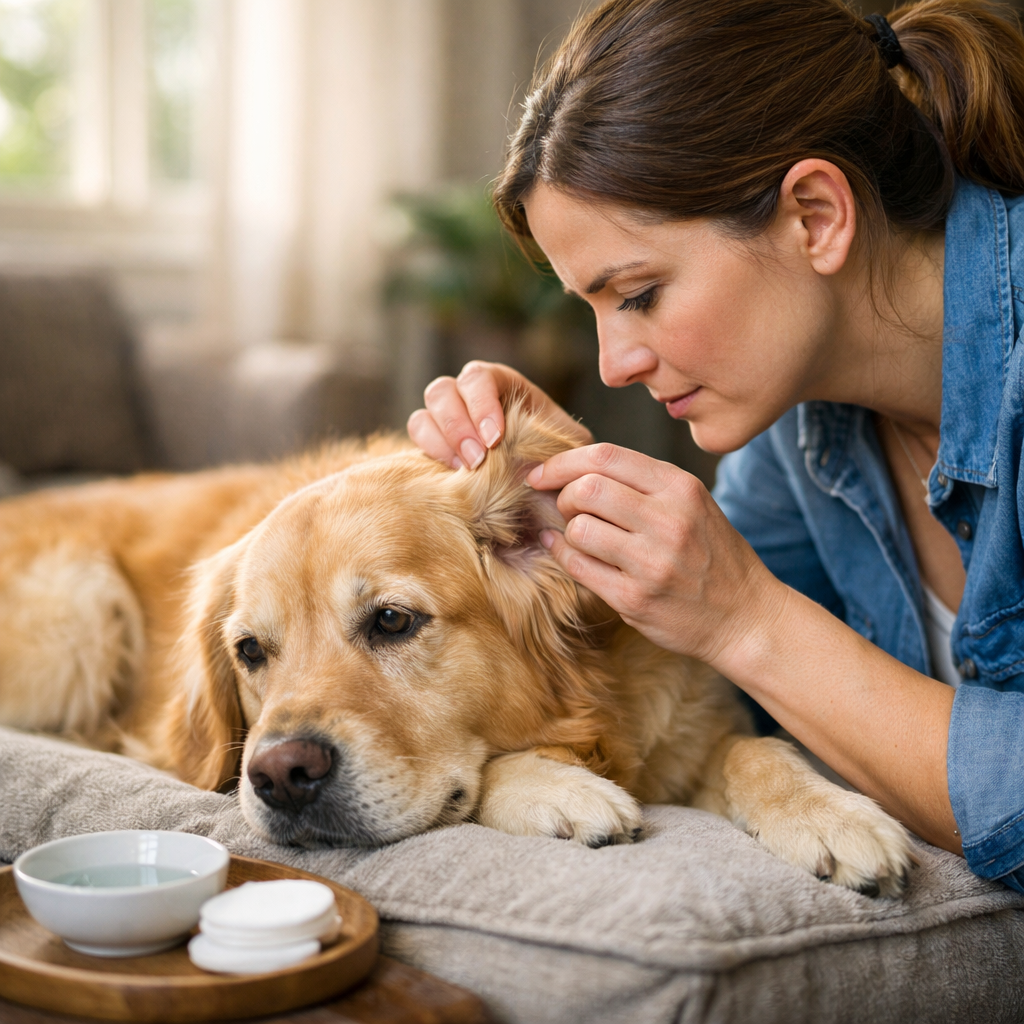
What Is a Dog Ear Infection?
A dog ear infection occurs when bacteria, yeast, or parasites cause inflammation inside the ear canal. Veterinarians often refer to this condition as otitis. Recognizing dog ear infection symptoms early can prevent the infection from spreading deeper into the ear.
There are three main types of ear infections that can affect dogs.
| Type of Ear Infection | Description | Severity |
|---|---|---|
| Otitis Externa | Infection in the outer ear canal | Most common |
| Otitis Media | Infection in the middle ear | Moderate |
| Otitis Interna | Infection in the inner ear affecting balance | Severe |
Most infections start in the outer ear, which is why the first dog ear infection symptoms usually appear around the ear canal or outer ear flap.
Why Dogs Are Prone to Ear Infections
Dogs are more likely to develop ear infections than humans because their ear canals are shaped differently. The ear canal forms an L-shape, which makes it easier for wax, dirt, and moisture to become trapped.
When moisture and debris remain in the ear canal, bacteria and yeast can grow quickly. These conditions often lead to the development of dog ear infection symptoms such as itching, redness, and irritation.
Certain dog breeds are also more likely to experience recurring infections.
| Dog Breed | Reason for Higher Risk |
|---|---|
| Cocker Spaniels | Long ears trap moisture |
| Basset Hounds | Poor air circulation |
| Golden Retrievers | Prone to allergies |
| Labrador Retrievers | Frequent swimming |
| Poodles | Excess hair inside ears |
Owners of these breeds should regularly check their dog’s ears for dog ear infection symptoms to prevent infections from developing.
Common Dog Ear Infection Symptoms
Recognizing dog ear infection symptoms early can prevent pain and long-term damage. Dogs often show behavioral changes before visible symptoms appear.
Below are the most common dog ear infection symptoms every dog owner should know.
1. Constant Ear Scratching
One of the earliest dog ear infection symptoms is repeated scratching or pawing at the ears. Dogs may rub their ears against furniture or the floor to relieve itching.
If your dog suddenly starts scratching its ears frequently, it may be one of the first dog ear infection symptoms.
2. Frequent Head Shaking
Head shaking is another common sign that something is wrong inside the ear. Dogs with infections often shake their heads to relieve irritation.
If head shaking becomes frequent, it may indicate developing dog ear infection symptoms.
3. Unpleasant Ear Odor
A strong smell coming from the ear is often a clear sign of infection. Yeast infections especially produce a noticeable odor.
When pet owners notice a bad smell along with other dog ear infection symptoms, it usually indicates bacterial or yeast growth inside the ear canal.
4. Redness and Swelling
Inflammation inside the ear can cause redness, swelling, and sensitivity. The ear canal may appear irritated or inflamed.
These visible changes are among the most noticeable dog ear infection symptoms.
5. Ear Discharge
Discharge from the ear is another important warning sign. The color and texture of the discharge may vary depending on the infection.
| Discharge Color | Possible Cause |
|---|---|
| Dark brown | Yeast infection |
| Yellow or green | Bacterial infection |
| Black debris | Ear mites |
| Thick wax | Chronic irritation |
These types of discharge are often accompanied by other dog ear infection symptoms such as odor and itching.
6. Pain When Touching the Ear
Dogs experiencing ear infections may become sensitive around the ear area. They may pull away, whine, or avoid being touched.
Pain and sensitivity are serious dog ear infection symptoms that should not be ignored.
7. Balance Problems
In severe cases, dogs may develop balance problems or walk in circles. This happens when the infection spreads to the inner ear.
Balance issues are advanced dog ear infection symptoms and require immediate veterinary attention.
Causes of Ear Infections in Dogs
Many factors can lead to ear infections. Understanding these causes can help prevent dog ear infection symptoms from occurring in the future.
| Cause | Explanation |
|---|---|
| Bacterial infections | Most common cause |
| Yeast infections | Often caused by moisture |
| Allergies | Food or environmental triggers |
| Ear mites | Parasites irritating the ear canal |
| Moisture | Swimming or bathing |
| Foreign objects | Dirt or seeds inside ear |
Identifying the underlying cause of dog ear infection symptoms helps determine the best treatment.
Risk Factors for Ear Infections
Some dogs are more prone to infections than others. Recognizing risk factors can help you prevent recurring dog ear infection symptoms.
Common risk factors include:
floppy ears that trap moisture
excessive hair inside ear canals
frequent swimming
poor ear hygiene
allergies
weakened immune system
Dogs with these risk factors should be checked regularly for dog ear infection symptoms.
Dog Ear Infection Treatment at Home
For mild infections, some pet owners try dog ear infection treatment at home to relieve discomfort. However, severe dog ear infection symptoms always require professional veterinary care.
1. Regular Ear Cleaning
Cleaning the ears helps remove wax and bacteria that may cause infection.
Steps for safe ear cleaning:
Use a veterinarian-approved ear cleaning solution
Apply the solution gently to the ear canal
Massage the base of the ear
Allow the dog to shake its head
Wipe away debris with cotton or gauze
Regular cleaning can reduce the risk of dog ear infection symptoms.
2. Keep the Ears Dry
Moisture is one of the biggest causes of ear infections.
After bathing or swimming:
dry your dog’s ears carefully
check for redness or irritation
ensure water does not remain inside the ear canal
Keeping ears dry helps prevent dog ear infection symptoms from developing.
3. Natural Remedies
Some natural remedies may help relieve mild irritation.
| Remedy | Benefit |
|---|---|
| Coconut oil | Antibacterial and antifungal |
| Aloe vera | Reduces inflammation |
| Chamomile tea | Gentle cleansing |
These remedies should only be used on the outer ear and not deep inside the ear canal. They may help soothe mild dog ear infection symptoms.
When to Visit a Veterinarian
Home treatment may help mild irritation, but some dog ear infection symptoms require professional care.
You should visit a veterinarian if your dog shows:
severe pain
heavy discharge
bleeding
strong odor
swelling that worsens
balance problems
symptoms lasting more than two days
Veterinarians can prescribe medications such as antibiotics, antifungal treatments, or anti-inflammatory drugs to treat dog ear infection symptoms effectively.
How to Prevent Dog Ear Infections
Prevention is the best way to avoid recurring dog ear infection symptoms.
| Prevention Method | Benefit |
|---|---|
| Regular ear cleaning | Removes wax and bacteria |
| Dry ears after swimming | Prevents moisture buildup |
| Trim ear hair | Improves airflow |
| Monitor allergies | Reduces inflammation |
| Routine vet checkups | Early detection |
These steps can significantly reduce the chances of developing dog ear infection symptoms.
Signs an Ear Infection Is Getting Worse
If an ear infection progresses without treatment, symptoms may become more severe.
Warning signs include:
strong odor from the ear
thick discharge
severe swelling
hearing loss
balance problems
intense pain
These advanced dog ear infection symptoms indicate that the infection may have spread deeper into the ear.
Final Thoughts
Understanding dog ear infection symptoms is essential for every dog owner. Early detection can prevent serious complications and help your dog recover quickly.
By recognizing the early dog ear infection symptoms, maintaining proper ear hygiene, and using safe home care methods, you can protect your dog’s ear health.
However, if dog ear infection symptoms persist or worsen, a veterinarian should always evaluate your dog to ensure proper treatment.
Regular ear care, routine grooming, and monitoring your dog’s behavior can help prevent infections and keep your pet comfortable and healthy.
Frequently Asked Questions (FAQs)
1. What are the common dog ear infection symptoms?
Answer: The most common dog ear infection symptoms include frequent ear scratching, head shaking, redness, swelling, foul odor, ear discharge, sensitivity to touch, and in severe cases, balance issues. Early recognition helps prevent complications.
2. How can I treat a dog ear infection at home?
Answer: Mild ear infections can sometimes be managed with dog ear infection treatment at home, such as gently cleaning the ears with a vet-approved solution, keeping the ears dry, and using natural remedies like coconut oil on the outer ear. Always consult a vet if symptoms persist.
3. What causes ear infections in dogs?
Answer: Ear infections in dogs can be caused by bacteria, yeast, parasites (ear mites), allergies, moisture buildup, and foreign objects like dirt or seeds. Dogs with floppy ears or frequent exposure to water are at higher risk of developing dog ear infection symptoms.
4. When should I take my dog to the vet for an ear infection?
Answer: You should see a veterinarian if your dog shows severe pain, heavy or colored discharge, bleeding, strong odor, swelling, balance problems, or if symptoms persist for more than 2–3 days. These could indicate a worsening infection.
5. Can ear infections in dogs be prevented?
Answer: Yes. Regular ear cleaning, keeping ears dry after swimming, trimming excess hair, monitoring allergies, and routine veterinary checkups can help prevent dog ear infection symptoms from recurring.
6. Can allergies cause ear infections in dogs?
Answer: Yes, food and environmental allergies are a common cause of recurring dog ear infection symptoms. Treating allergies and maintaining good ear hygiene can help prevent infections.
7. How long does it take for a dog ear infection to heal?
Answer: Mild infections may improve within a few days with home care, but moderate to severe infections often require veterinary treatment and may take 1–3 weeks to fully heal, depending on the cause and treatment.