
 By Muntaha farid
Learn the most common dog heat stroke symptoms, emergency treatment, prevention tips, and when to call a vet to protect your beloved pet.
Dog Heat Stroke Symptoms
Introduction
Summer can be a wonderful season for outdoor walks, backyard playtime, beach trips, and family adventures with a dog. When temperatures rise, the risk of heat-related illness rises. Many pet owners do not realize how quickly a dog can overheat, especially in hot weather, in high humidity, or after exercise. What seems like a harmless outing can become a life-threatening emergency within minutes.
Understanding dog heat stroke symptoms is one of the most important things every pet owner can learn. Heat stroke is not a simple case of overheating. It is a medical emergency that happens when a dog’s body temperature climbs to a dangerous level, and the body can no longer cool itself. If not treated immediately, heat stroke can damage the brain, heart, kidneys, liver, and other vital organs. In severe cases, it can be fatal.
Unlike humans, dogs do not sweat across their bodies to regulate temperature. They rely mostly on panting and a small amount of sweating through their paw pads. When those cooling methods are not enough, body temperature can rise rapidly. That is why recognizing the warning signs early can save your dog’s life.
In this guide, you will learn what heat stroke is, why dogs are so vulnerable to it, the most common symptoms to watch for, what to do in an emergency, what not to do, how veterinarians treat the condition, and how to prevent it from happening to your pet in the first place.
What Is Heat Stroke in Dogs?
Heat stroke in dogs occurs when the body overheats and is unable to regulate its internal temperature. A dog’s normal body temperature is usually between 101°F and 102.5°F. Once the temperature rises above 104°F, the dog is in danger. At 106°F or higher, serious organ damage can begin very quickly.
Heat stroke can happen in many situations, including:
- Being left in a parked car
- Exercising in hot weather
- Playing too long in direct sunlight
- Staying in a poorly ventilated room
- Being exposed to high humidity
- Not having enough water or shade.
This condition can develop faster than many people expect. In some cases, a dog can go from mild overheating to collapse in less than 20 minutes. That’s why every pet owner should know the signs and act immediately if they appear.
Heat Exhaustion vs Heat Stroke
Many people confuse heat exhaustion with heat stroke, but the difference is important.
| Heat | Heat Stroke |
|---|---|
| Mild to moderate overheating | Life-threatening emergency |
| Heavy panting | Extreme panting or difficulty breathing |
| Weakness or tiredness | Collapse or unconsciousness |
| The dog may still respond normally | A dog may be confused, disoriented, or unresponsive |
| Often improves with quick cooling | Requires urgent veterinary treatment |
Heat exhaustion is a warning sign that the dog is struggling. Heat stroke means the body is failing to cool itself, and immediate action is needed.
Why Dogs Are More Vulnerable to Heat
Dogs are much more sensitive to heat than humans because their bodies cool differently. Humans sweat through most of their skin, which helps release heat efficiently. Dogs, however, depend mainly on panting. Panting moves air over the tongue and respiratory tract, helping moisture evaporate and cool the body. Dogs also release a small amount of heat through their paw pads and blood vessels near the skin.
This system works well in mild conditions, but it becomes less effective when:
- The weather is very hot.
- Humidity is high
- The dog is exercising hard.
- The dog is overweight.
- The dog has a thick coat.
- The dog is brachycephalic, meaning it has a short nose and flat face
When the body cannot cool itself fast enough, temperature rises, dehydration worsens, and organs begin to suffer. That is why even a healthy pet can be at risk during extreme heat.
How Fast Can Heat Stroke Happen?
Many pet owners assume heat stroke takes hours to develop, but that is not always true. In dangerous conditions, it can happen very quickly.
A dog left in a parked car can overheat in minutes, even if the windows are cracked open. The temperature inside a vehicle can rise far above the outdoor temperature in a short time. A dog running hard on a hot day can also overheat rapidly, especially if there is little shade or water available.
Even temperatures that feel comfortable to humans can be dangerous for dogs if the humidity is high or if the dog is active. This is why it is so important to monitor your pet closely during warm weather.
Common Dog Heat Stroke Symptoms
Recognizing dog heat stroke symptoms early can make the difference between recovery and a medical emergency. The signs may begin mildly and then worsen quickly.
Excessive Panting
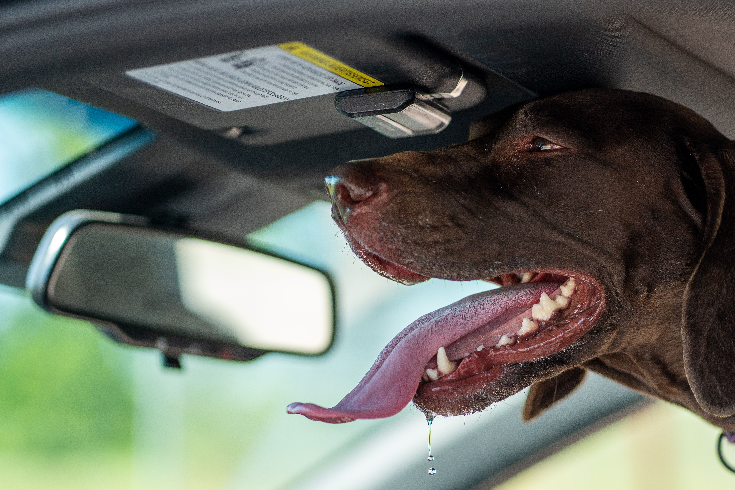
Heavy panting is often the first and most obvious sign. A dog may breathe rapidly, loudly, or with obvious effort. The tongue may hang out farther than usual, and the dog may seem unable to catch its breath.
Panting is normal after exercise, but if it continues even after rest or becomes more intense than usual, it may signal overheating.
Excessive Drooling
Dogs with heat stress often produce thick, sticky saliva. You may notice:
- Constant drooling
- Foamy saliva
- Rope-like strings of saliva
- Wet fur around the mouth and chest
This happens because the body is struggling to regulate temperature and maintain normal function.
Bright Red or Dark Red Gums
Healthy gums are usually pink. During heat stroke, gums may become bright red, dark red, or even purple. In severe cases, gums may turn pale or gray, which can indicate shock or poor circulation.
Checking your dog’s gums is a simple way to spot trouble early.
Rapid Heart Rate
When a dog overheats, the heart works harder to circulate blood and cool the body. You may notice a racing heartbeat, visible chest movement, or restlessness. A fast heart rate combined with heavy panting is a serious warning sign.
Weakness or Fatigue
A dog that is overheating may suddenly become tired or unwilling to continue walking. Signs of weakness include:
- Slowing down
- Sitting or lying down frequently
- Refusing to move
- Struggling to stand
If your dog seems unusually exhausted, do not ignore it.
Vomiting
Heat stroke often affects the digestive system. A dog may vomit food, foam, bile, or even blood in severe cases. Vomiting is a sign that the body is under significant stress and needs immediate attention.
Diarrhea
Loose stool or bloody diarrhea can also occur. This happens because overheating can damage the digestive tract and affect circulation. Diarrhea during heat stress should always be taken seriously.
Confusion or Disorientation
The brain is highly sensitive to heat. A dog may appear confused, dazed, or unable to focus. You might notice your pet:
- Staring blankly
- Walking in the wrong direction
- Not responding to commands.
- Acting unlike themselves
Behavior changes are often one of the clearest signs that something is wrong.
Loss of Coordination
As heat stroke worsens, dogs may lose balance or coordination. They may wobble, stagger, stumble, or fall over. This is a dangerous sign that the nervous system is being affected.
Collapse
Collapse is a medical emergency. If your dog suddenly falls and cannot stand, the situation is critical. Breathing may become shallow or irregular, and the dog may become unresponsive. Immediate veterinary care is essential.
Early Warning Signs Every Pet Owner Should Notice
The earlier you catch heat stroke, the better the outcome. Mild symptoms may seem small at first, but they can progress quickly.
Watch for these early warning signs:
- Heavy panting
- Warm ears
- Bright tongue
- Dry mouth
- Seeking shade constantly
- Drinking large amounts of water
- Slower movement
- Mild weakness
- Restlessness
- Refusing to continue exercising
If your pet shows any of these signs, stop activity immediately and move them to a cooler place. Early action can prevent a full heat stroke emergency.
Severe Dog Heat Stroke Symptoms
When heat stroke becomes severe, the symptoms are much more dangerous. These signs mean the dog needs emergency veterinary care right away:
- Vomiting blood
- Bloody diarrhea
- Muscle tremors
- Seizures
- Blue, pale, or gray gums
- Collapse
- Unconsciousness
- Shock
- Coma
- Difficulty breathing
At this stage, the dog’s organs may already be under serious stress. Every minute matters; begin cooling measures while arranging transport to the nearest veterinarian immediately.
Dogs at Higher Risk?
Any dog can suffer from heat stroke, but some are more vulnerable than others. Pet owners should be especially careful with dogs that have the following risk factors:
Brachycephalic Breeds
Flat-faced breeds such as Bulldogs, Pugs, Boxers, Shih Tzus, and Boston Terriers have shorter airways, which makes panting less effective. These dogs can overheat much faster than other breeds.
Overweight Dogs
Extra body fat makes it harder for dogs to release heat. Overweight pets are more likely to struggle in warm weather.
Senior Dogs
Older dogs may have weaker hearts, reduced stamina, or underlying health conditions that make heat more dangerous.
Puppies
Young dogs may not regulate body temperature as efficiently as adult dogs. They can become overheated quickly during play.
Dogs With Thick Coats
Breeds with dense or double coats, such as Huskies, Malamutes, and Newfoundlands, may be more prone to overheating when active in hot weather.
Dogs With Medical Conditions
Dogs with heart disease, respiratory problems, or other chronic illnesses may have a harder time coping with heat.
Common Causes of Heat Stroke
Heat stroke usually happens when a dog is exposed to conditions that prevent proper cooling. Common causes include:
- Being left in a parked car
- Exercising too hard in hot weather
- Lack of shade or water
- Poor ventilation indoors
- High humidity
- Overexcitement during play
- Walking on hot pavement
- Wearing heavy coats or gear in the heat
One of the most dangerous myths is that a dog is safe in a car if the windows are cracked. This is not true. A parked car can become deadly very quickly, even on a day that does not feel extremely hot.
What to Do Immediately If You Suspect Heat Stroke
If you notice signs of dog heat stroke, act fast. Your goal is to lower your dog’s body temperature safely while getting veterinary help.
Move Your Dog to a Cooler Area
Take your dog out of the heat immediately. Move them into shade, an air-conditioned room, or another cool place.
Offer Small Amounts of Cool Water
Let your dog drink small sips of cool water if they are alert and able to swallow. Do not force water into their mouth.
Begin Gentle Cooling
Use cool, not ice-cold, water to help lower body temperature. You can:
- Wet the paws
- Wet the belly and chest.
- Place cool, damp towels on the body.
- Use a fan to increase airflow.
Avoid soaking the dog in ice water, as this can cause blood vessels to constrict and make cooling less effective.
Call a Veterinarian Immediately
Even if your dog seems to improve, heat stroke can cause hidden internal damage. A veterinary exam is necessary to check for organ injury, dehydration, and complications.
What NOT to Do
When a dog is overheating, some well-meaning actions can actually make things worse. Avoid these mistakes:
- Do not use ice-cold water.
- Do not force the dog to drink.
- Do not cover the dog with wet towels for too long without airflow.
- Do not delay veterinary care.
- Do not assume the dog is fine because symptoms have improved.
- Do not make the dog exercise or walk farther than necessary
The safest approach is gentle cooling and immediate medical attention.
Veterinary Treatment for Heat Stroke
Once your dog reaches the clinic, the veterinarian will assess the severity of the condition and begin treatment right away. Treatment may include:
- IV fluids to treat dehydration and support circulation
- Oxygen therapy if breathing is difficult
- Temperature monitoring
- Blood tests to check organ function
- Medications to control vomiting or seizures
- Treatment for shock
- Hospitalization for observation and recovery
The vet may also monitor for complications such as kidney damage, liver injury, clotting problems, or brain swelling. Even if your dog appears stable, internal damage can continue after the initial overheating episode, why professional care is so important.
Recovery Process
Recovery from heat stroke depends on how quickly treatment begins and how severe the condition is. Some dogs recover within a day or two, while others may need several days of hospitalization.
During recovery, your veterinarian may recommend:
- Rest and limited activity
- Plenty of fresh water
- A cool indoor environment
- Follow-up blood work
- A special diet if the digestive system was affected
- Medication for any complications
It is important to follow all veterinary instructions carefully. A dog that has suffered heat stroke may be more sensitive to heat in the future, so extra caution is needed during warm weather.
Prevention Tips Every Pet Owner Should Follow
Preventing heat stroke is always better than treating it. These simple habits can help keep your pet safe:
Avoid midday exercise
Walk the dog early in the morning or later in the evening when temperatures are cooler.
Provide Plenty of Water
Always make sure the dog has access to fresh, clean water, especially during outdoor activities.
Use Shade and Ventilation
If a dog is outside, make sure there is plenty of shade and airflow.
Never Leave the Dog in a Car
Even a short stop can be dangerous. If you cannot take the dog with you, leave them at home.
Watch the Pavement
Hot pavement can burn paws and increase body temperature. If the ground is too hot for your hand, it is too hot for the dog.
Limit Intense Play
Dogs often keep playing even when they are overheating. It is up to the pet owner to stop the activity before danger begins.
Know Your Dog’s Risk Level
If a dog is older, overweight, flat-faced, or has a medical condition, be extra cautious in warm weather.
Use Cooling Tools Carefully
Cooling mats, fans, and shaded rest areas can help, but they should never replace supervision.
Conclusion
Knowing the signs of heat stroke in dogs is one of the most valuable things a pet owner can do. Heat stroke can develop quickly, and the symptoms may start with something as simple as heavy panting or mild weakness before turning into a life-threatening emergency. By learning to recognize the warning signs early, you can act fast and protect your dog from serious harm.
Remember that dogs do not cool themselves the same way humans do. They depend on panting, shade, water, and our judgment to stay safe. If the pet shows signs of overheating, move them to a cool area, begin gentle cooling, and contact a veterinarian right away. Never wait to see if the symptoms improve on their own.
With awareness, preparation, and quick action, can help your dog enjoy summer safely. A little caution goes a long way in protecting the health and happiness of your beloved pet.
Frequently Asked Questions
What are the first signs of heat stroke in dogs?
The first signs usually include heavy panting, drooling, restlessness, bright red gums, and weakness. If you notice these symptoms, move your dog to a cooler place immediately.
Can a dog recover from heat stroke?
Yes, many dogs recover if treatment begins quickly. However, severe heat stroke can cause permanent organ damage or death, so immediate veterinary care is essential.
How hot is too hot for a dog?
There is no single safe temperature for every dog. Humidity, exercise, breed, age, and health all matter. Even moderate temperatures can be dangerous if the dog is active or trapped in a hot environment.
Should I give my dog ice water during heat stroke?
No. Offer cool water in small amounts if your dog is alert, but do not force ice water. Gentle cooling is safer than extreme cold.
Can heat stroke happen indoors?
Yes, poor ventilation, lack of air conditioning, or being trapped in a hot room can cause heat stroke indoors as well.