
Ultimate Best Toys for Bored Pets: Keep Dogs & Cats Active and Happy
Discover the best toys for pets that get bored easily and learn how toys for pets that get bored easily improve mental stimulation and reduce stress.
Best Toys for Pets That Get Bored Easily
Pets are intelligent, curious, and energetic companions. However, when they do not receive enough mental or physical stimulation, boredom can quickly develop. This is why choosing the right toys for bored pets is essential for their happiness, behavior, and overall well-being. Interestingly, boredom or lack of stimulation can sometimes contribute to behaviors like why your dog licks excessively at night, as dogs may use licking as a way to self-soothe or release pent-up energy.
The best toys for pets that get bored easily help prevent anxiety, reduce destructive habits, and keep pets engaged throughout the day. In this guide, we will explore why pets get bored, how toys help, and which toys for pets that get bored easily are most effective for cats and dogs—while also addressing behaviors such as why your dog licks excessively at night.
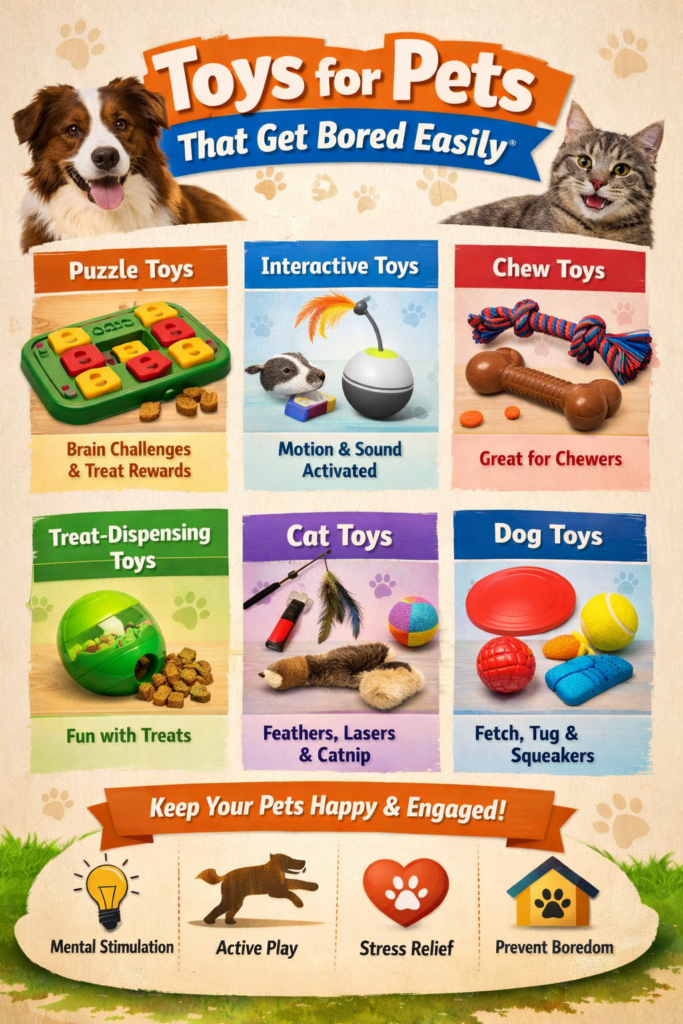
Why Do Pets Get Bored Easily?
Pets need daily stimulation to stay mentally balanced. When their environment becomes repetitive or inactive, boredom appears.
Common reasons include:
Long hours spent alone
Lack of exercise
No mental challenges
Repetitive daily routines
Limited interaction with owners
Bored pets often show unwanted behaviors such as chewing furniture, excessive barking or meowing, scratching, pacing, or restlessness. Using the right toys for pets that get bored easily can greatly reduce these problems.
How Toys Help Prevent Pet Boredom
Toys are an essential part of enrichment, not just entertainment. High-quality toys for pets that get bored easily provide both mental stimulation and physical activity.
Benefits include:
Reduced stress and anxiety
Improved intelligence and focus
Healthy physical movement
Less destructive behavior
Stronger bond between pet and owner
When pets stay mentally active, they are calmer, happier, and easier to manage.
Best Types of Toys for Pets That Get Bored Easily
Different pets have different needs. Below are the most effective toy categories for boredom-prone pets.
Puzzle Toys
Puzzle toys are among the most effective toys for pets that get bored easily because they challenge the brain and reward problem-solving behavior.
Puzzle toys typically require pets to move parts, slide panels, or press buttons to access treats.
Why puzzle toys are effective:
Improve cognitive skills
Encourage independent play
Keep pets engaged for longer periods
Best for dogs, cats, and intelligent breeds that enjoy mental challenges.
Interactive Toys
Interactive toys react to a pet’s movement, making playtime unpredictable and exciting.
Examples include:
Motion-activated toys
Sound-responsive toys
Smart toys that move automatically
These toys mimic real-life prey movement, triggering natural hunting and chasing instincts, especially in cats and energetic dogs.
Chew Toys
Chewing is a natural behavior, particularly for dogs. High-quality chew toys help release stress while protecting household items.
Benefits of chew toys:
Relieve anxiety
Support dental health
Prevent destructive chewing
Durable chew toys are ideal for pets that spend long hours alone.
Treat-Dispensing Toys
Treat-dispensing toys combine entertainment with motivation, making them extremely effective for boredom-prone pets.
Why pets enjoy them:
Encourage problem-solving
Keep pets busy for extended periods
Help control treat portions
These are some of the most popular toys for pets that get bored easily, especially for food-motivated pets.
Cat-Specific Toys for Easily Bored Cats
Cats are natural hunters and need toys that activate their instincts.
Best toys for bored cats include:
Feather wands
Laser pointers
Rolling balls
Catnip toys
Rotating cat toys weekly prevents boredom and keeps playtime fresh and exciting.
Dog Toys for High-Energy Dogs
High-energy dogs become bored faster if their physical needs are not met.
Ideal toys for active dogs:
Fetch balls
Tug-of-war ropes
Frisbees
Durable squeaky toys
Combining toys with daily walks or exercise gives the best results.
Choosing the Right Toys for Your Pet
Not all toys are suitable for every pet. When selecting toys, consider the following factors to ensure safety, engagement, and fun:
Age
Puppies and kittens benefit from softer, gentle toys, while adult pets prefer more durable and challenging options that stimulate their minds and bodies.
Size
Always choose toys that match your pet’s size. Small toys can be a choking hazard for larger pets, while oversized toys may be difficult for smaller pets to play with.
Personality
Every pet has unique play preferences. Some enjoy chasing and retrieving, others love chewing, and some prefer problem-solving or puzzle toys.
Safety
Select toys made from non-toxic, pet-safe materials. Avoid small detachable parts or materials that could be swallowed or cause injury
Signs Your Pet Needs Better Toys
Your pet may need more engaging toys if you notice:
Excessive sleeping during the day
Destructive behavior
Constant attention-seeking
Restlessness or pacing
Upgrading to better toys for pets that get bored easily can quickly improve behavior.
How Many Toys Does a Pet Need?
Quality matters more than quantity. A mix of 5–7 rotating toys is usually ideal.
Toy Rotation Tip
Keep some toys hidden
Rotate weekly
Reintroduce old toys to renew interest
This keeps playtime fresh and exciting.
Common Mistakes Pet Owners Make
Avoid these mistakes when buying toys:
Buying too many similar toys
Ignoring pet preferences
Choosing toys that are too easy
Not supervising playtime initially
A well-chosen toy is safer and more effective than multiple random ones.
DIY Toys: Are They Worth It?
Homemade toys can be useful but must be safe.
Safe DIY Ideas
Treats hidden in cardboard boxes
Rolled towels with kibble
Ice cubes with treats (for dogs)
Always supervise to prevent accidental ingestion.
The Role of Toys in Pet Mental Health
Mental stimulation is just as important as physical exercise. Pets that stay mentally active are:
Happier
Less anxious
More obedient
Less destructive
Toys play a key role in emotional balance and confidence.
Pingback: Why Your Dog Licks Excessively at Night – Causes, Signs & Solutions