
Blind Dog Care Guide: How to Care for a Blind Dog Safely and Happily
Expert blind dog care guide: Learn essential grooming tips, regular vet visits, preventive health care, and daily routines to keep your blind dog healthy, happy, and confident.
Introduction
Caring for a blind dog may feel overwhelming at first, but with the right knowledge, patience, and love, blind dog care can be deeply rewarding. Dogs do not rely on vision as much as humans do. Their powerful sense of smell, hearing, and memory allows them to adapt beautifully—even after losing their sight.
This Blind Dog Care Guide is designed to help pet owners understand how to care for a blind dog, create a safe environment, and ensure their furry companion lives a happy, confident, and fulfilling life.
When a dog loses their vision, many pet owners feel fear, confusion, and heartbreak. But the truth is—blind dogs can live happy, confident, and deeply fulfilling lives with the right care and understanding. Blindness does not take away a dog’s ability to love, learn, play, or bond. It simply changes how they experience the world.
Blind dog care is not about sympathy—it’s about support, routine, communication, and trust. Dogs rely more on their sense of smell, hearing, and memory than eyesight. With consistent guidance, verbal cues, and emotional reassurance, blind dogs adapt remarkably well to their surroundings.
Whether your dog was born blind or lost vision due to age, illness, or injury, this guide will help you understand how to care for them with confidence. From daily routines and training to emotional bonding, mental stimulation, and safe travel, proper blind dog care can transform uncertainty into strength.
A blind dog doesn’t need perfect vision.
They need your voice, your patience, and your love.
Blindness may change how a dog sees the world—but it never changes how deeply they love. A blind dog still wags their tail at your voice, still feels safe in your arms, and still trusts you with their whole heart. What they need is not pity, but patience, guidance, and understanding.
Understanding Blindness in Dogs
Blindness in dogs can occur gradually or suddenly. Some dogs are born blind, while others lose vision due to age, injury, or illness.
Common Causes of Blindness
Cataracts
Glaucoma
Progressive Retinal Atrophy (PRA)
Diabetes
Eye infections or trauma
Old age
No matter the cause, blind dog care focuses on adaptation—not limitation.
Can Blind Dogs Live a Happy Life?
Yes—absolutely. One of the biggest myths about blind dog care is that blindness ruins a dog’s quality of life. In reality, dogs live in the moment. With proper care, structure, and reassurance, blind dogs can:
Play
Learn
Go on walks
Form strong emotional bonds
Many blind dogs are just as joyful as sighted dogs—sometimes even more affectionate.

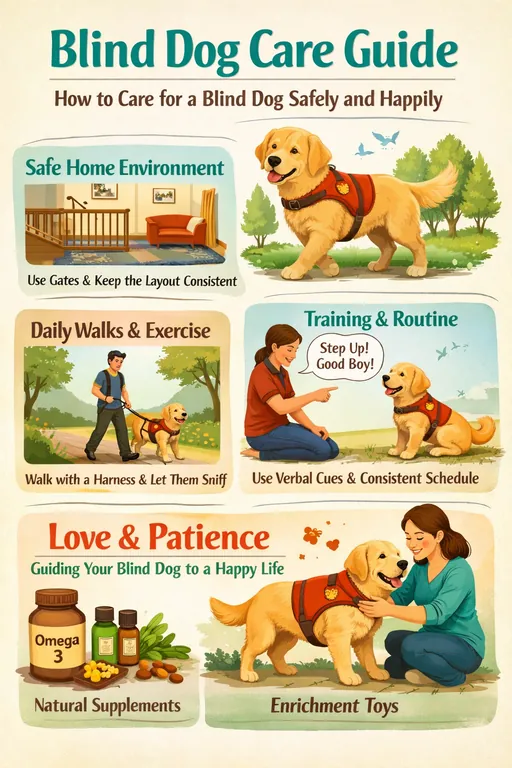
Preparing Your Home for Blind Dog Care
A safe and predictable home is the foundation of caring for a blind dog.
Keep the Layout Consistent
Avoid moving furniture frequently
Keep pathways clear
Use rugs or mats as texture markers
Consistency helps your dog build a mental map of the house.
Block Dangerous Areas
Use baby gates for stairs
Cover sharp corners
Keep doors either fully open or fully closed
Use Sound & Scent Cues
Hang bells on doors
Use essential oils (pet-safe) near key areas like food bowls
Talk to your dog while approaching
These small steps make blind dog care much easier.
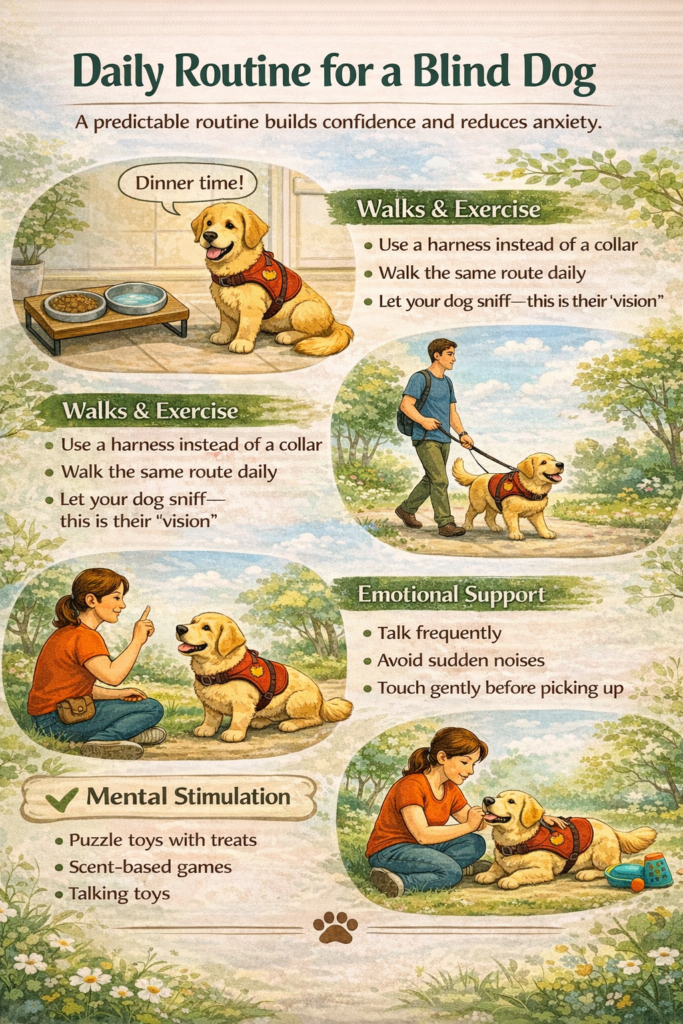
Daily Routine for a Blind Dog
A predictable routine builds confidence and reduces anxiety.
Feeding Time
Keep food and water bowls in the same spot
Announce feeding time verbally
Avoid changing bowl locations
Walks & Exercise
Use a harness instead of a collar
Walk the same route daily
Let your dog sniff—this is their “vision”
Regular walks are essential for blind dog care and mental stimulation.
Training a Blind Dog
Training is not only possible—it’s essential.
Use Verbal Commands
Blind dogs rely heavily on voice cues. Use calm, consistent commands like:
“Step up”
“Stop”
“Careful”
Positive Reinforcement
Treats
Praise
Gentle touch
Never punish mistakes. Confidence is key in blind dog care.
Teach Spatial Awareness
Guide your dog slowly and let them explore new spaces at their own pace.
Morning Routine: Starting the Day with Confidence
A calm and predictable morning sets the tone for the entire day.
Wake-Up and Orientation
Always wake your blind dog gently by speaking first. Saying their name before touching them prevents confusion or fear. Keep their sleeping area unchanged so they recognize the surroundings through scent and memory.
Bathroom Break
Take your dog to the same potty area every morning using the same path. Use verbal cues such as “step,” “slow,” or “stop” to guide them safely. Consistency helps your blind dog memorize the route.
Breakfast Time
Feed your blind dog at the same time and in the same place daily. Avoid moving food bowls. You can tap the bowl lightly or use a verbal cue like “food” so your dog can locate it easily.
Emotional Support & Bonding
Blind dogs often form deeper emotional connections with their owners.
Build Trust
Talk frequently
Touch gently before picking them up
Avoid sudden noises
Reduce Anxiety
Stick to routines
Play calming music
Use comforting scents
Blind dog care is as much emotional as it is physical.
Mental Stimulation for Blind Dogs
Mental health is crucial in blind dog care.
Enrichment Ideas
Puzzle toys with treats
Scent-based games
Talking toys
Mental stimulation prevents boredom and depression.
Grooming & Health Care
Grooming and regular health care are crucial parts of blind dog care. They not only keep your dog physically healthy but also reduce anxiety and build trust between you and your pet.
Grooming Tips
Grooming is an excellent opportunity to bond with your blind dog. Here’s how to make it comfortable and safe:
Talk while grooming: Always speak softly and explain your actions. Let your dog know when you are about to brush, trim nails, or clean their ears.
Use the same tools consistently: Using familiar brushes, combs, and nail clippers helps your dog feel secure. Sudden changes in tools can cause anxiety.
Keep sessions calm and slow: Short, gentle sessions prevent stress. Allow your dog to take breaks if needed and reward them with treats or praise.
Brush regularly: Brushing removes tangles, distributes natural oils, and keeps the coat healthy.
Check for injuries or irritation: While grooming, examine your dog’s skin, ears, paws, and nails for any signs of infection, inflammation, or injury.
Bathing: Use lukewarm water and mild dog-friendly shampoo. Speak to your dog throughout the bath to reassure them. Avoid strong scents or harsh products.
Regular grooming not only maintains hygiene but also strengthens the emotional bond between you and your blind dog.
Vet Visits
Blind dogs require routine veterinary care to maintain overall health and prevent complications:
Regular eye check-ups: Even if your dog is completely blind, regular vet visits help monitor eye health and detect any underlying conditions early.
Monitor for infections: Blind dogs may not notice injuries or irritations. Check ears, teeth, skin, and paws for any signs of infection.
Ask about supplements: Supplements such as Omega-3 fatty acids can support coat, joint, and cognitive health—especially in older blind dogs.
Vaccinations and preventive care: Keep vaccinations, flea/tick treatments, and deworming schedules up to date.
Monitor weight and diet: Blind dogs may be less active; ensure their diet is balanced to prevent obesity or malnutrition.
Proactive health care is essential in blind dog care. Preventive measures, early detection, and consistent grooming routines ensure your blind dog remains happy, comfortable, and confident in their environment.
Introducing a Blind Dog to New Pets or People
Take It Slow
Allow sniffing first
Use calm voices
Supervise initial interactions
Blind dogs depend on scent and sound to recognize others.
Traveling With a Blind Dog
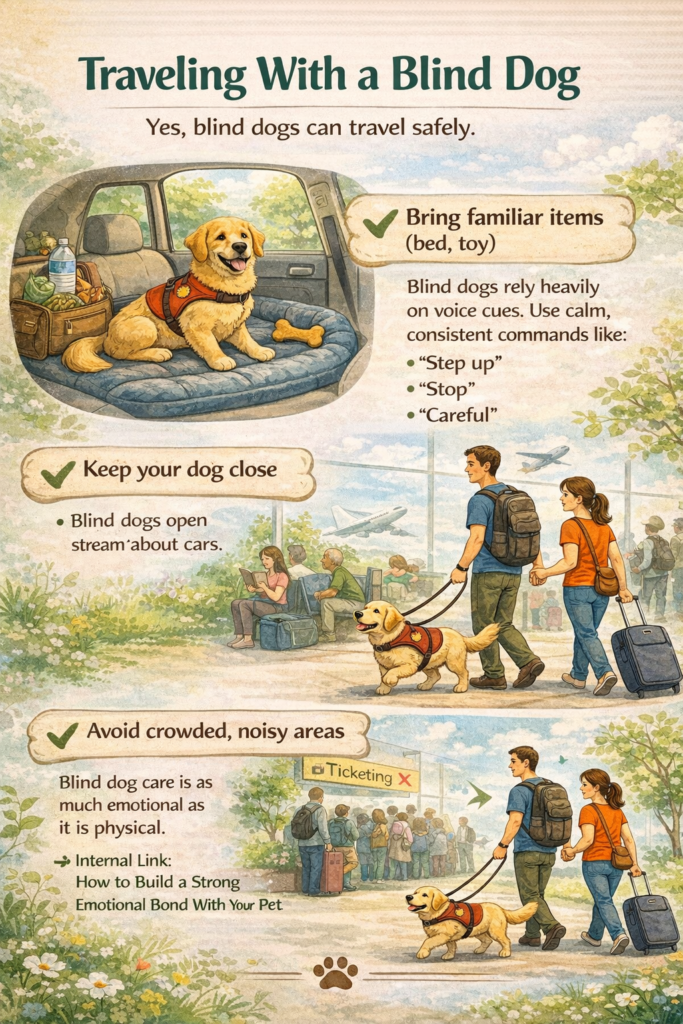
Yes, blind dogs can travel safely.
Travel Tips
Bring familiar items (bed, toy)
Keep your dog close
Avoid crowded, noisy areas
Preparation makes blind dog care easier outside the home.
Reducing Travel Anxiety in Blind Dogs
Travel anxiety can occur, especially during early experiences.
To reduce stress:
Stick to routines as much as possible
Bring familiar items from home
Avoid sudden loud noises
Offer praise and reassurance
Never rush your blind dog. Let them move at their own pace and celebrate small successes.
Staying in Hotels or New Homes
When staying somewhere new, allow your blind dog to explore slowly.
Walk them around the space on a leash first. Show them where their bed, food, and water are located. Keep furniture layout as consistent as possible during your stay.
Common Mistakes to Avoid
Rearranging furniture often
Ignoring verbal communication
Treating blindness as a weakness
Overprotecting too much
Natural & Holistic Support for Blind Dogs
Many owners prefer a natural approach.
Helpful Natural Options
Omega-3 supplements (vet-approved)
Gentle massage
Calming herbal remedies (pet-safe only)
Final Thoughts: Loving a Blind Dog Is a Beautiful Journey
Caring for a blind dog is not about focusing on what your dog has lost—it’s about discovering how much they can still experience. Blind dogs don’t feel sorry for themselves. They adapt, trust, and love deeply when given patience and reassurance.
Blind dog care teaches us powerful lessons about empathy, communication, and unconditional love. When you slow down, speak gently, and guide your dog with confidence, you build a bond that is often stronger than ever before. Many pet owners say that caring for a blind dog has made them more attentive, compassionate, and emotionally connected.
Your blind dog does not need perfect vision to feel safe. They need:
Your voice
Your routine
Your patience
Your love
With consistent care, mental stimulation, emotional bonding, and a safe environment, blind dogs can enjoy a life full of joy, trust, and adventure—even while traveling, playing, and learning new things.
FAQ-About Blind Dog Care
Can blind dogs live a normal and happy life?
Yes, blind dogs can live a very happy, active, and fulfilling life. Dogs rely more on smell, hearing, and memory than vision. With proper blind dog care, a consistent routine, and emotional support, most blind dogs adapt extremely well. Many owners report that once the initial adjustment period passes, their blind dog behaves just like any other dog—playing, walking, and bonding deeply with family members.
Is it hard to take care of a blind dog?
Blind dog care may feel challenging at first, especially if the vision loss is sudden. However, once you understand your dog’s needs and establish a predictable routine, caring for a blind dog becomes second nature. Small changes like keeping furniture in the same place, using verbal cues, and offering reassurance make a huge difference.
How do I train a blind dog effectively?
Training a blind dog is not only possible—it is essential. Blind dogs respond very well to clear verbal commands, tone of voice, and positive reinforcement. Commands like “step up,” “stop,” and “careful” help your dog understand their surroundings. Reward-based training builds confidence and trust, which is a key part of blind dog care.
Should I walk my blind dog every day?
Yes, daily walks are very important for blind dog care. Walks provide physical exercise, mental stimulation, and confidence-building experiences. Always use a harness instead of a collar, follow the same route daily, and allow your dog to sniff freely. For a blind dog, sniffing is how they “see” the world.
Can blind dogs travel safely?
Absolutely. Blind dogs can travel safely when properly prepared. Bring familiar items such as their bed, blanket, or favorite toy to reduce anxiety. Keep your dog close in new environments, use verbal reassurance, and avoid crowded or noisy places when possible. Traveling with a blind dog becomes easier with planning and patience.
How do I help my blind dog feel safe at home?
Creating a safe home environment is a major part of blind dog care. Keep furniture in consistent positions, block stairs or dangerous areas, and avoid leaving objects on the floor. Talking to your dog before touching them and using sound or scent cues can also help them feel secure.
Do blind dogs get depressed?
Blindness itself does not cause depression, but sudden vision loss combined with confusion or lack of stimulation can lead to anxiety or sadness. Mental stimulation, affection, routine, and patience are essential. Interactive toys, scent-based games, and emotional bonding help keep blind dogs mentally healthy and happy.
Should I treat my blind dog differently from other dogs?
Your blind dog needs understanding, not limitation. Avoid overprotecting or isolating them. Allow exploration, play, and learning at their own pace. Blind dog care is about guidance and support—not restriction.