
Cat Meowing at Night: 10 Common Causes and How to Solve Them
Cat meowing at night can disrupt your sleep. Discover why your cat meows at night and learn simple, expert-backed ways to stop it fast.
Cat Meowing at Night – Causes, Meaning & Easy Home Solutions
If your cat meowing at night has turned into a daily struggle, you are not alone. Many cat owners experience this frustrating behavior, especially when their cat suddenly becomes vocal after midnight or during the early morning hours. Cats naturally communicate through meowing, but cat meowing at night often signals something more than simple communication. It may be hunger, stress, anxiety, boredom, confusion, health issues, or even natural instincts. Similar to how patience and consistency are needed when learning How to Train a Parrot to Talk, understanding the reasons behind nighttime meowing is essential to correcting the behavior effectively.
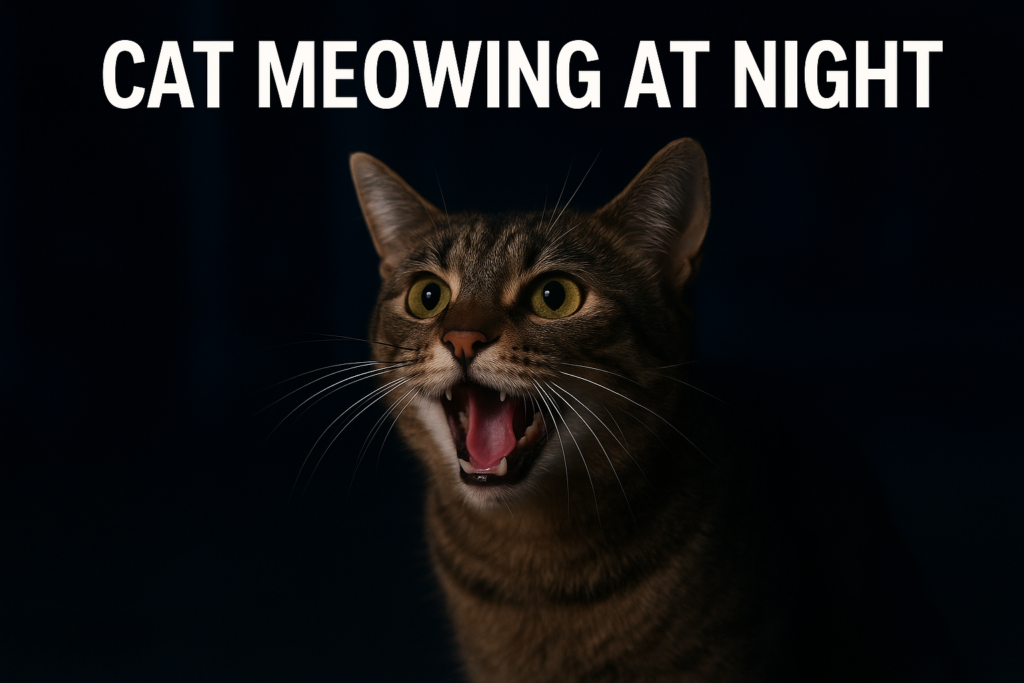
What Does Cat Meowing at Night Really Mean?
Cats meow to communicate. But when the cat meowing at night becomes loud, persistent, or unusual, it’s usually a sign that your cat is trying to tell you something important.
Nighttime meowing generally indicates:
A physical need
Emotional needs
Medical issues
Environmental discomfort
Natural behavior patterns
Understanding these signals is the first step to stopping cat meowing at night permanently.
Main Reasons for Cat Meowing at Night
Below are the most common, scientifically supported reasons why cats cry, yowl, or meow during the night.
1. Hunger or Inconsistent Feeding Routine
One of the biggest reasons for cat meowing at night is hunger.
Cats have fast metabolisms, and if you feed them too early, they might wake up hungry.
Signs hunger is the cause:
Meowing near the kitchen
Sitting near their food bowl
Crying at the bedroom door
A simple solution like a late-night meal or an automatic feeder can reduce nighttime meowing.
2. Excess Energy or Boredom
Cats who don’t get enough daily activity often release their energy at night.
This extra energy turns into:
Zoomies
Scratching
Jumping
Cat meowing at night repeatedly
Young cats, kittens, and active breeds like Bengal or Siamese are more prone to this.
Playtime = Less Noisy Nights.
3. Attention-Seeking Behavior
Some cats meow at night because:
They want company
They want to sleep in your room
They are used to night cuddles
They get attention when they cry
If you respond every time, the behavior strengthens.
Cats learn “Meow = Human comes.”
Ignoring this behavior consistently is key.
4. Stress, Anxiety, or Environmental Change
Cats are sensitive. Even a small change can trigger cat meowing at night, such as:
New home
New furniture
New pet
New baby
Loud noise
Travel
Owner’s routine change
Stress leads to nighttime crying because the cat feels unsafe or unsettled.
5. Aging & Cognitive Decline
Older cats often experience:
Confusion
Disorientation
Night anxiety
Reduced vision or hearing
This results in excessive cat meowing at night.
This is called Feline Cognitive Dysfunction, similar to human dementia.
6. Medical Issues
Sometimes, cat meowing at night is a sign of pain or illness.
Possible medical causes include:
Hyperthyroidism
Kidney disease
Urinary infection
Arthritis
Stomach issues
Blindness
Dental pain
If your cat suddenly starts crying loudly at night, a veterinary visit is necessary.
7. Mating Behavior
Unneutered or unspayed cats cry loudly at night due to hormonal changes.
Females in heat will:
Meow loudly
Roll on the floor
Try to escape
Males will:
Yowl
Roam
Look for female cats
Spaying/neutering greatly reduces nighttime meowing.
8. Territorial Instincts
Cats are territorial. If your cat sees stray cats outside during the night:
They may meow
Growl
Yowl
Scratch the window
This behavior is instinctive and common in street-facing homes.
How to Stop Cat Meowing at Night
Below are proven methods to stop cat meowing at night safely and effectively.
1. Adjust Feeding Schedule
Feed your cat:
A bigger meal at night
Or add a small late-night snack
A well-fed cat sleeps better and stops crying.
Automatic feeders also help maintain routine.
2. Increase Daily Activity (Play Before Bed)
Spend 15–20 minutes playing before bedtime.
Use:
Laser pointer
Feather wand
Balls
Interactive toys
A tired cat = A quiet cat.
This alone solves cat meowing at night in most homes.
3. Don’t Respond to Attention-Seeking Meowing
This is hard but effective.
If your cat learns:
Meowing gets you out of bed
Meowing gives them snacks
Meowing lets them into your room
…then they will continue meowing every night.
Stay strong and ignore it.
Consistency is key.
4. Provide a Cozy Sleeping Area
Make a quiet, warm, safe place where your cat can sleep peacefully.
Add:
Soft blanket
Warm bed
Small night light
Cat-safe heating pad
Comfort reduces stress-based cat meowing at night.
5. Use Calming Aids
If your cat is anxious, calming products help a lot.
Try:
Feliway diffuser
Calming spray
Catnip
Pheromone collar
L-theanine treats
These help reduce fear, anxiety, and nighttime crying.
6. Keep the Environment Stable
Avoid sudden changes.
Cats prefer routine.
Keep:
Sleeping spot consistent
Feeding times fixed
Litter box clean
Lights dim at night
Routine reduces anxiety-based cat meowing at night.
7. Block Outside Triggers
If stray cats cause nighttime meowing:
Close curtains
Use privacy film
Keep your cat away from windows
Remove outdoor food that attracts strays
Removing visual triggers reduces nighttime crying instantly.
8. Spay/Neuter Your Cat
This reduces:
Hormonal crying
Night yowling
Restless behavior
Attempts to escape
Perfect solution for mating-related cat meowing at night.
9. Visit a Vet if Behavior Is Sudden
If the night crying:
Started suddenly
Sounds painful
Includes vomiting
Includes hiding
Includes limping
Then immediate veterinary attention is needed.
Health issues should never be ignored.
Is Cat Meowing at Night Normal?
Yes and no.
Some nighttime meowing is normal, especially for active breeds.
But excessive, loud, or sudden cat meowing at night is not normal and needs attention.
A healthy, comfortable, stimulated cat sleeps quietly.
When to Worry About Nighttime Meowing?
You should worry if your cat is:
Crying loudly in pain
Suddenly vocal at night
Elderly with confusion
Eating less
Drinking excessively
Losing weight
Staring at walls
Hiding
These are signs of illness.
Conclusion
Cat meowing at night can be annoying, stressful, and confusing for owners, but the good news is — it is fixable.
By understanding the root cause — hunger, stress, boredom, illness, or natural instincts — you can solve nighttime crying quickly and safely.
With proper feeding, enough playtime, comfort, routine, and care, your cat can sleep peacefully throughout the night… and so can you!
FAQs — Cat Meowing at Night
1. Why is my cat meowing at night so loudly?
Cat meowing at night loudly usually means your cat is trying to communicate an urgent need. This can include hunger, stress, loneliness, boredom, mating behavior, or discomfort. Cats are more vocal at night because their natural instinct is to be active during dawn and dusk. If your cat suddenly starts crying loudly at night, it may also indicate pain, illness, or emotional upset. Loud nighttime meowing is common in breeds like Siamese, who are naturally vocal. If the sound is painful or unusual, a vet check is recommended.
2. Is cat meowing at night normal or a sign of a problem?
Some cat meowing at night is normal, especially in younger cats, active breeds, or cats with high energy. But excessive, nonstop, or newly developed nighttime meowing usually signals a deeper issue. It may be a behavioral problem like boredom or attention-seeking. It may be environmental, like a new pet or shift in routine. Or it may be medical, such as thyroid disease, kidney problems, or anxiety. Normal meowing is soft and brief. Abnormal meowing is loud, frequent, and persistent.
3. Why do cats meow when the house is dark at night?
Cats meow more in the dark because:
They see movement outside like stray cats
They feel lonely when everyone is asleep
They become more alert at night
They feel anxious in dark, quiet rooms
Cat meowing at night in darkness is often a comfort-seeking behavior. Cats rely on voices and human presence, and darkness reduces their confidence. A soft night light can reduce fear or confusion, especially in older cats with poor eyesight.
4. How can I stop my cat from meowing at night naturally?
To stop cat meowing at night naturally, follow these steps:
Feed your cat a late dinner
Play for 20–30 minutes before bedtime
Offer a warm, cozy sleeping spot
Ignore attention-seeking meowing
Maintain a stable routine
Use calming sprays or pheromone diffusers
Keep windows covered to block stray animals
Most cats stop nighttime crying within a week when these steps are applied consistently.
5. Can hunger really cause cat meowing at night?
Yes. Hunger is one of the top causes of cat meowing at night. Cats have small stomachs and fast digestion, so if they eat early in the evening, they can wake up hungry during the night. A late-night meal or automatic feeder set for 2–3 AM reduces hunger-related meowing. If your cat meows near the kitchen or food bowl, hunger is the likely cause.
6. Why do older cats meow more at night?
Senior cats frequently suffer from cognitive decline, similar to human dementia. This leads to:
Confusion
Disorientation
Fear
Night anxiety
Increased vocalization
Older cats may also experience pain from arthritis, poor vision, or hearing loss, causing them to cry for help. Cat meowing at night in older cats is very common and requires gentle care, a night light, comfortable bedding, and a vet check to manage symptoms.
7. Is attention-seeking a cause of nighttime meowing?
Absolutely. Many cats learn that if they meow long enough, their owner will get up, give attention, open a door, or offer food. This reinforces the behavior. To stop cat meowing at night for attention, you must ignore it completely. Any reaction—even shouting—rewards the behavior. Cats quickly learn that meowing no longer works.
8. Does playing with my cat reduce nighttime crying?
Yes. Nighttime meowing is often caused by pent-up energy. Cats need mental stimulation, hunting-style play, and exercise to stay calm at night. A tired cat sleeps quietly.
Play with:
Wand toys
Laser pointers
Feather teasers
Puzzle feeders
This reduces cat meowing at night dramatically.
9. Should I worry if my cat suddenly starts meowing at night?
Yes. A sudden increase in cat meowing at night may signal:
Pain
Hyperthyroidism
UTI
Kidney problems
Injury
Stress
Fear
If nighttime crying started out of nowhere, especially if the cat is older, a vet visit is necessary.
10. Can spaying or neutering stop nighttime meowing?
Yes. Unneutered males and unspayed females cry loudly at night due to mating instincts. This includes yowling, roaming, and restlessness. Spaying/neutering reduces hormones responsible for nighttime vocalization and is one of the most effective long-term solutions for cat meowing at night.
Pingback: How to Train a Parrot to Talk