
Foods Toxic to Dogs That Can Kill Your Dog
Learn about foods toxic to dogs, including chocolate, grapes, xylitol, and more. Discover symptoms, risks, and how to keep your dog safe.
Foods toxic to dogs are a serious but often overlooked threat to canine health. Many dog owners unknowingly share human foods with their pets, believing them to be harmless or even healthy. However, several everyday foods that are safe for humans can be extremely dangerous—and sometimes fatal—for dogs.
Dogs have a different digestive system and metabolism than humans. Certain foods can damage their organs, disrupt their nervous system, or cause severe poisoning. Understanding which foods are toxic to dogs, recognizing early symptoms, and knowing how to prevent accidental ingestion can save your dog’s life.
This complete guide explains the most dangerous foods toxic to dogs, symptoms of food poisoning, what to do in emergencies, and safe alternatives every dog owner should know.
Why Some Human Foods Are Toxic to Dogs
Dogs process food differently than humans. Their bodies lack certain enzymes needed to break down specific compounds found in human foods. As a result, even small amounts of some foods can cause:
Digestive upset
Nervous system damage
Liver or kidney failure
Heart problems
Death in severe cases
Many cases of food poisoning in dogs happen accidentally—during family meals, parties, or when dogs access trash bins.
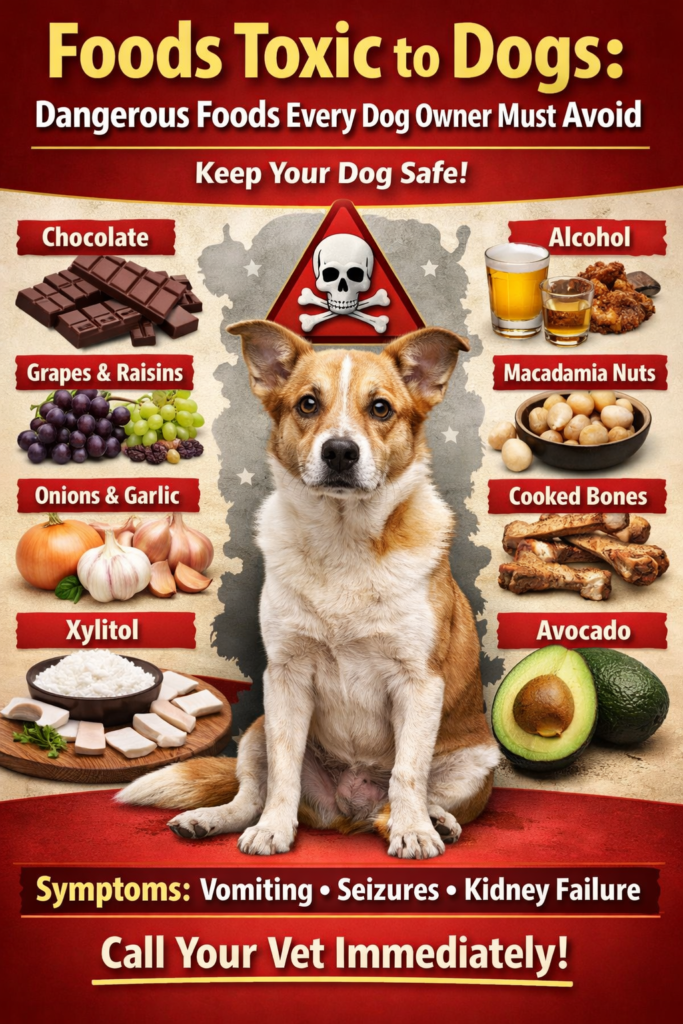
Most Dangerous Foods Toxic to Dogs
1. Chocolate and Cocoa Products
Chocolate is one of the most well-known foods toxic to dogs.
Why it’s dangerous:
Chocolate contains theobromine and caffeine, which dogs cannot metabolize efficiently.
Symptoms:
Vomiting and diarrhea
Rapid heart rate
Tremors
Seizures
Hyperactivity
Collapse or death in severe cases
Most dangerous types:
Dark chocolate
Baking chocolate
Cocoa powder
2. Grapes and Raisins
Grapes and raisins are extremely toxic—even in small amounts.
Health risks:
Acute kidney failure
Symptoms:
Vomiting
Diarrhea
Lethargy
Loss of appetite
Reduced urination
The exact toxic compound is unknown, making grapes one of the most unpredictable foods toxic to dogs.
3. Onions, Garlic, and Chives
These foods belong to the Allium family and are highly toxic to dogs.
Sources include:
Raw onions
Cooked onions
Garlic powder
Onion-flavored foods
Health risks:
Destruction of red blood cells
Anemia
Symptoms:
Weakness
Pale gums
Rapid breathing
Vomiting
4. Xylitol (Artificial Sweetener)
Xylitol is found in:
Sugar-free gum
Candies
Peanut butter
Baked goods
Toothpaste
Why it’s deadly:
Xylitol causes a rapid insulin release, leading to dangerously low blood sugar levels.
Symptoms:
Vomiting
Loss of coordination
Seizures
Liver failure
Death
This is one of the fastest-acting foods toxic to dogs.
5. Alcohol and Fermented Foods
Alcohol affects dogs much more severely than humans.
Sources:
Beer
Wine
Liquor
Raw dough
Symptoms:
Vomiting
Disorientation
Difficulty breathing
Coma
Death
Raw dough is especially dangerous because it expands in the stomach and produces alcohol during fermentation.
6. Caffeine
Caffeine is found in:
Coffee
Tea
Energy drinks
Soda
Coffee grounds
Health risks:
Nervous system stimulation
Heart rhythm abnormalities
Symptoms:
Restlessness
Tremors
Rapid heartbeat
Seizures
7. Macadamia Nuts
Macadamia nuts are highly toxic to dogs, though the exact toxin is unknown.
Symptoms:
Weakness (especially hind legs)
Vomiting
Tremors
Fever
Symptoms usually appear within 12 hours of ingestion.
8. Avocado
Avocados contain persin, which can be harmful to dogs.
Risks include:
Vomiting
Diarrhea
Pancreatitis due to high fat content
Choking hazard from the pit
9. Fatty and Fried Foods
Examples include:
Bacon
Sausages
Fried chicken
Pizza
Health risks:
Pancreatitis
Obesity
Digestive upset
While not immediately toxic, these foods can cause serious long-term health issues.
10. Cooked Bones
Cooked bones may splinter and cause:
Choking
Intestinal blockages
Internal injuries
Raw bones should only be given under veterinary guidance.
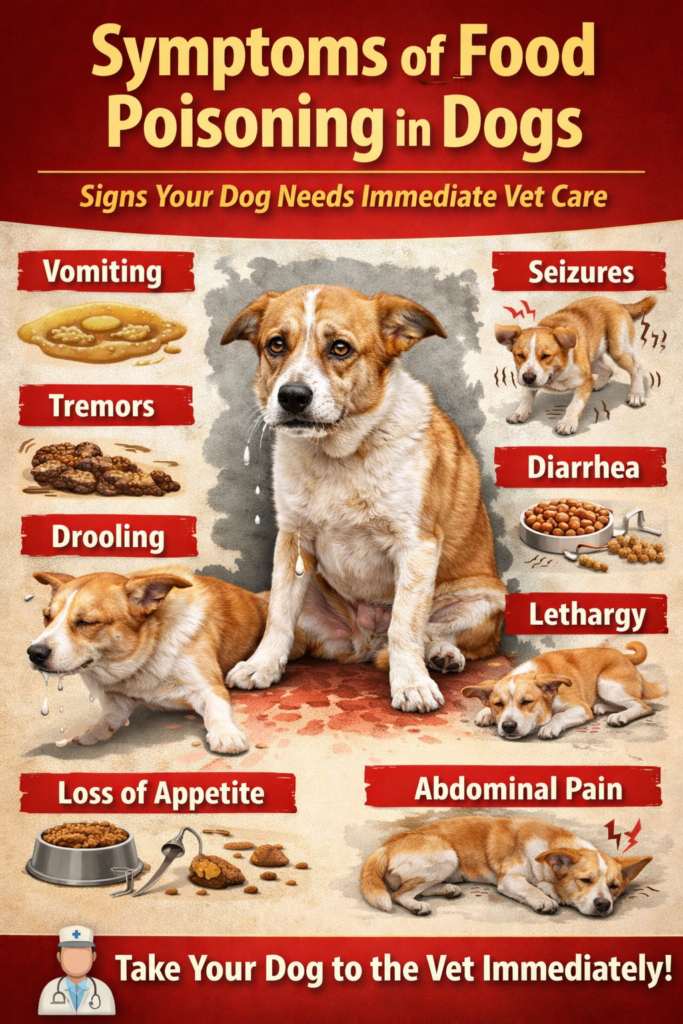
Symptoms of Food Poisoning in Dogs
Common signs include:
Vomiting
Diarrhea
Drooling
Tremors
Seizures
Lethargy
Loss of appetite
Immediate veterinary care is critical
What to Do If Your Dog Eats Toxic Food
Remove remaining food
Do not induce vomiting unless advised
Call your vet immediately
Share food name, amount, and time eaten
Safe Human Foods for Dogs
Plain cooked chicken
Rice
Carrots
Pumpkin
Apples (no seeds)
Blueberries
Always feed in moderation.
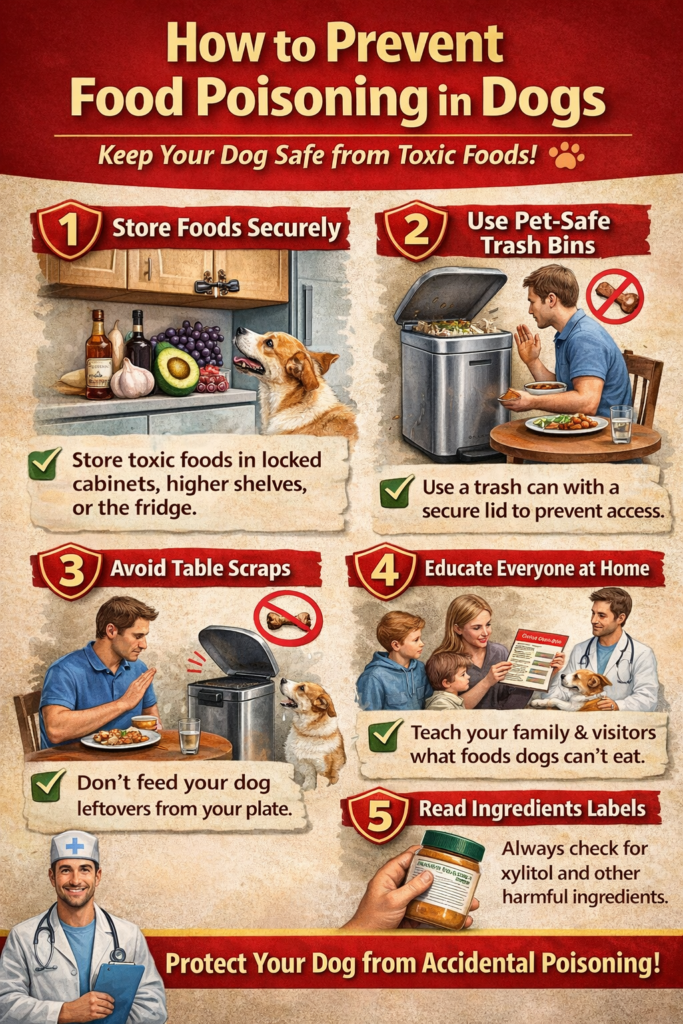
How to Prevent Food Poisoning
Store toxic foods securely
Avoid table scraps
Educate family members
Read ingredient labels
Use pet-safe trash bins
FAQ- Foods Toxic to Dogs
1. What are the most common foods toxic to dogs?
The most common foods toxic to dogs include chocolate, grapes, raisins, onions, garlic, xylitol (found in sugar-free gum and peanut butter), alcohol, caffeine, macadamia nuts, and cooked bones. Even small amounts of these foods can cause serious illness or death in dogs.
2. Can small amounts of toxic foods harm dogs?
Yes. Dogs have a sensitive digestive system, and even small amounts of some foods toxic to dogs can cause vomiting, diarrhea, or more severe symptoms like seizures or organ failure. Puppies and small breeds are especially vulnerable.
3. How fast do symptoms of food poisoning appear in dogs?
Symptoms of poisoning from foods toxic to dogs may appear within minutes to a few hours. In some cases, like with grapes or xylitol, symptoms may take 12–24 hours to manifest. Quick recognition and veterinary care are essential.
4. Is chocolate always dangerous for dogs?
Chocolate contains theobromine and caffeine, which are toxic to dogs. Dark chocolate and baking chocolate are the most dangerous. While small amounts of milk chocolate may not always cause severe illness, it’s safest to avoid all chocolate entirely.
5. Are grapes and raisins really toxic to all dogs?
Yes. Grapes and raisins can cause acute kidney failure in dogs, and there is no known safe quantity. Any exposure should be treated as an emergency, and the vet should be contacted immediately.
6. Can dogs eat onions or garlic in small amounts?
No. Onions, garlic, and other Allium vegetables destroy red blood cells, leading to anemia. Symptoms include weakness, pale gums, and rapid breathing. Even cooked onions or garlic powder in small amounts can be harmful.
7. What is xylitol, and why is it dangerous for dogs?
Xylitol is an artificial sweetener commonly found in sugar-free gum, candies, peanut butter, and baked goods. It causes a rapid release of insulin in dogs, resulting in dangerously low blood sugar and potential liver failure. Xylitol poisoning can be fatal if not treated promptly.
8. Are fatty or fried foods safe for dogs?
Fatty or fried foods, like bacon, pizza, or fried chicken, are not immediately toxic but can trigger pancreatitis, obesity, or digestive issues over time. Moderation and vet-approved diets are recommended.
9. Can cooked bones be dangerous for dogs?
Yes. Cooked bones splinter easily and can cause choking, mouth injuries, or internal blockages. Raw bones may be safer but should be given under supervision.
10. What should I do if my dog eats toxic food?
Stay calm and remove any remaining food.
Do not induce vomiting unless instructed by a vet.
Contact your veterinarian immediately.
Provide details like the type of food, amount, and time ingested. Early intervention increases survival chances.
11. Are some human foods safe for dogs?
Yes. Safe options include cooked, unseasoned chicken, plain rice, carrots, pumpkin, apples (without seeds), and blueberries. Always introduce new foods gradually.
12. How can I prevent accidental food poisoning?
Store all foods toxic to dogs out of reach.
Avoid feeding table scraps.
Educate family members and guests.
Use pet-proof trash bins.
Read labels carefully for artificial sweeteners like xylitol.
13. How do I recognize early signs of poisoning?
Symptoms may include:
Vomiting
Diarrhea
Drooling
Tremors
Seizures
Lethargy
Loss of appetite
Early recognition is critical to saving your dog’s life.
14. Can small dogs handle toxic foods better than large dogs?
No. Small dogs are actually more vulnerable because even tiny amounts of foods toxic to dogs are more concentrated relative to their body weight.
15. Is it safe to give dogs human candy or snacks?
No. Most human candies contain chocolate, xylitol, or high sugar and fat content, which are dangerous for dogs. Always provide dog-safe treats instead.
16. Are fruits like apples and carrots safe for dogs?
Yes. Apples (without seeds) and carrots are healthy, low-calorie snacks that provide vitamins and fiber. Moderation is key to prevent digestive upset.
17. Can water intake prevent food poisoning?
While water doesn’t prevent ingestion of toxic foods, keeping your dog hydrated can help reduce the severity of some digestive symptoms. Always provide clean, fresh water.
18. Are all nuts toxic to dogs?
Not all, but macadamia nuts are extremely toxic. Others, like peanuts or almonds, may be safe in small amounts if unsalted and plain. Always check with your vet.
19. How important is vet intervention after toxic food ingestion?
Extremely important. Many foods toxic to dogs can cause irreversible organ damage. Immediate veterinary care can prevent complications and save lives.
20. Can dogs recover fully from mild food poisoning?
Yes. If treated promptly, most dogs recover fully from mild cases. Recovery depends on the type of food ingested, the amount, and how quickly treatment starts.