
Harmful Pet Trends on Social Media
Harmful Pet Trends on social media can put pets at serious risk. Learn which viral pet challenges are dangerous and how to keep your pets safe.
Introduction
Social media has changed the way we share our lives with pets. While many trends celebrate pets, some are harmful. Understanding harmful pet trends is crucial for every pet owner to ensure pets’ safety and well-being. Pets cannot voice discomfort, so it’s our responsibility to identify which trends are dangerous and why.
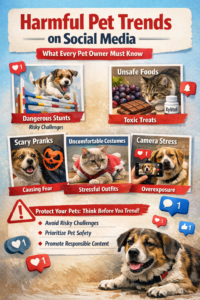
1. Forced Reactions & Prank Videos
One of the most common harmful pet trends involves scaring pets for entertainment. Loud noises, fake objects, or sudden surprises may seem funny online but cause long-term stress. Signs of distress include trembling, hiding, and excessive panting.
Safer Alternative: Focus on positive interactions or training exercises that showcase pets’ natural behaviors.
2. Dangerous Diet & Feeding Trends
Many viral challenges encourage pets to eat unsafe foods. Common examples include chocolate, onions, grapes, xylitol products, and cooked bones, all of which can lead to poisoning, organ damage, or serious digestive issues. Ignoring proper nutrition guidelines and safe meal planning—especially without following a Homemade Pet Food Recipes & Feeding Guide—can put pets at serious risk.
Including unsafe feeding challenges is one of the top harmful pet trends seen on social media, often promoting habits that contradict balanced and safe nutrition practices recommended in a reliable Homemade Pet Food Recipes & Feeding Guide.
Safer Alternative: Use vet-approved treats and maintain a healthy diet by following a trusted Homemade Pet Food Recipes & Feeding Guide to ensure pets receive safe, nutritious meals.
3. Dressing Pets Uncomfortably
While dressing pets may look cute online, forcing them into tight, heavy, or restrictive clothing is a major harmful pet trend. Pets may freeze, refuse to move, or show signs of stress.
Safer Alternative: Only use lightweight, comfortable clothing approved for pets.
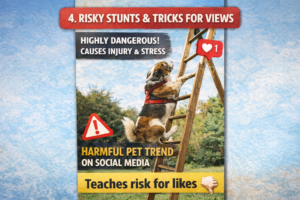
4. Risky Stunts & Tricks
Viral videos often encourage pets to perform jumps, climb objects, or navigate dangerous obstacles. These stunts are highly risky, potentially causing broken bones, joint injuries, or long-term mobility issues.
Safer Alternative: Teach safe tricks and focus on mental enrichment games.
5. Overexposure & Camera Stress
Some influencer pets are filmed excessively, leaving them stressed and fatigued. This overexposure is another significant harmful pet trend, leading to anxiety, withdrawal, and behavioral issues.
Safer Alternative: Limit filming time and respect pets’ rest periods.
6. Copying Trends Without Understanding
Many users replicate viral pet trends without considering breed, age, or health conditions. This blind imitation is a hidden danger and a frequent harmful pet trend.
Safer Alternative: Research before attempting any trend and consult a vet if unsure.
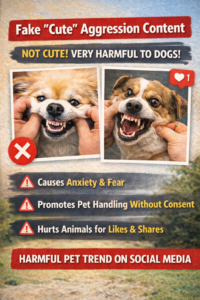
7. Fake “Cute” Aggression Content
Videos showing growling, snapping, or resource guarding as “cute” normalize aggression. This is a dangerous harmful pet trend, as it encourages unsafe behavior around humans and other pets.
Safer Alternative: Educate audiences about pet body language and safe interactions.
How to Identify Harmful Pet Trends
Ask yourself:
Is the pet showing stress or fear?
Would this behavior occur naturally?
Does the trend involve force or discomfort?
Is it done for views rather than welfare?
If yes, the content likely falls under harmful pet trends.
Responsible Pet Content Creation
Content creators should:
Prioritize pet health over engagement
Promote safe, educational content
Avoid trends that induce stress or harm
Encourage adoption, care, and responsible ownership
Role of Viewers
Audiences can help reduce harmful pet trends by:
Not liking or sharing dangerous content
Reporting unsafe videos
Supporting ethical creators
Conclusion
Harmful pet trends on social media are more than just entertaining videos—they can lead to stress, injuries, or even death for pets. By recognizing, avoiding, and educating others about these trends, we can create a safer online environment and protect our furry friends. Responsible ownership ensures pets thrive, free from harmful influences.
FAQ Harmful Pet Trends
Q1: What are harmful pet trends on social media?
A: Harmful pet trends are viral online challenges, videos, or social media content that put pets at risk of physical or emotional harm. These trends often appear cute or entertaining but can involve unsafe practices such as scaring pets, feeding them dangerous foods, forcing them into uncomfortable costumes, or making them perform risky stunts. Pets cannot express discomfort like humans, so even minor stress can escalate into serious behavioral or health problems. Understanding which trends are harmful is critical for every pet owner to ensure the safety and well-being of their pets.
Q2: Why do harmful pet trends go viral so quickly?
A: Social media algorithms reward content that generates high engagement. Videos that shock, amuse, or evoke emotional reactions tend to get more views, likes, and shares. Pets, being inherently cute and playful, attract millions of viewers. Unfortunately, many creators focus on going viral rather than prioritizing pet welfare. This makes harmful pet trends more visible and appealing, even if they are dangerous. Pets may experience stress, anxiety, or injury while viewers perceive the content as harmless entertainment.
Q3: Which harmful pet trends are most common?
A: The most common harmful pet trends include:
Forced reactions and prank videos – scaring pets for amusement.
Unsafe feeding challenges – giving pets chocolate, grapes, xylitol, or other toxic human foods.
Stressful clothing and costumes – tight or heavy outfits that restrict movement.
Risky stunts – jumping from heights, balancing on unsafe surfaces, or performing dangerous tricks.
Overexposure to cameras – filming pets excessively, causing stress or anxiety.
Mimicking trends without knowledge – copying viral content without considering pet breed, age, or health conditions.
All these trends fall under harmful pet trends, and pet owners should avoid them to ensure their pets remain safe.
Q4: How can I tell if a social media trend is harmful to my pet?
A: To identify harmful pet trends, observe your pet closely:
Are they showing stress, fear, or discomfort?
Is the activity unnatural or unsafe for their breed or age?
Does the trend prioritize views or likes over pet welfare?
Could the activity cause physical injury, anxiety, or digestive issues?
If the answer is “yes” to any of these questions, it is likely a harmful trend. Being proactive and aware helps prevent injuries and long-term behavioral problems.
Q5: Are all viral pet challenges unsafe?
A: Not all viral pet challenges are harmful, but many are unsafe because they prioritize entertainment over safety. Even seemingly harmless trends can unintentionally stress pets or expose them to risk. Always evaluate challenges critically, consult a veterinarian if needed, and focus on content that highlights positive behavior, mental stimulation, and healthy interaction.
Q6: How can I create pet content responsibly?
A: Responsible pet content creation avoids contributing to harmful pet trends:
Prioritize safety and welfare over likes or virality.
Avoid frightening, stressful, or physically demanding challenges.
Use vet-approved foods and treats.
Limit filming time to prevent overexposure.
Showcase real pet behavior, adoption stories, or positive interactions.
Educating your audience about safe pet care can also help reduce the spread of dangerous trends online.
Q7: What should I do if my pet is affected by a harmful trend?
A: Immediate action is essential if a pet is exposed to a harmful trend:
Stop the activity and remove the pet from the situation.
Monitor for signs of distress such as vomiting, lethargy, trembling, or difficulty breathing.
Seek advice from a veterinarian immediately.
Avoid sharing or participating in the harmful trend further.
By acting quickly, you can prevent serious injury or long-term behavioral issues.
Q8: How can viewers help reduce harmful pet trends online?
A: Audiences play a key role in stopping harmful pet trends from spreading:
Avoid liking, sharing, or promoting unsafe videos.
Report dangerous or abusive content on social media platforms.
Support creators who prioritize safe and responsible pet content.
Educate friends and followers about the risks of harmful trends.
Collective action can reduce the visibility of dangerous content and protect pets everywhere.
Q9: Why is awareness of harmful pet trends important?
A: Awareness ensures that pets are safe, healthy, and stress-free. By understanding harmful pet trends, owners and content creators can avoid unintentional harm, promote responsible ownership, and foster a positive environment online. Protecting pets from viral challenges not only prevents injuries but also helps build a culture of ethical and safe pet content.
Pingback: Ultimate Healthy Homemade Pet Food Recipes & Feeding Guide