
Ultimate Healthy Homemade Pet Food Recipes & Feeding Guide
Discover safe homemade pet food recipes and expert feeding guides. Learn how to prepare balanced meals for dogs and cats to improve health, digestion, and longevity.
Why Pet Owners Are Choosing Homemade Pet Food
Homemade pet food recipes are becoming a popular choice among pet owners who want full control over their pet’s daily nutrition and overall health. In recent years, pet parents in the USA and UK have become more conscious about what goes into their pets’ bowls. Just like humans, pets thrive on fresh, nutritious food made with quality ingredients. This growing awareness has also emerged as a positive response to harmful pet trends that promote unsafe feeding practices and poor-quality commercial diets.
Commercial pet foods are convenient, but many contain artificial preservatives, fillers, and low-quality by-products—factors often associated with harmful pet trends seen in modern pet care. Homemade meals give you full control over ingredients, allowing you to tailor nutrition based on your pet’s age, breed, size, and specific health needs while avoiding risky feeding habits.
This comprehensive guide will walk you through:
Benefits of homemade pet food
Essential nutrients pets need
Safe and balanced homemade recipes
Feeding guides for dogs and cats
Common mistakes to avoid
Whether you’re new to pet nutrition or already preparing meals at home, this guide will help you do it safely and correctly.
Benefits of Homemade Pet Food
1. Better Ingredient Control
Homemade pet food allows you to select fresh meats, vegetables, and healthy fats, avoiding harmful additives and allergens.One of the biggest advantages of homemade pet food recipes is the ability to avoid artificial preservatives while providing fresh, balanced meals.
2. Improved Digestion & Energy
Many pets experience fewer digestive issues, shinier coats, and higher energy levels when switched to a balanced homemade diet.
3. Custom Nutrition for Health Conditions
Homemade meals are ideal for pets with:
Food allergies
Obesity
Kidney or liver issues
Sensitive stomachs
4. Stronger Bond with Your Pet
Preparing food at home strengthens the emotional bond and ensures your pet feels cared for and valued.
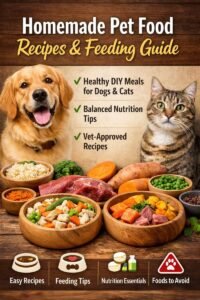
These homemade pet food recipes demonstrate how simple ingredients can create healthy meals for dogs and cats.
Essential Nutrients in a Healthy Pet Diet
A balanced homemade diet is not just about cooking meat. Pets require a mix of macronutrients and micronutrients.
Proteins (Foundation of Pet Nutrition)
Chicken
Turkey
Beef
Lamb
Fish (salmon, sardines)
Proteins support muscle growth, immunity, and tissue repair.
Healthy Carbohydrates
Brown rice
Oats
Sweet potatoes
Quinoa
Carbohydrates provide energy and support digestion.
Vegetables & Fiber
Carrots
Pumpkin
Spinach
Green beans
Zucchini
Vegetables help maintain gut health and provide essential vitamins.
Fats & Oils
Fish oil
Olive oil
Coconut oil
Healthy fats support brain function and keep coats shiny.
Vitamins & Minerals
Calcium (eggshell powder or vet-approved supplements)
Zinc
Iron
Vitamin A, D, and E
Always consult a vet before adding supplements.
Homemade Dog Food Recipes (Vet-Friendly)
Recipe 1: Chicken & Rice Balanced Meal (For Adult Dogs)
Ingredients:
1 cup boiled chicken (shredded)
½ cup cooked brown rice
½ cup carrots (chopped)
½ cup green beans
1 tsp olive oil
Instructions:
Cook chicken thoroughly and shred it.
Boil rice until soft.
Steam vegetables lightly.
Mix all ingredients and add olive oil.
Let cool before serving.
Benefits:
Easy to digest, ideal for dogs with sensitive stomachs.
Recipe 2: Beef & Sweet Potato Power Bowl
Ingredients:
1 cup lean ground beef
1 cup mashed sweet potato
½ cup spinach
1 tsp fish oil
Instructions:
Cook beef until fully browned.
Steam spinach lightly.
Mix all ingredients and drizzle fish oil.
Allow to cool.
Benefits:
High protein and energy-boosting meal for active dogs.
Homemade Cat Food Recipes (Safe & Simple)
Cats are obligate carnivores, meaning meat is essential to their diet.
Recipe 1: Chicken & Pumpkin Cat Meal
Ingredients:
1 cup boiled chicken (finely chopped)
¼ cup pumpkin puree
½ tsp fish oil
Instructions:
Cook chicken without seasoning.
Mix pumpkin and fish oil.
Blend lightly for texture.
Benefits:
Supports digestion and reduces hairballs.
Recipe 2: Fish & Rice Gentle Meal
Ingredients:
½ cup cooked salmon (boneless)
¼ cup white rice
½ tsp olive oil
Instructions:
Cook salmon thoroughly.
Mix with rice and olive oil.
Serve in small portions.
Benefits:
Great source of omega-3 for skin and coat health.
Pet Feeding Guide: How Much Should You Feed?
Dog Feeding Guide (General)
| Dog Size | Daily Portion |
|---|---|
| Small (5–10 kg) | 1 – 1.5 cups |
| Medium (10–25 kg) | 2 – 3 cups |
| Large (25+ kg) | 3 – 4.5 cups |
Divide meals into 2 servings per day.
Cat Feeding Guide (General)
| Cat Weight | Daily Portion |
|---|---|
| 3–4 kg | ¾ – 1 cup |
| 5–6 kg | 1 – 1.25 cups |
Serve in 2–3 small meals daily.
Portions vary depending on age, activity, and health.
Transitioning to Homemade Pet Food Safely
Switching abruptly can upset your pet’s stomach.
7-Day Transition Plan:
Day 1–2: 75% old food + 25% homemade
Day 3–4: 50% old food + 50% homemade
Day 5–6: 25% old food + 75% homemade
Day 7: 100% homemade
Monitor stool consistency and appetite closely.
Foods You Must NEVER Feed Pets
Onions & garlic
Chocolate
Grapes & raisins
Xylitol (artificial sweetener)
Raw dough
Excess salt or spices
These foods are toxic and can cause severe health issues.
Common Mistakes in Homemade Pet Diets
Skipping calcium sources
Feeding only meat without vegetables
Overfeeding
Ignoring vet guidance
Balanced nutrition is essential—homemade doesn’t mean unplanned.
Is Homemade Pet Food Right for Every Pet?
Homemade pet food is ideal for:
Pets with allergies
Senior pets
Health-conscious pet parents
However, pets with medical conditions should always follow vet-approved feeding plans.
Final Thoughts: A Healthier Way to Feed Your Pet
By following expert feeding guides and preparing homemade pet food recipes correctly, pet owners can support long-term health, digestion, and vitality.
Homemade pet food recipes and feeding guides empower you to take control of your pet’s nutrition. With proper planning, balance, and consistency, homemade meals can lead to:
Better digestion
Improved immunity
Shinier coats
Longer, healthier lives
When done right, homemade pet food is not just a trend—it’s a lifestyle choice for responsible pet parenting.
FAQs – Homemade Pet Food Recipes & Feeding Guide
1. Are homemade pet food recipes safe for dogs and cats?
Yes, homemade pet food recipes are safe when they are properly balanced and prepared with vet-approved ingredients. Pets need the right combination of protein, carbohydrates, fats, vitamins, and minerals to stay healthy.
2. How often should I feed homemade pet food to my pet?
Most dogs do well with two meals per day, while cats prefer two to three smaller meals daily. When following homemade pet food recipes, portion size should be adjusted based on your pet’s age, weight, and activity level.
3. Do homemade pet food recipes provide complete nutrition?
Homemade pet food recipes can provide complete nutrition if they include all essential nutrients. Adding calcium sources and consulting a veterinarian ensures your pet’s diet remains balanced and healthy.
4. Can I mix homemade pet food with commercial pet food?
Yes, you can mix homemade pet food recipes with commercial food during the transition period. Gradually increase homemade meals over 7 days to avoid digestive upset.
5. What ingredients should I avoid in homemade pet food recipes?
Avoid onions, garlic, chocolate, grapes, raisins, xylitol, and heavily seasoned foods. These ingredients are toxic and unsafe in all homemade pet food recipes.
6. Is homemade pet food better than store-bought food?
Homemade pet food recipes offer better ingredient control and freshness compared to many commercial foods. However, they must be carefully planned to meet nutritional requirements.
7. Can puppies and kittens eat homemade pet food?
Yes, but puppies and kittens have higher nutritional needs. Homemade pet food recipes for young pets should always be created under veterinary guidance.
8. How long can homemade pet food be stored?
Homemade pet food can be stored in the refrigerator for up to 3 days and in the freezer for up to 2 months. Always thaw and serve at room temperature.
Pingback: Best Dog Food for Sensitive Stomach – Safe, Gentle & Grain-Free Guide