
How Weather Affects Pets — Essential Tips for Every Season
Learn how weather affects pets and discover practical tips to keep your dogs, cats, and small pets safe, healthy, and comfortable in hot, cold, or stormy weather. Complete seasonal pet care guide inside!
How Weather Affects Pets
Weather impacts every aspect of life, and our pets are no exception. Although pets cannot tell us when they feel uncomfortable, their bodies respond instantly to changes in temperature, humidity, storms, and seasonal transitions. Understanding how weather affects pets is essential for every pet owner who wants to keep their animals healthy, safe, and comfortable throughout the year. Adjusting daily care based on seasonal conditions is a key part of building strong pet lifespan habits that support long-term well-being.
Pets are highly sensitive to environmental conditions. Unlike humans, they cannot regulate body temperature efficiently through sweating and instead rely on fur, feathers, or scales for insulation. This is why knowing how weather affects pets becomes critical when developing healthy pet lifespan habits, especially during sudden heatwaves, cold snaps, or periods of high humidity. Extreme weather can impact hydration, energy levels, appetite, and behavior. For example, dogs with short snouts struggle to breathe in hot weather, while small, short-haired, or senior pets are more vulnerable to cold conditions. Birds, rabbits, and other small animals also need seasonal care adjustments to maintain proper pet lifespan habits.
The impact of how weather affects pets goes beyond physical health and directly influences emotional well-being. Seasonal changes and extreme weather can trigger anxiety, stress, or fatigue, all of which affect long-term pet lifespan habits. Storms may cause hiding behavior or loss of appetite, while prolonged heat or cold can reduce activity levels. Even routine activities such as walking, feeding, or playtime should be modified based on how weather affects pets to protect your pet’s comfort, safety, and overall quality of life.
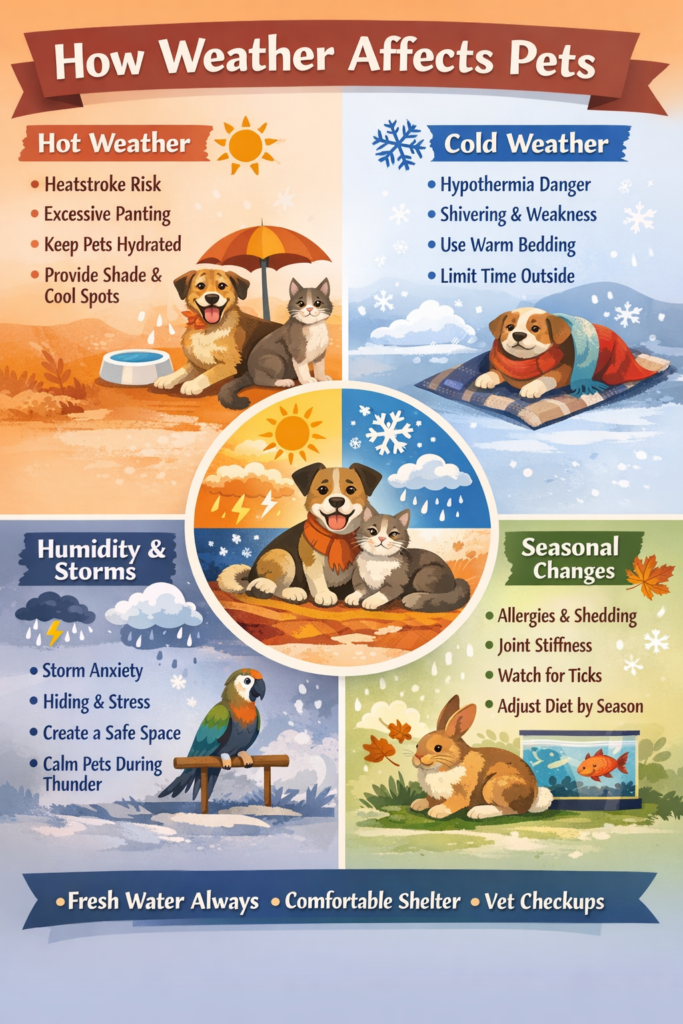
1. Why Weather Matters for Pets
Pets are highly sensitive to weather changes, often more so than humans. Unlike people, many pets:
Cannot sweat efficiently, relying mainly on panting or other limited mechanisms to cool down
Depend on fur, feathers, or scales for insulation, which may not protect them fully in extreme heat or cold
Have specific hydration needs that change with temperature, activity, and humidity
Are more vulnerable to extreme temperatures, particularly young, senior, or sick pets
Because of these factors, weather directly impacts pets’ health, behavior, energy levels, and daily routines. Sudden heatwaves, cold snaps, high humidity, or seasonal transitions can influence appetite, mood, and overall well-being. For example, dogs may become lethargic during hot days, while cats may hide or reduce activity. Birds and small animals can experience stress or weakened immunity during extreme weather, and reptiles or amphibians may struggle to regulate their body temperature.
2. Hot Weather and Pets
How Cold Weather Affects Pets
Cold weather can slow down a pet’s metabolism and body functions, making them more vulnerable to illness, discomfort, and injury. Pets rely on fur, feathers, or body fat for insulation, but extreme cold can still overwhelm their natural defenses.
Small breeds, short-haired pets, puppies, and senior animals feel the cold more intensely.
Outdoor pets may lose body heat quickly, especially in wet or windy conditions.
Reptiles and amphibians are particularly sensitive, as they rely on external heat to regulate body temperature.
Common effects of cold weather on pets include:
Shivering or trembling
Lifting paws off cold surfaces
Constantly seeking warmth (e.g., near heaters or blankets)
Reduced activity and slower movement
3. Cold Weather and Pets
How Cold Weather Affects Pets
Cold weather can slow down a pet’s metabolism and body functions, making them more vulnerable to illness, discomfort, and injury. Pets rely on fur, feathers, or body fat for insulation, but extreme cold can still overwhelm their natural defenses.
Small breeds, short-haired pets, puppies, and senior animals feel the cold more intensely.
Outdoor pets may lose body heat quickly, especially in wet or windy conditions.
Reptiles and amphibians are particularly sensitive, as they rely on external heat to regulate body temperature.
Common effects of cold weather on pets include:
Shivering or trembling
Lifting paws off cold surfaces
Constantly seeking warmth (e.g., near heaters or blankets)
Reduced activity and slower movement
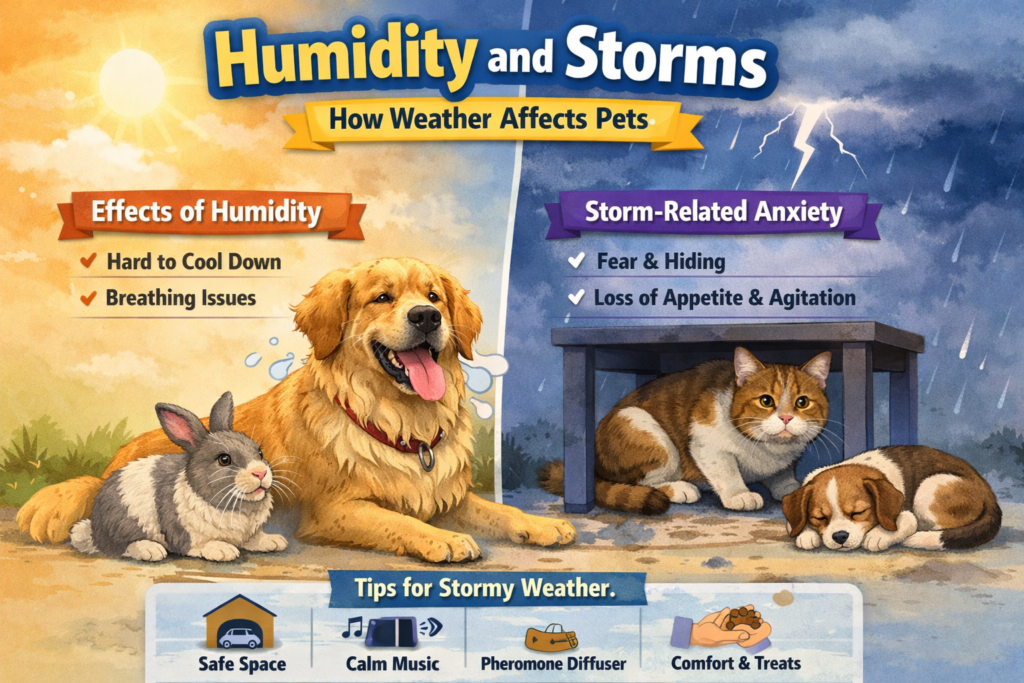
4. Humidity and Storms
Effects of Humidity
High humidity makes it harder for pets to cool down. Pets with thick coats or flat faces are especially vulnerable. It can also affect breathing and increase fatigue.
Storm-Related Anxiety
Sudden storms can cause:
Fear
Hiding
Loss of appetite
Aggression
Tips for Stormy Weather
Provide a quiet, safe space
Play soft music or white noise
Use pheromone diffusers if needed
Offer treats and comfort
5. Seasonal Effects on Pets
Spring
Allergies can flare → itching, sneezing
Outdoor activities → exposure to ticks
Summer
Risk of dehydration and sunburn
Heatstroke concerns
Fall
Cooler mornings → increased activity
Shedding prepares for winter coat
Winter
Less outdoor activity
Joint stiffness in older pets
Cold injuries risk
6. Emergency Weather Situations
Extreme Heat
Watch for: heavy panting, red gums, collapse
These are signs of heatstroke, a medical emergency. Move the pet to a cool area and contact a veterinarian immediately.
Extreme Cold
Watch for: shivering, immobility, weakness
These symptoms may indicate hypothermia and require urgent veterinary care.
7. Hydration Tips for Pets
Hydration plays a critical role in regulating body temperature and preventing illness.
Hot weather: frequent water changes, ice cubes, multiple water bowls
Cold weather: slightly warm water to encourage drinking
Proper hydration helps prevent heat stress, supports kidney health, and keeps pets energetic.
8. Feeding and Weather Changes
Weather can affect appetite and energy needs:
Summer: pets may eat less due to heat
Winter: some pets may need extra calories for warmth
Avoid overfeeding if activity levels decrease, and always adjust portions based on your pet’s lifestyle and health.
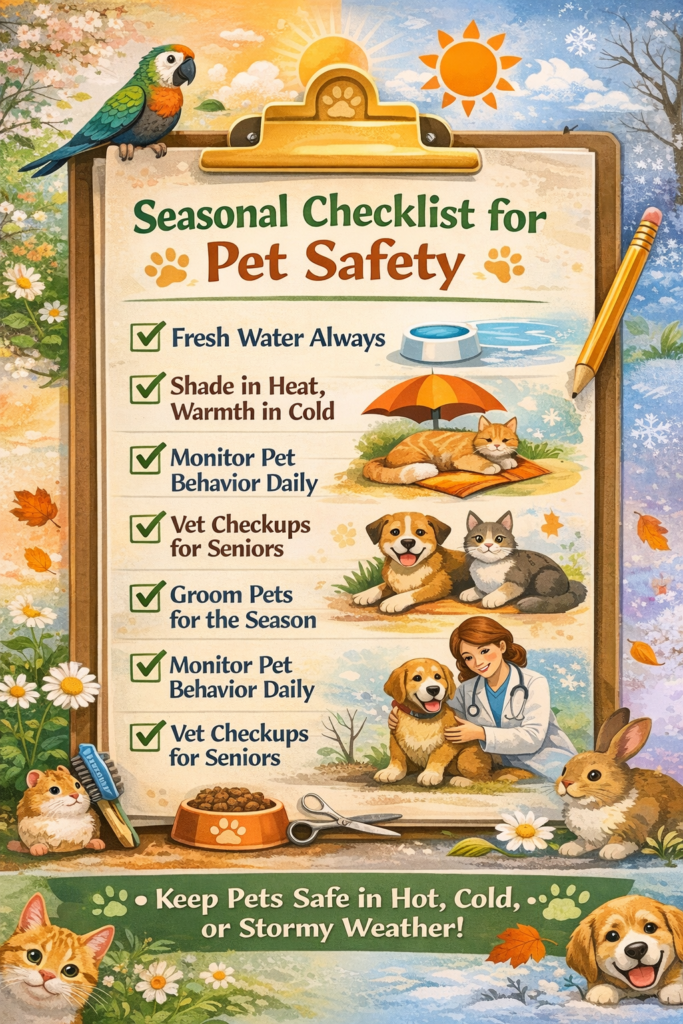
9. Seasonal Checklist for Pet Safety
Fresh water available at all times
Access to shade in summer and warmth in winter
Daily behavior monitoring
Seasonal grooming
Safe and comfortable indoor environment
Regular veterinary checkups, especially for senior pets
(FAQs): How Weather Affects Pets
1. How does weather affect pets’ health?
Weather affects pets in many ways, including their hydration levels, energy, appetite, skin condition, and overall comfort. Extreme heat can cause dehydration and heatstroke, while cold weather may lead to hypothermia, joint stiffness, and weakened immunity. Sudden weather changes can also increase stress and anxiety in pets. Understanding how weather affects pets helps owners take preventive measures before health problems arise.
2. Are some pets more sensitive to weather changes than others?
Yes, certain pets are more vulnerable to weather changes. Puppies, kittens, senior pets, overweight animals, and pets with medical conditions are at higher risk. Short-nosed dog breeds struggle more in hot weather, while short-haired or small pets are more sensitive to cold temperatures. Birds and small animals can also be quickly affected by temperature and humidity changes.
3. How does hot weather affect pets?
Hot weather affects pets by increasing water loss through panting and raising their body temperature. Pets may become tired, dehydrated, or lose appetite during extreme heat. Without proper care, heat exhaustion or heatstroke can occur, which is a medical emergency. Providing shade, fresh water, and avoiding outdoor activity during peak heat hours helps reduce risks.
4. Can cold weather be dangerous for pets?
Yes, cold weather can be just as dangerous as heat. Cold temperatures may cause shivering, stiffness, reduced movement, and hypothermia. Pets that spend time outdoors are especially at risk if they are exposed to freezing temperatures for long periods. Cold weather can also worsen arthritis and joint pain in older pets.
5. How do humidity and storms affect pets?
High humidity makes it harder for pets to cool down, increasing the risk of overheating. Storms can cause anxiety due to loud thunder, lightning, and pressure changes. Many pets show fear-based behaviors such as hiding, pacing, barking, or refusing food during storms. Creating a calm, safe environment helps reduce stress during bad weather.
6. How does weather affect pet hydration?
Hydration is one of the most important factors in how weather affects pets. In hot weather, pets need more water to prevent dehydration and heat stress. In cold weather, pets may drink less, increasing the risk of dehydration without obvious signs. Ensuring constant access to clean water in every season is essential for pet health.
7. Should pet care routines change with the seasons?
Yes, pet care routines should be adjusted according to the season. In summer, walks should be scheduled during cooler hours, and hydration should be closely monitored. In winter, pets may need warm bedding, protective clothing, and shorter outdoor exposure. Seasonal grooming, feeding adjustments, and regular health checks help pets adapt to weather changes.
8. What are the warning signs that weather is affecting my pet?
Common warning signs include excessive panting, shivering, lethargy, reduced appetite, behavior changes, vomiting, or weakness. Any sudden or severe reaction to weather conditions should be taken seriously. If symptoms persist, veterinary advice should be sought immediately.
9. How can pet owners protect pets from extreme weather?
Pet owners can protect pets by providing proper shelter, fresh water, temperature control, and seasonal care. Monitoring behavior, adjusting daily routines, and preparing for weather emergencies are key steps. Awareness is the most effective way to reduce weather-related health risks.
10. Why is it important to understand how weather affects pets?
Understanding how weather affects pets allows owners to prevent illness, reduce stress, and improve overall quality of life. With proper preparation and care, pets can remain safe, healthy, and comfortable throughout the year, regardless of weather conditions.
Pingback: Pet Lifespan Habits: Powerful Daily Routines for a Longer, Healthier Life