
10 Indoor Cat Health Problems UK Every Cat Owner Should Know
Indoor cat health problems UK include obesity, dental disease, urinary issues and stress. Learn common symptoms and simple care tips to keep your indoor cat healthy.
Indoor Cat Health Problems UK: Common Issues Every Cat Owner Should Know
Indoor cats are often seen as safer and healthier than outdoor cats. They are protected from traffic, fights, harsh weather, and many infections. However, living indoors also comes with its own set of health challenges. In the UK, vets regularly see indoor cats suffering from preventable health problems caused by lifestyle, diet, and lack of activity.
If you are a cat owner in the UK, understanding indoor cat health problems UK cats commonly face can help you spot early warning signs and keep your cat happy and healthy for years.
In this guide, we will cover the most common health issues in indoor cats, their symptoms, causes, and simple prevention tips.
Why Indoor Cats Face Unique Health Problems
Indoor cats usually live longer than outdoor cats, but their lifestyle can lead to:
Less physical activity
Boredom and stress
Overeating
Limited sunlight exposure
Less mental stimulation
These factors directly contribute to many indoor cat health problems seen across the UK.
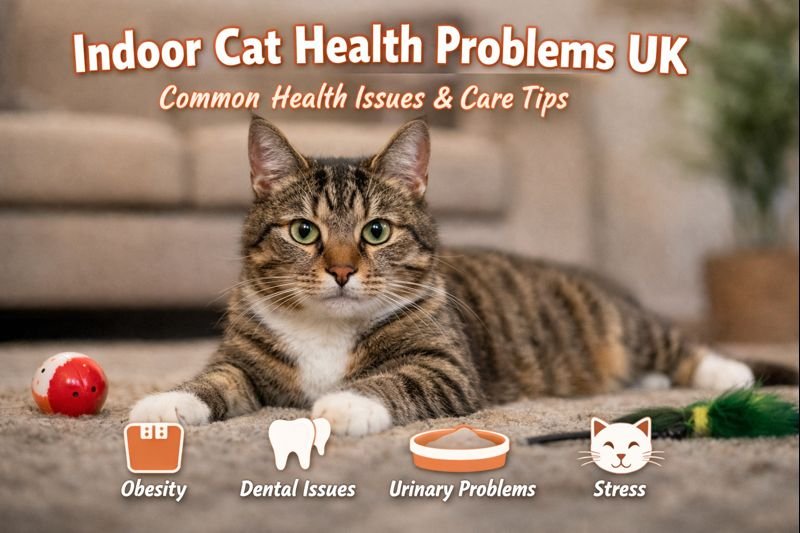
1. Obesity in Indoor Cats
Why It’s Common in the UK
Obesity is one of the most common indoor cat health problems UK vets deal with today. Indoor cats burn fewer calories, and many owners unintentionally overfeed them.
Signs of Obesity
Weight gain
Difficulty jumping or climbing
Breathing heavily after small activity
Sleeping more than usual
Health Risks
Diabetes
Joint pain and arthritis
Heart disease
Reduced lifespan
Prevention Tips
Measure food portions carefully
Choose food designed for indoor cats
Encourage daily play using toys and laser pointers
Avoid giving too many treats
2. Dental Disease in Indoor Cats
Dental problems are extremely common in cats across the UK, especially those living indoors.
Common Dental Issues
Gingivitis
Plaque and tartar buildup
Tooth loss
Symptoms to Watch For
Bad breath
Drooling
Difficulty eating
Pawing at the mouth
How to Prevent Dental Problems
Brush your cat’s teeth if possible
Use dental treats or dental food
Schedule regular vet dental checks
Ignoring dental disease can lead to infections affecting the heart and kidneys.
3. Urinary Tract Problems
Urinary issues are serious indoor cat health problems UK cat owners must not ignore.
Why Indoor Cats Are at Risk
Low water intake
Stress
Poor diet
Lack of movement
Common Conditions
Feline Lower Urinary Tract Disease (FLUTD)
Bladder stones
Urinary infections
Warning Signs
Frequent trips to the litter box
Crying while urinating
Blood in urine
Urinating outside the litter tray
Prevention Tips
Encourage water intake (fountains work well)
Feed wet food regularly
Keep litter trays clean and stress-free
4. Hairballs and Digestive Issues
Hairballs are normal, but frequent hairballs may indicate digestive problems.
Causes
Excessive grooming
Poor diet
Lack of fibre
Symptoms
Vomiting hairballs often
Constipation
Loss of appetite
How to Reduce Hairballs
Brush your cat regularly
Feed high-fibre or hairball-control food
Ensure enough hydration
5. Stress, Anxiety, and Behavioural Problems
Many people don’t realise that stress is a major indoor cat health problem UK vets see regularly.
Common Stress Triggers
Boredom
Changes in routine
Loud noises
New pets or people
Signs of Stress
Excessive grooming
Aggression
Hiding
Urinating outside the litter box
Helping an Anxious Indoor Cat
Create quiet hiding spaces
Provide scratching posts and climbing areas
Stick to a routine
Use interactive toys
Mental health is just as important as physical health.
6. Skin Allergies and Over-Grooming
Indoor cats can develop skin issues even without outdoor exposure.
Causes
Food allergies
Dust mites
Fleas brought in on clothing
Stress
Symptoms
Hair loss
Red or itchy skin
Constant licking
Prevention
Regular flea prevention (even for indoor cats)
High-quality food
Vet allergy testing if needed
7. Diabetes in Indoor Cats
Diabetes is becoming more common among indoor cats in the UK.
Risk Factors
Obesity
Poor diet
Lack of exercise
Early Signs
Increased thirst
Frequent urination
Weight loss despite eating
Early diagnosis can greatly improve your cat’s quality of life.
8. Vitamin D Deficiency
Indoor cats have limited access to sunlight, which can affect vitamin D levels.
Why It Matters
Vitamin D helps support bones and overall health.
Solution
Feed complete, balanced cat food
Never give human vitamin supplements without vet advice
9. Respiratory Problems
Indoor air quality plays a big role in cat health.
Common Causes
Dust
Cigarette smoke
Cleaning chemicals
Symptoms
Sneezing
Coughing
Breathing difficulty
Prevention Tips
Keep your home well ventilated
Avoid strong fragrances and sprays
Keep litter areas clean
10. Parasites in Indoor Cats
Many UK owners think indoor cats can’t get parasites — this is a myth.
Common Parasites
Fleas
Worms
How They Get Them
Humans bringing parasites indoors
Contact with other pets
Prevention
Regular flea and worm treatment
Vet-recommended products
How to Keep Your Indoor Cat Healthy in the UK
Here are some simple steps every UK cat owner should follow:
Annual vet check-ups
Balanced indoor cat diet
Daily playtime
Clean litter trays
Mental stimulation
Preventive healthcare
Small daily habits can prevent most indoor cat health problems UK cats suffer from.
When to See a Vet
Contact your vet immediately if your cat shows:
Sudden behaviour changes
Loss of appetite
Difficulty breathing
Pain or discomfort
Early treatment saves lives.
Final Thoughts
Indoor cats may live safer lives, but they still face many health challenges. Understanding indoor cat health problems UK owners commonly experience helps you take action early and give your cat a long, happy life.
With proper care, attention, and love, your indoor cat can thrive in a healthy home environment.
FAQs – Indoor Cat Health Problems UK
1. What are the most common indoor cat health problems in the UK?
The most common indoor cat health problems UK cats face include obesity, dental disease, urinary tract issues, stress, hairballs, and diabetes. These problems are often linked to lack of exercise, diet, and indoor lifestyle.
2. Are indoor cats healthier than outdoor cats in the UK?
Indoor cats are safer from accidents and fights, but they can still develop health problems. Indoor cat health problems UK vets often see are obesity, stress-related issues, and dental disease due to limited activity and boredom.
3. How can I tell if my indoor cat is unhealthy?
Signs of health problems include weight gain or loss, low energy, changes in eating habits, frequent vomiting, litter box issues, and behaviour changes. If these symptoms persist, consult a UK vet.
4. Why do indoor cats gain weight easily?
Indoor cats gain weight because they burn fewer calories, eat too much, and don’t get enough physical activity. Obesity is one of the most common indoor cat health problems UK pet owners report.
5. Can indoor cats get urinary problems?
Yes, indoor cats are more likely to develop urinary problems due to stress, dehydration, and poor diet. Symptoms include frequent urination, pain, or blood in urine and need immediate vet attention.
6. Do indoor cats in the UK need flea and worm treatment?
Yes, even indoor cats need regular flea and worm prevention. Parasites can enter homes through clothing, shoes, or other pets and are a common but overlooked indoor cat health problem in the UK.
7. How can I prevent health problems in indoor cats?
You can prevent many indoor cat health problems UK cats face by providing a balanced diet, daily playtime, clean litter trays, regular vet check-ups, and mental stimulation.
8. Is stress a serious health issue for indoor cats?
Yes, stress can lead to serious problems like over-grooming, urinary issues, and behaviour changes. Stress is a major cause of indoor cat health problems UK vets frequently treat.
9. How often should indoor cats see a vet in the UK?
Indoor cats should visit a vet at least once a year for a health check. Senior indoor cats may need more frequent visits to detect health problems early.
10. When should I take my indoor cat to the vet immediately?
Take your cat to the vet if you notice breathing problems, refusal to eat, difficulty urinating, sudden behaviour changes, or signs of pain. Early treatment can prevent serious indoor cat health problems.