
Lack of Attention in Pets
Causes, Signs, and Serious Health Effects
Lack of Attention in Pets can lead to stress, behavioral issues, and serious health problems. Learn how emotional neglect affects pets and how to restore their well-being.
Pets communicate stress and emotional discomfort in subtle ways that many owners fail to recognize. Changes in behavior, appetite, or activity level are often early indicators of emotional imbalance caused by lack of attention in pets. Especially in smaller animals, these warning signs can easily go unnoticed when daily interaction and mental stimulation are missing. Understanding the signs of stress in small pets helps pet owners recognize how lack of attention in pets gradually affects their emotional and physical well-being.
By identifying these stress indicators early, owners can reduce the negative impact of lack of attention in pets and rebuild a healthier, more supportive human-pet bond.
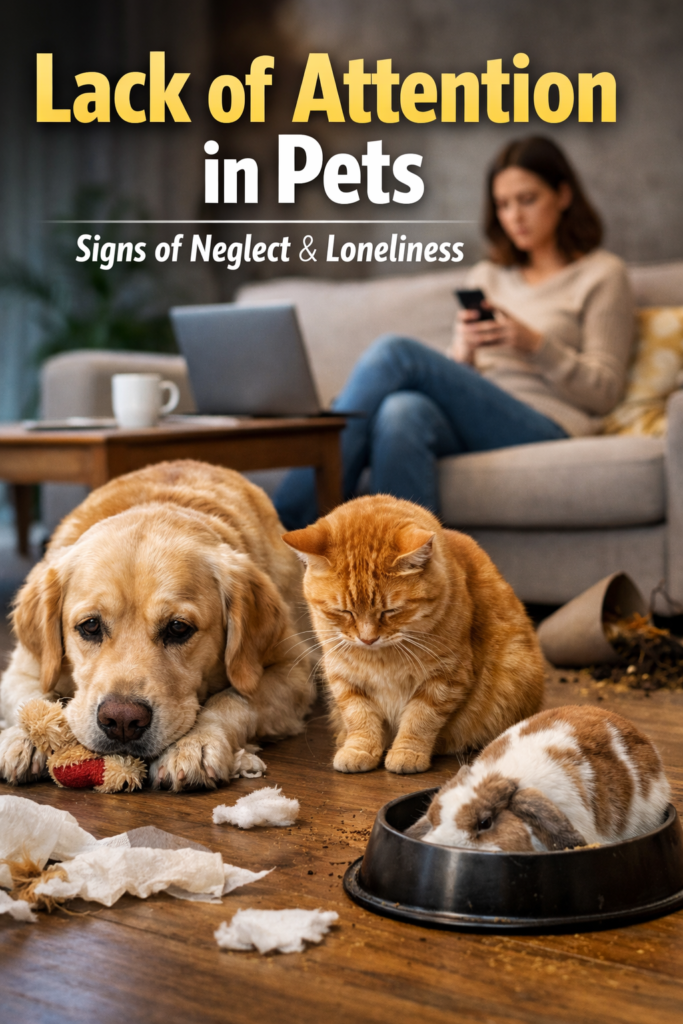
What Does Lack of Attention in Pets Mean?
Lack of attention in pets refers to insufficient emotional, mental, and social interaction with animals. It does not always involve intentional neglect. Even well-fed and medically cared-for pets can suffer if their emotional needs are ignored.
Attention includes:
Talking and responding to pets
Physical affection and bonding
Playtime and exercise
Mental stimulation
Observation of behavior and emotions
When these elements are missing, pets experience emotional deprivation, which gradually impacts their overall health.
Emotional Effects of Lack of Attention in Pets
One of the most serious consequences of lack of attention in pets is chronic stress. Pets thrive on routine, interaction, and reassurance. When these are absent, they feel insecure and anxious.
Common stress-related signs include:
Restlessness and pacing
Excessive barking or meowing
Hiding or avoidance behavior
Loss of interest in surroundings
Long-term stress increases cortisol levels, weakening the immune system and making pets vulnerable to illness.
Depression and Emotional Withdrawal
Pets are emotional beings capable of feeling sadness and loneliness. When ignored for long periods, many pets develop symptoms similar to depression.
Signs of pet depression include:
Sleeping more than usual
Reduced appetite
Lack of enthusiasm
Avoiding human interaction
Depression caused by lack of attention in pets slows metabolism and reduces overall vitality.
Behavioral Problems Caused by Emotional Neglect
Destructive Behavior
Chewing furniture, scratching doors, digging, or breaking objects are often misinterpreted as bad behavior. In reality, these actions are coping mechanisms for boredom and frustration.
Destructive behavior is a clear signal of:
Mental understimulation
Loneliness
Unmet emotional needs
Punishing such behavior without addressing the root cause worsens the problem.
Aggression and Irritability
Lack of attention in pets can lead to fear-based or frustration-based aggression. Pets may growl, bite, or snap unexpectedly, especially when approached.
Aggression often develops due to:
Emotional insecurity
Poor socialization
Lack of positive interaction and trust
This behavior is not disobedience but a defense response.
Excessive Vocalization
Constant barking, whining, or meowing is a common sign of emotional distress. Pets use vocalization to communicate loneliness, anxiety, or the need for interaction.
Ignoring these signals increases frustration and emotional imbalance.
Physical Health Issues Linked to Lack of Attention in Pets
Weak Immune System
Emotional neglect has a direct impact on physical health. Chronic stress caused by lack of attention suppresses immune function.
Health problems may include:
Frequent infections
Skin and coat issues
Slow healing
Digestive disorders
A stressed pet is far more likely to become ill.
Weight Problems: Obesity or Malnutrition
Lack of attention in pets often leads to unhealthy eating patterns.
Some pets overeat due to boredom, while others lose appetite because of emotional distress. Both extremes are dangerous.
Possible outcomes include:
Obesity and joint problems
Diabetes and heart strain
Nutritional deficiencies
Reduced Physical Activity
Pets need encouragement to stay active. Without playtime or engagement, they become sedentary.
Low activity levels can cause:
Muscle weakness
Joint stiffness
Reduced stamina
Poor cardiovascular health
This issue is especially common in indoor pets.
How Different Pets Are Affected
Dogs
Dogs are highly social animals and suffer deeply from emotional neglect. Lack of attention in dogs often leads to separation anxiety, destructive behavior, and depression.
Dogs require:
Daily walks
Interactive play
Verbal communication
Without these, emotional instability develops quickly.
Cats
Cats may appear independent, but they still need emotional engagement. Ignored cats often become withdrawn, aggressive, or overly clingy.
Cats benefit from:
Interactive toys
Gentle affection
Environmental enrichment
Small Pets (Rabbits, Hamsters, Guinea Pigs)
Small pets are often the most emotionally neglected. Minimal handling and interaction can cause extreme stress.
Effects include:
Fear-based behavior
Reduced appetite
Shortened lifespan
Long-Term Consequences of Lack of Attention in Pets
If emotional neglect continues, pets may suffer from:
Chronic anxiety disorders
Long-term digestive problems
Heart-related conditions
Behavioral disorders
Shortened lifespan
Emotional neglect can be as harmful as physical neglect.
Warning Signs Your Pet Needs More Attention
Be alert to these signs:
Sudden behavior changes
Excessive clinginess or isolation
Loss of appetite
Repeated illnesses
Destructive habits
Early intervention can prevent permanent damage.
How to Prevent Lack of Attention in Pets
Spend Quality Time Daily
Even 20–30 minutes of focused attention can dramatically improve a pet’s emotional health.
Examples:
Playing with toys
Talking calmly
Gentle grooming
Provide Mental Enrichment
Use puzzle toys, training exercises, and new activities to stimulate the brain.
Mental engagement reduces stress and boredom.
Maintain a Consistent Routine
Regular feeding, playtime, and sleep schedules give pets emotional security.
Observe and Respond
Pay attention to your pet’s body language and behavior. Responding to their needs builds trust and strengthens the bond.
(FAQs) Lack of Attention in Pets
1. What does lack of attention in pets mean?
Lack of attention in pets means not providing enough emotional interaction, mental stimulation, and social engagement. Even if pets receive food and shelter, ignoring playtime, bonding, and daily interaction can lead to emotional neglect. Pets need attention to feel safe, loved, and mentally healthy.
2. Can lack of attention really affect a pet’s health?
Yes, lack of attention in pets can seriously affect both mental and physical health. Emotional neglect often leads to stress, anxiety, depression, and weakened immunity. Over time, this can result in frequent illnesses, digestive problems, obesity, or even shortened lifespan.
3. What are the common signs of lack of attention in pets?
Common signs include sudden behavior changes, excessive barking or meowing, destructive habits, loss of appetite, unusual aggression, or excessive sleeping. Some pets become overly clingy, while others completely withdraw. These behaviors are clear signals that a pet needs more emotional engagement.
4. Do indoor pets suffer more from lack of attention?
Indoor pets are at higher risk of lack of attention because they depend entirely on their owners for stimulation and activity. Without regular playtime, exercise, and interaction, indoor pets can become bored, stressed, and physically inactive, which negatively affects their overall health.
5. How does lack of attention affect a pet’s behavior?
Lack of attention in pets often leads to destructive behavior, aggression, fearfulness, or excessive vocalization. These behaviors are not signs of disobedience but emotional frustration. Pets use behavior as a way to express unmet emotional needs.
6. Can small pets also suffer from lack of attention?
Yes, small pets like rabbits, hamsters, and guinea pigs are commonly affected by lack of attention. Minimal handling and interaction can cause stress, fear, and reduced appetite. Emotional neglect in small pets can even shorten their lifespan.
7. How much attention does a pet need daily?
Most pets need at least 20–30 minutes of quality attention daily. This includes playtime, talking, gentle touch, grooming, or training. Quality matters more than quantity—focused, distraction-free interaction has the greatest positive impact.
8. Can lack of attention cause depression in pets?
Yes, pets can experience depression due to lack of attention. Symptoms include low energy, sleeping excessively, loss of interest in activities, and reduced appetite. Pet depression should never be ignored, as it can lead to serious health problems if left untreated.
9. How can owners prevent lack of attention in pets?
Owners can prevent lack of attention in pets by creating a daily routine that includes playtime, exercise, mental stimulation, and bonding activities. Interactive toys, training sessions, and simply talking to pets help strengthen emotional bonds and reduce stress.
10. Is emotional neglect as harmful as physical neglect?
Emotional neglect can be just as harmful as physical neglect. While physical neglect affects basic survival, emotional neglect damages mental health, behavior, and immunity. A pet may look healthy outwardly but suffer silently due to lack of attention.
11. Can improving attention reverse health problems in pets?
In many cases, yes. Increasing attention, interaction, and mental stimulation can significantly improve a pet’s mood, behavior, and physical health. Pets often respond quickly when they feel emotionally secure and valued again.
12. Why is attention considered essential for pets?
Attention builds trust, reduces stress, and supports emotional balance. Lack of attention in pets breaks this emotional connection, leading to long-term health issues. Pets thrive when they feel seen, heard, and emotionally connected to their owners.
Pingback: Signs of Stress in Small Pets: Hidden Warnings