
Pet First Aid Basics: Critical Life-Saving Tips Every Owner Must Know
Learn pet first aid basics every owner must know. Discover emergency care tips, first aid kits, and life-saving steps for dogs & cats.
Pet First Aid Basics: Essential Life-Saving Tips Every Owner Must Know
Pets are part of our family, and just like humans, they can face sudden injuries or medical emergencies. Accidents can happen at home, during walks, or while traveling. Knowing pet first aid basics can help you act quickly and confidently before reaching a veterinarian.
This complete guide explains pet first aid tips, emergency care for pets, pet first aid kits, and essential life-saving skills every pet owner should know.
What Are Pet First Aid Basics?
Pet first aid basics involve providing immediate care to an injured or ill pet until professional veterinary help is available. The main goals are to stabilize your pet, reduce pain, prevent the condition from worsening, and safely transport them to a pet.
Learning these basics can make a critical difference during emergencies.
Why Every Pet Owner Must Learn Pet First Aid
Many pet emergencies occur unexpectedly and outside clinic hours. Knowing basic pet first aid skills allows you to:
Save your pet’s life
Reduce pain and stress
Prevent serious complications
Respond calmly and confidently
Prepared pet owners can handle emergencies more effectively.
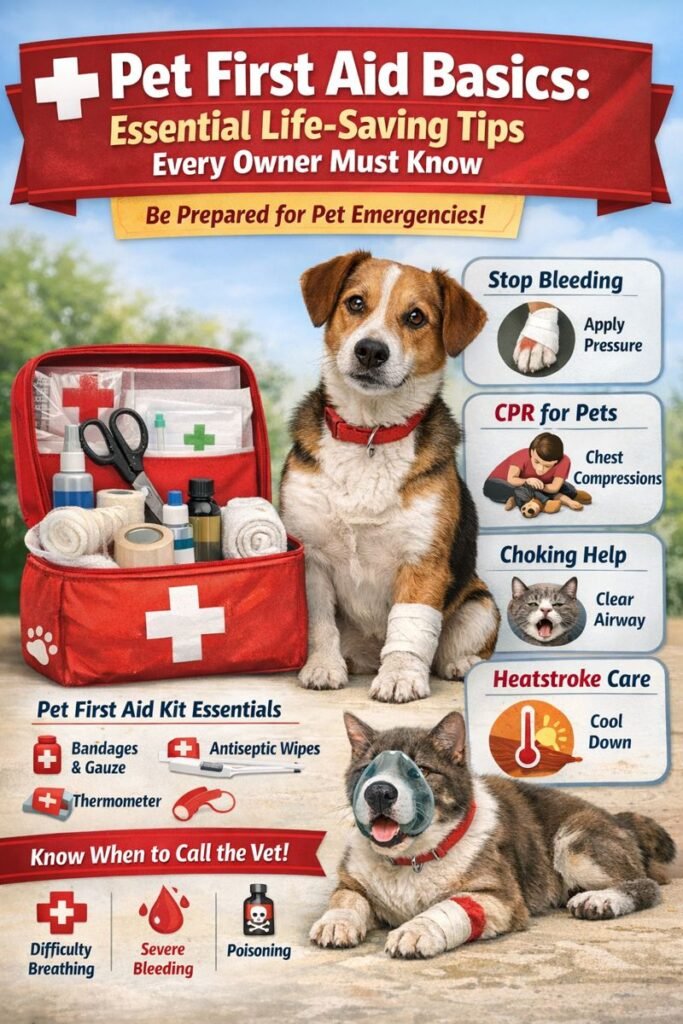
Pet First Aid Kit: Essentials Every Owner Should Have
A well-prepared pet first aid kit is a must for every home and travel bag.
Must-Have Items:
Sterile gauze pads and bandages
Adhesive tape
Antiseptic wipes or solution
Disposable gloves
Tweezers
Blunt-tip scissors
Digital thermometer
Cotton balls and clean towels
Muzzle (for injured pets)
Saline solution
Emergency vet contact numbers
Keep your kit easily accessible and check it every few months.
Basic Pet First Aid Skills Every Owner Must Know
Handling Bleeding and Wounds
Cuts and injuries are common pet emergencies.
What to do:
Keep your pet calm and still
Apply gentle pressure using sterile gauze
Clean minor wounds with saline or clean water
Bandage the area securely but not tightly
Seek veterinary help if bleeding continues
Choking in Dogs and Cats
Choking can be life-threatening.
Signs include:
Coughing or gagging
Pawing at the mouth
Difficulty breathing
First aid steps:
Check the mouth carefully
Remove visible objects with tweezers
Never blindly reach into the throat
Visit a veterinarian immediately
CPR for Pets (Basic Awareness)
Pet CPR can help in life-threatening situations.
Basic steps include:
Check breathing and heartbeat
Place your pet on their side
Perform chest compressions
Provide rescue breaths if trained
Professional training is highly recommended.
Heatstroke in Pets
Heatstroke is a serious emergency, especially in summer.
Symptoms include:
Heavy panting
Drooling
Weakness
Vomiting
Immediate care:
Move your pet to a cool area
Offer small amounts of water
Apply cool (not ice-cold) towels
Seek veterinary care urgently
Shock in Pets
Shock can occur after injury or trauma.
Signs of shock:
Pale gums
Rapid breathing
Weak pulse
First aid steps:
Keep your pet warm
Lay them flat
Get emergency veterinary help immediately
Common Pet Emergencies to Be Prepared For
Understanding common emergencies improves response time:
Cuts and wounds
Broken bones
Poisoning
Burns
Allergic reactions
Seizures
Preparation saves valuable time during emergencies.
What NOT to Do in Pet First Aid
Avoid these common mistakes:
Giving human medicines to pets
Panicking or forcing restraint
Delaying veterinary care
Using alcohol on wounds
Incorrect actions can worsen your pet’s condition.
When to Contact a Veterinarian Immediately
Seek urgent veterinary care if your pet:
Is unconscious
Has difficulty breathing
Is bleeding heavily
Has seizures
Has ingested poison
Suffers severe injuries
Pet first aid is temporary and does not replace professional treatment.
Final Thoughts
Knowing pet first aid basics is an essential responsibility of every pet owner. Emergencies can happen anytime, but preparation can save lives. By learning these skills and keeping a pet first aid kit ready, you can protect your furry friend when it matters most.
Share this guide with other pet owners and help spread awareness about pet safety and emergency care.
FAQs – Pet First Aid Basics
What should be included in a pet first aid kit?
A pet first aid kit should include bandages, antiseptic wipes, gloves, tweezers, thermometer, and emergency contact numbers.
Can I give human medicine to my pet?
No. Many human medicines are toxic to pets. Always consult a veterinarian.
Is pet CPR the same for dogs and cats?
No. Techniques vary depending on size and species. Proper training is advised.
How often should I check my pet first aid kit?
Every 3–6 months to ensure all supplies are up to date.