
Is Your Pet Bored? Mental Health Guide for All Pets
“Discover expert tips to improve your pet’s mental health and prevent boredom. Learn how to keep your pets happy and emotionally healthy.”
Introduction
Pet owners often focus on feeding schedules, grooming, and physical exercise, but one critical part of pet care is frequently overlooked—pet mental health. Just like humans, pets can experience pet boredom, stress, anxiety, and emotional imbalance. Ignoring these mental needs may lead to behavioral problems, stress-related illnesses, and long-term health issues.
Whether you own a dog, cat, bird, rabbit, fish, turtle, horse, or chicken, mental well-being is essential. This guide explains the causes of pet boredom, signs of mental stress, and practical solutions to improve mental stimulation for pets of all types.
This guide dives into practical tips, creative games, and lifestyle strategies to keep pets mentally stimulated and emotionally satisfied. By understanding your pet’s individual needs and providing consistent engagement—along with the Best diet for healthy pets—you can ensure they live a balanced, happy, and fulfilling life, filled with joy, curiosity, and vitality.
Pets are more than just companions—they are family members who rely on us not only for food and shelter but also for mental stimulation and emotional care. Just like humans, pets can experience boredom, stress, and anxiety, which can affect their overall health and behavior. From dogs and cats to birds, rabbits, and even reptiles, each pet has unique needs that, if unmet, can lead to destructive habits, lethargy, or emotional distress. Proper nutrition plays a vital role here, making the Best diet for healthy pets essential for both physical and mental well-being.
Understanding the signs of boredom and knowing how to engage your pet in meaningful ways is essential for their mental well-being. This guide explores practical tips, activities, and strategies—supported by the Best diet for healthy pets—to keep your pets happy, active, and mentally stimulated, ensuring they live a balanced and fulfilling life.
By providing mental stimulation, emotional support, and the Best diet for healthy pets, you help your pets build confidence, reduce anxiety, and live a more active and fulfilling life. Small daily habits, like short training sessions or puzzle toys, can make a big difference in keeping your pets engaged. Ultimately, a happy and mentally stimulated pet contributes to a happier, healthier home for the entire family.
Understanding Pet Mental Health
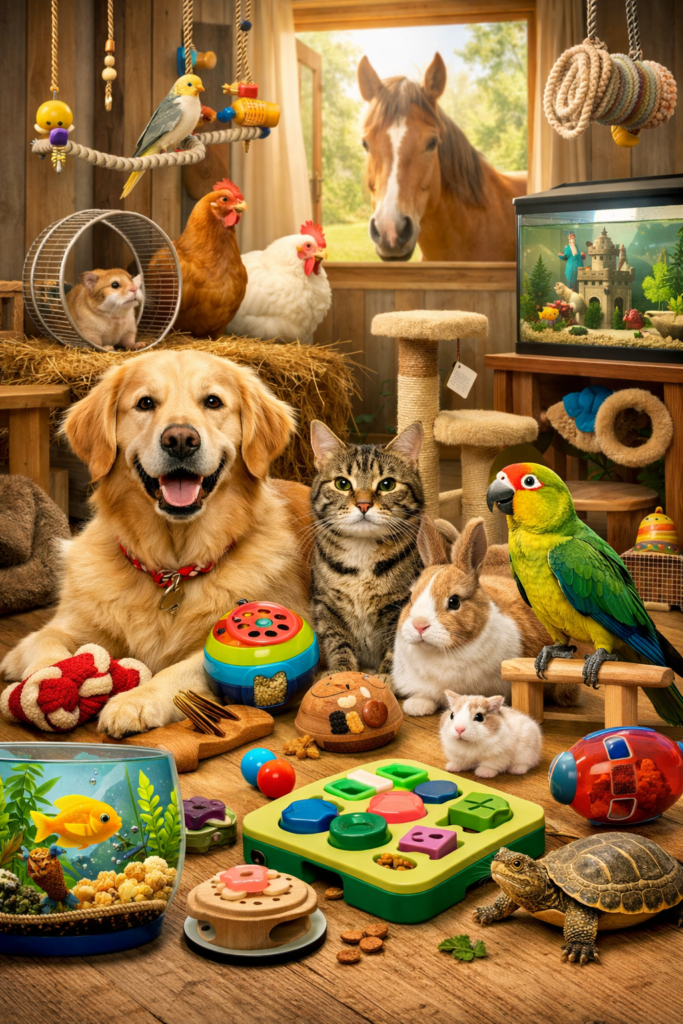
Pet mental health refers to an animal’s emotional and psychological well-being. In nature, animals constantly explore, hunt, problem-solve, and interact socially. Domestic life often limits these behaviors, especially for indoor pets.
When pets lack regular mental engagement, they may feel frustrated or restless. Over time, pet boredom and mental understimulation can lead to anxiety, depression, aggression, and unwanted behaviors. Supporting your pet’s mental wellness is just as important as proper nutrition, grooming, and physical activity.
Why Mental Health Matters for All Pets
Pets with strong mental wellness:
Are calmer and more confident
Show fewer destructive behaviors
Develop better relationships with their owners
Have stronger immunity and overall health
Ignoring mental health can silently affect your pet’s happiness and quality of life, increasing bored pets behavior.
What Is Pet Boredom?
Pet boredom occurs when an animal lacks mental challenges, interaction, or environmental variety. A bored pet may have excess energy but no positive outlet to release it.
Common Causes of Pet Boredom
Repetitive daily routines: Doing the same activities every day without variation
Long hours of isolation: Pets left alone for work or school hours
Limited living space: Small cages, apartments, or tanks
Lack of enrichment toys: No toys, puzzles, or sensory stimulation
Minimal interaction with owners: Reduced social bonding
If boredom persists, pets may develop negative behaviors or health issues, making early detection of pet boredom crucial.

Signs Your Pet Is Bored
Recognizing pet boredom early can prevent serious mental health problems. Signs vary by species but often share common patterns.
Common Signs in All Pets
Destructive behavior (chewing, scratching, breaking items)
Excessive noise or vocalization (barking, meowing, chirping)
Restlessness, pacing, or hyperactivity
Withdrawal, lethargy, or lack of interest in usual activities
Changes in appetite, sleep, or hygiene
Species-Specific Signs
Dogs: Chewing furniture, digging, excessive barking, hyperactive bursts.
Cats: Aggression, over-grooming, scratching furniture, sudden energy bursts.
Birds: Feather plucking, loud screaming, repetitive movements or pacing.
Rabbits & Small Pets: Repetitive actions, hiding, or reduced appetite.
Fish: Constant hiding, erratic swimming, aggression toward tank mates.
Farm Animals: Horses, chickens, and outdoor pets may show restlessness, lack of social interaction, or destructive pecking/gnawing.
Understanding these signs is the first step to preventing bored pets behavior and supporting mental wellness.
Why Mental Stimulation Is Important for Pets
Mental stimulation keeps a pet’s brain active and balanced. Even physically healthy pets can suffer emotionally if their minds are unstimulated.
Benefits of Mental Stimulation
Reduced stress and anxiety
Better behavior and obedience
Increased confidence and curiosity
Stronger owner-pet bond
Improved overall health
Providing daily enrichment and engagement is the best way to prevent pet boredom.
Mental Stimulation Ideas for All Pets
You don’t need expensive products to support pet mental health. Simple daily activities make a big difference.
Enrichment Activities
Puzzle feeders and treat-dispensing toys
Hide-and-seek games with treats
DIY toys made from safe household materials (cardboard boxes, paper tubes, bottle caps)
Environmental Enrichment
Rearrange enclosures, rooms, or cages weekly
Add hiding areas, climbing structures, or tunnels
Introduce new textures, scents, and objects
Daily Engagement
Spending 10–15 minutes a day focused on mental engagement can greatly improve a pet’s emotional health.
Mental Health Tips by Pet Type
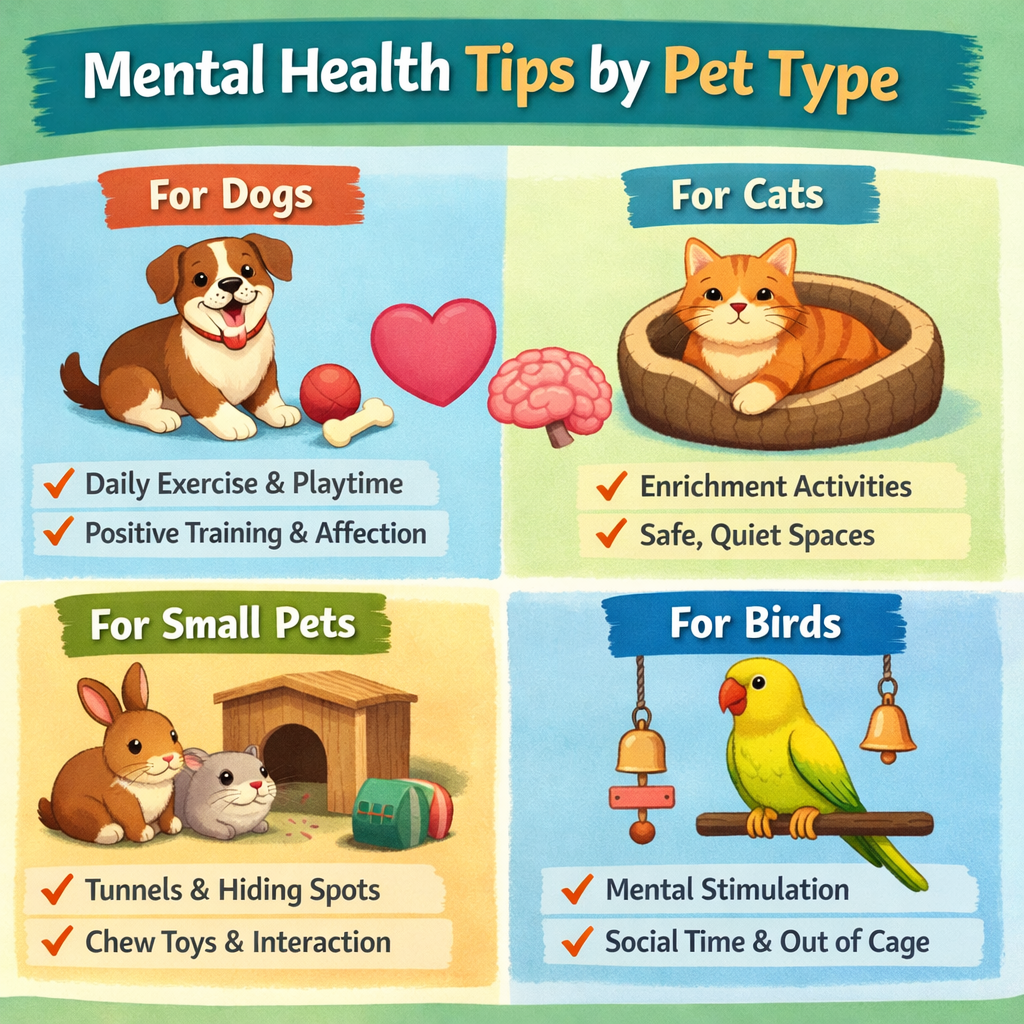
Dogs: Training sessions, scent work, puzzle toys, interactive walks, and playdates with other dogs.
Cats: Short hunting-style play sessions, interactive toys, climbing shelves, scratching posts, and cozy hideaways.
Birds: Foraging toys, mirrors, music, and supervised out-of-cage time to mimic natural behaviors.
Rabbits & Small Pets: Tunnels, chew toys, supervised exploration, and gentle handling to prevent loneliness and stress.
Fish: Larger tanks with plants, rocks, hiding spots, and visual variety to simulate natural environments.
Farm & Outdoor Pets: Horses and chickens benefit from open space, social interaction, and environmental enrichment such as logs, perches, and forage toys.
These activities not only prevent pet boredom but also improve overall happiness and behavior.
Boost Your Mental Health Through Pets
Energize Your Mind with Dogs
Dogs bring joy and energy into our lives. Daily walks, playful interaction, and training sessions not only keep them happy but also reduce stress and elevate your mood.
Find Calm and Comfort with Cats
Cats offer a soothing presence. Gentle petting, quiet companionship, and interactive play help relieve anxiety and create a peaceful environment at home.
Lift Your Spirits with Birds
Birds brighten any space with their cheerful songs and social engagement. Providing toys and perches keeps them mentally active while their playful nature uplifts your mood.
Main Causes of Boredom in Pets
1. Repetitive Lifestyle
Pets thrive on routines, but too much repetition without variety leads to frustration and mental stagnation.
2. Lack of Social Interaction
Many pets develop stress when left alone for long periods, especially dogs, birds, and social species like rabbits.
3. Indoor Living
Indoor pets often lack environmental diversity. Without new stimuli, pets may display destructive or repetitive behaviors linked to pet boredom.
4. Limited Environment
Small cages, aquariums, or rooms restrict exploration and natural behaviors. Adding vertical space, tunnels, and hiding spots can reduce bored pets behavior significantly.
Natural Ways to Improve Pet Mental Wellness
Supporting pet mental wellness does not require complicated methods.
Maintain a balanced routine with small changes
Provide nutritious, species-appropriate diets
Ensure enough rest and quiet time
Keep living areas clean and stress-free
Use positive reinforcement instead of punishment
What Happens If Pet Boredom Is Ignored?
Ignoring mental health can lead to serious consequences:
Aggression toward people or animals
Chronic anxiety or depression
Self-destructive behaviors
Weakened immune system
Reduced quality of life
Creating a Balanced Pet Care Routine
A complete routine includes:
Physical exercise: Walks, runs, or free play
Mental stimulation: Toys, puzzles, and interactive games
Proper nutrition: Species-appropriate diets
Emotional bonding: Quality time, attention, and affection
When all elements are combined, pets remain mentally strong and emotionally satisfied, reducing pet boredom and promoting better behavior.
Final Thoughts
Providing regular mental stimulation is essential. Engaging your pet through interactive play, puzzle toys, training exercises, and outdoor activities can help prevent boredom and strengthen the bond between you and your pet. Even small daily interactions, like teaching a new trick or hiding treats for them to find, contribute significantly to their emotional satisfaction and confidence. Different pets require different types of enrichment: dogs often benefit from physical exercise and scent games, cats enjoy climbing structures and interactive toys, birds thrive on social interaction and problem-solving challenges, and rabbits and reptiles need space and stimulating environments to explore.
FAQ – Pet Mental Health Guide
Q1: How can I tell if my pet is bored?
Look for destructive behavior, excessive noise, restlessness, over-grooming, or unusual hiding.
Q2: Can indoor pets get bored more easily?
Yes, due to limited space, repetitive environments, and minimal interaction.
Q3: What mental stimulation activities work for pets?
Interactive toys, puzzle feeders, treat-hiding games, climbing structures, tunnels, and short daily play sessions.
Q4: How much time should I spend on my pet’s mental health?
10–15 minutes of focused engagement daily is highly effective.
Q5: Are mental health problems linked to physical health?
Yes, mentally unstimulated pets may develop stress-related illnesses or weakened immunity.
Q6: Can different pets benefit from the same enrichment methods?
Yes, some activities like puzzle toys and environmental changes work across species but should be tailored.
Q7: What happens if I ignore pet boredom?
It may lead to aggression, anxiety, destructive behavior, depression, and a shorter lifespan.
Q8: Do small pets need mental stimulation?
Absolutely. Tunnels, chew toys, and exploration prevent stress in rabbits, hamsters, and guinea pigs.
Q9: Can fish get bored?
Yes, larger tanks with plants, rocks, hiding spots, and visual stimuli help maintain mental health.
Q10: How do I maintain mental health for multiple pets?
Rotate toys, ensure social interaction, and tailor activities to each species and personality.
Pingback: “best diet for healthy pets”