
Puppy & Senior Dog Care- Complete Guide for Healthy Dogs at Every Life Stage
Complete puppy & senior dog care guide covering diet, vaccines, common illnesses, and senior dog mobility and home care tips.
Proper puppy & senior dog care is essential for every dog owner who wants their pets to live a long, healthy, and happy life. Puppies require specialized nutrition, vaccinations, and training to ensure healthy development, while senior dogs need gentle care, medical attention, and proper home adjustments to maintain comfort and mobility. Understanding the unique needs at these two critical life stages helps prevent diseases, supports physical and mental well-being, and strengthens the bond between you and your dog.
This complete guide will cover everything you need to know about puppy & senior dog care, including health checklists, nutrition, vaccinations, common illnesses, mobility issues, and tips for caring for aging dogs at home.
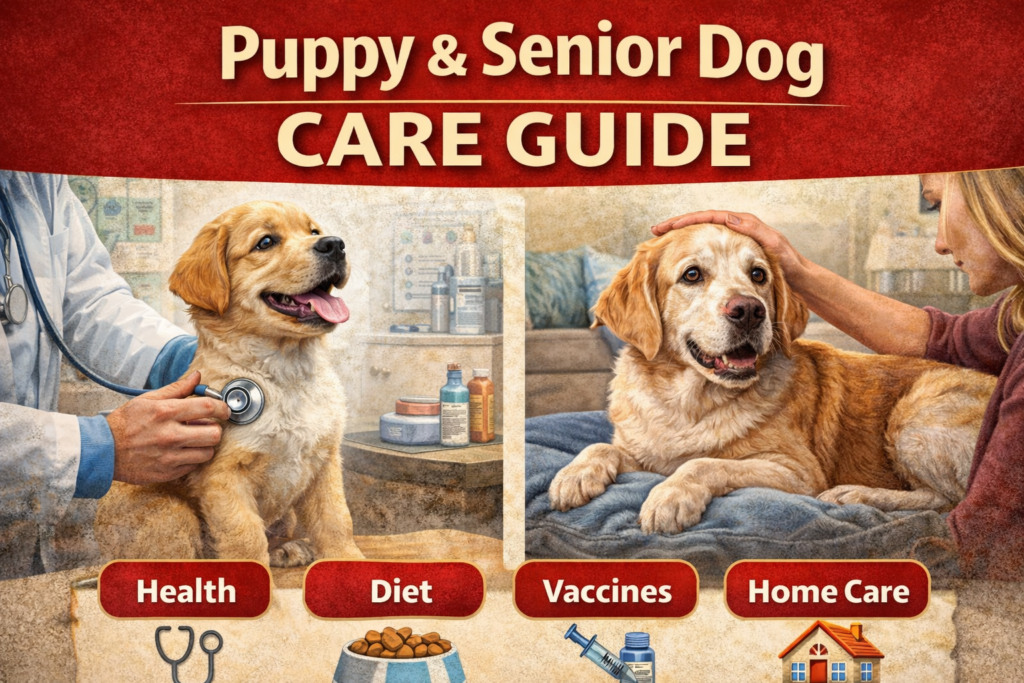
Puppy Care- Building a Healthy Foundation
Puppy Health Checklist
A proper puppy & senior dog care plan starts with a comprehensive puppy health checklist. This ensures your puppy grows strong and avoids preventable health problems.
Checklist includes:
Initial veterinary examination
Vaccinations according to schedule
Deworming and parasite prevention
Balanced diet for growth
Socialization and basic training
Regular weight and growth monitoring
Dental care and teething management
Including these steps in puppy & senior dog care prevents illnesses and supports long-term health.
Common Puppy Illnesses
Puppies have weaker immune systems, making them more vulnerable to infections and illnesses.
Common puppy illnesses include:
Parvovirus
Distemper
Kennel cough
Intestinal worms
Diarrhea and vomiting
Skin infections
Warning signs:
Lethargy
Loss of appetite
Fever
Persistent diarrhea or vomiting
Immediate veterinary care is essential if symptoms appear.
Puppy Vaccination Guide
Vaccinations are one of the most important aspects of puppy care. They protect puppies from life-threatening diseases.
Core vaccines include:
Distemper
Parvovirus
Hepatitis
Rabies
Non-core vaccines (based on lifestyle):
Kennel cough
Leptospirosis
Puppies usually start vaccinations at 6–8 weeks of age and continue until 16 weeks.
Teething Problems in Puppies
Teething is a natural but uncomfortable phase for puppies.
Common teething issues:
Chewing furniture
Drooling
Gum irritation
Mild discomfort
How to help:
Provide safe chew toys
Avoid hard objects
Maintain oral hygiene
Teething usually lasts until 6–7 months of age.
Senior Dog Care: Comfort, Health & Quality of Life
As dogs age, their physical abilities decline, and they become more prone to chronic health issues. Senior dog care focuses on comfort, disease management, and emotional well-being.
Health Problems in Older Dogs
Senior dogs are more likely to develop age-related medical conditions.
Common health problems in older dogs include:
Arthritis and joint pain
Heart disease
Kidney disease
Liver issues
Diabetes
Vision and hearing loss
Regular vet visits help detect these conditions early.
Diet for Senior Dogs
Nutrition plays a major role in senior dog care. Older dogs require fewer calories but higher-quality nutrients.
Ideal senior dog diet includes:
High-quality protein
Omega-3 fatty acids
Joint-support supplements
Fiber for digestion
Controlled fat content
Avoid overfeeding to prevent obesity.
Mobility Issues in Senior Dogs
Mobility problems are common as dogs age and can greatly affect their quality of life.
Signs of mobility issues:
Difficulty standing or walking
Stiffness after rest
Limping
Reduced activity
Ways to support mobility:
Orthopedic dog beds
Ramps instead of stairs
Gentle exercise
Joint supplements
Caring for Aging Dogs at Home
Providing proper home care is essential for senior dogs.
Tips for caring for aging dogs at home:
Keep a consistent routine
Provide a warm, quiet sleeping area
Use non-slip flooring
Maintain regular grooming
Monitor appetite and behavior
Offer mental stimulation
Emotional support is just as important as physical care.
Mental Health in Puppies & Senior Dogs
Mental well-being is often overlooked in puppy & senior dog care.
For Puppies:
Socialization prevents fear and aggression
Training builds confidence
For Senior Dogs:
Mental games slow cognitive decline
Routine reduces anxiety
Mental stimulation improves overall happiness.
Preventive Care for All Life Stages
Preventive care benefits both puppies and senior dogs.
Key preventive steps:
Routine vet checkups
Vaccinations
Parasite prevention
Dental care
Weight management
Prevention is always better than treatment.
FAQ- Puppy & Senior Dog Care
1. What is the best approach to puppy & senior dog care?
The best approach to puppy & senior dog care involves providing proper nutrition, regular veterinary checkups, vaccinations, mental stimulation, and preventive health measures. Puppies need structured training and socialization, while senior dogs need support for mobility, diet adjustments, and comfortable living conditions.
2. How often should I take my puppy to the vet?
For effective puppy & senior dog care, puppies should visit the vet every 3–4 weeks during the first 16 weeks for vaccinations, deworming, and general health checks. Regular visits ensure early detection of illnesses and proper growth monitoring.
3. What vaccinations are necessary for puppies?
Puppy vaccinations are a crucial part of puppy & senior dog care. Core vaccines include distemper, parvovirus, hepatitis, and rabies. Non-core vaccines, depending on your puppy’s lifestyle, may include kennel cough and leptospirosis. Following the vaccination schedule protects puppies from life-threatening diseases.
4. How can I support my senior dog’s mobility?
Senior dogs often face joint and mobility issues. In puppy & senior dog care, providing orthopedic beds, ramps, gentle exercise, and joint supplements can help maintain mobility and comfort. Regular vet checkups can identify problems early and provide targeted solutions.
5. What should I feed senior dogs?
A proper diet is essential for puppy & senior dog care, especially for aging dogs. A senior dog diet should include high-quality protein, Omega-3 fatty acids, fiber, joint-support supplements, and controlled fat content to maintain a healthy weight and reduce the risk of age-related diseases.
6. How do I manage teething problems in puppies?
Teething is normal but can cause discomfort and chewing issues. Effective puppy & senior dog care involves giving safe chew toys, avoiding household items, and maintaining oral hygiene. This reduces the risk of dental problems and teaches puppies safe chewing habits.
7. Can mental stimulation help senior dogs?
Yes. Mental stimulation is an important part of puppy & senior dog care. Interactive toys, puzzles, and routine engagement prevent cognitive decline and anxiety in senior dogs, improving their quality of life.
8. How do I monitor my dog’s weight?
Regular weight checks are crucial in puppy & senior dog care. Puppies should gain weight steadily according to breed standards, while senior dogs need careful monitoring to prevent obesity, which can worsen mobility problems and increase the risk of chronic diseases.
9. How do I prevent common illnesses in puppies and senior dogs?
Preventive care is central to puppy & senior dog care. Routine vet checkups, vaccinations, parasite prevention, dental care, and proper nutrition help prevent common illnesses in both puppies and senior dogs. Early detection allows for timely intervention.
10. Can I provide home care for senior dogs?
Absolutely. Home care is a critical aspect of puppy & senior dog care. Ensure a comfortable bed, safe walking areas, consistent routines, gentle exercise, regular grooming, and mental engagement. Monitoring appetite, behavior, and mobility at home helps detect problems early.
11. How do I manage both puppies and senior dogs in the same home?
When caring for both age groups, divide attention based on specific needs. Puppies need training and socialization, while senior dogs need gentle care. Puppy & senior dog care together ensures both age groups thrive, with appropriate feeding, exercise, and mental stimulation.
12. How often should senior dogs see a vet?
Senior dogs should visit the vet at least every 6 months for a wellness check, blood tests, dental exams, and preventive care. Including this in puppy & senior dog care routines helps detect chronic illnesses like arthritis, kidney disease, or heart problems early.