
Hamster Cage Setup Guide: How to Create a Safe and Comfortable Home
Hamster Cage Setup Guide for beginners. Learn the right cage size, bedding, accessories, and layout tips to build a safe, comfortable home for your hamster.
Introduction
A proper hamster cage setup guide is essential for every new hamster owner. Many beginners focus only on feeding but forget that a hamster spends most of its life inside the cage. A well-planned cage prevents stress, boredom, and health problems while keeping your pet active and happy.
This hamster cage setup guide will walk you through all the steps: choosing the right cage, selecting safe bedding, arranging accessories, providing enrichment, and maintaining the habitat for a healthy and happy hamster.
A well-planned hamster cage setup ensures that your pet has sufficient space to move, run, dig, and explore, while also providing safe areas to rest, hide, and store food. It also allows owners to observe natural behaviors, like burrowing and climbing, which are crucial for both mental and physical stimulation. Following a comprehensive hamster cage setup guide helps new owners understand how to balance comfort, safety, and enrichment in a single environment.
In this expanded hamster cage setup guide, we will walk you through every critical step of creating the perfect hamster home. From choosing the right cage size and type, to selecting safe and comfortable bedding, arranging essential accessories, incorporating enrichment activities, and maintaining a clean and stimulating habitat, this guide covers it all. By the end, you will have the knowledge and confidence to provide a safe, engaging, and healthy environment for your hamster, ensuring it thrives happily in its new home.
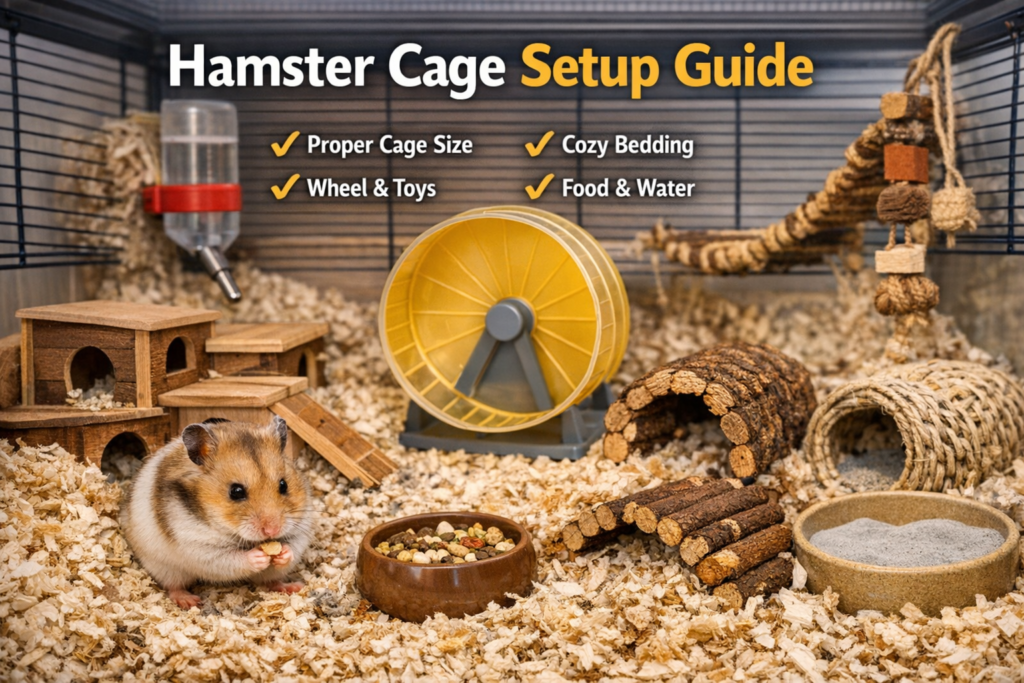
Why a Proper Hamster Cage Setup Is Important
Hamsters are naturally active and curious animals. In the wild, they dig tunnels, explore, and run long distances. Following a hamster cage setup guide ensures your pet can express these natural behaviors.
A proper cage setup:
Reduces stress and anxiety
Prevents obesity and boredom
Encourages digging and exploration
Improves overall health and lifespan
Without a thoughtful hamster cage setup, your pet may show signs of stress, chew bars excessively, or develop health issues.
1. Choosing the Right Cage for Your Hamster
The first step in any hamster cage setup guide is selecting the correct cage.
Ideal Cage Size
Minimum floor space: 450–600 square inches
Height: Sufficient for bedding and accessories
Bar spacing: Less than 1 cm to prevent escapes
Remember, hamsters need more floor space than multiple levels.
Best Cage Types
Glass tanks with mesh lids
Large wire cages with solid bases
DIY bin cages with proper ventilation
Cages to Avoid
Small plastic cages
Tiny starter kits
Cages with excessive tubes but little space
A good hamster cage setup guide emphasizes space and comfort over appearance.
2. Bedding: The Base of a Good Hamster Cage Setup
Bedding allows hamsters to burrow and feel secure.
Safe Bedding Options
Paper-based bedding
Aspen wood shavings
Hemp bedding
Bedding Depth
Minimum: 6 inches
Ideal: 8–10 inches
Bedding to Avoid
Pine or cedar shavings (toxic oils)
Scented bedding
Clay-based or cat litter products
This is a key step in a proper hamster cage setup guide, ensuring your hamster can burrow naturally.
3. Hiding Spots & Shelters
Small animals need a sense of security to feel safe and reduce stress. A well-planned hiding setup can also provide enrichment and encourage natural behaviors like burrowing and nesting. Include:
Hideouts or tunnels:
Use materials like wood, cardboard, or safe plastic.
Provide multiple tunnels and hideouts to mimic a natural burrow.
Tunnels can also serve as exercise and exploration areas.
Sleeping areas:
Nest boxes, igloos, or small huts give your pet a cozy place to sleep.
Line them with soft, safe bedding or shredded paper for warmth.
Rotating hides:
Move or change hiding spots periodically to keep your pet mentally stimulated.
Adding new textures or shapes helps prevent boredom.

4. Essential Accessories for a Hamster Cage
Accessories are not optional—they are necessary.
Hideouts and Houses
Hamsters need privacy for sleep and security.
Wooden houses
Ceramic hides
Multi-chamber hideouts
Exercise Wheel
Running is essential for hamster health.
Dwarf hamsters: 6–8 inches
Syrian hamsters: 10–12 inches
Solid-surface wheels prevent injuries
Food Bowl and Water Bottle
Heavy ceramic food bowl
Drip-free water bottle
Place away from bedding
Chew Toys
Teeth grow continuously, so chew toys are crucial:
Wooden chew toys
Cardboard tubes
Applewood sticks
All of these are part of a complete hamster cage setup guide for a happy pet.
5. Enrichment Ideas for a Better Cage Setup
Enrichment prevents boredom and promotes natural behavior.
Tunnels and bridges
Dig boxes with sand or soil
Rearranging toys weekly
Scatter feeding instead of using only a bowl
A good hamster cage setup guide emphasizes enrichment as much as safety.
6. Hamster Cage Setup for Beginners (Simple Checklist)
For beginners, simplicity works best.
Large cage
Deep bedding
One hideout
Proper exercise wheel
Food and water
One or two chew toys
This checklist aligns perfectly with a beginner-friendly hamster cage setup guide.
7. Where to Place the Hamster Cage at Home
Placement is critical for safety and comfort.
Best Location
Quiet room
Away from direct sunlight
Stable temperature (18–24°C)
Places to Avoid
Kitchens or noisy rooms
Near speakers or TVs
Drafty areas
Following this guidance ensures your hamster cage setup is both safe and stress-free.
8. Cleaning and Maintenance Schedule
A clean cage is essential, but over-cleaning can stress hamsters.
Daily
Remove uneaten food
Check water bottle
Weekly
Spot clean soiled bedding
Clean food bowl
Monthly
Partial bedding change
Clean accessories
Keeping familiar scents is part of a proper hamster cage setup guide to reduce stress.

9. Common Hamster Cage Setup Mistakes
Choosing a cage that is too small
Using scented or unsafe bedding
Incorrect wheel size
Overcrowding the cage
Over-cleaning
Avoiding these mistakes is a key step in any hamster cage setup guide.
10. Final Tips for a Safe and Comfortable Cage Setup
Secure cage lids
Remove sharp edges from accessories
Avoid placing heavy items on loose bedding
Observe your hamster’s behavior
A complete hamster cage setup guide ensures your pet is active, happy, and healthy.
1. Secure Cage Lids and Doors
Always ensure that your hamster cage doors and lids are tightly secured. Hamsters are excellent escape artists, and even a small gap can allow them to squeeze out. A well-secured hamster cage setup keeps your pet safe and prevents stress.
2. Avoid Sharp Edges and Small Gaps
Check all accessories, tunnels, and hideouts for sharp edges or gaps where your hamster’s tiny paws or legs could get trapped. A safe hamster cage setup guide emphasizes smooth surfaces and stable accessories.
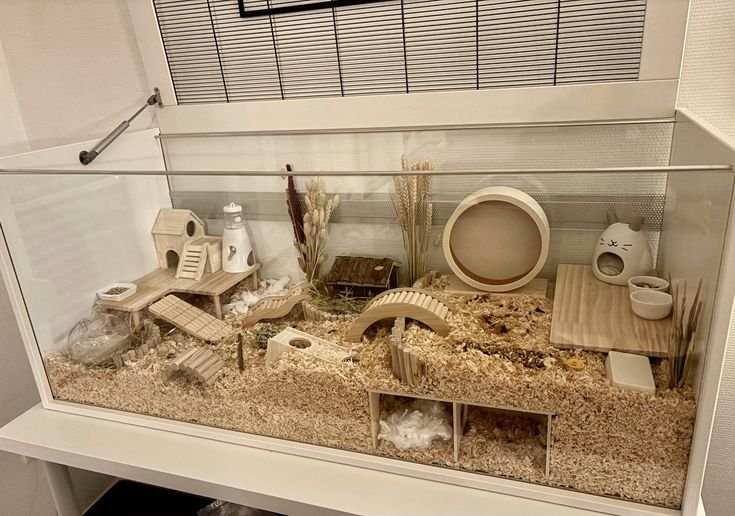
Final Thoughts
A proper hamster cage setup guide is more than just a checklist of items—it is a complete roadmap to ensure your hamster lives a happy, healthy, and stress-free life. Hamsters are naturally curious, active, and small creatures, and their cage is essentially their entire world. The right setup allows them to explore, dig, chew, hide, and exercise, all while keeping them safe from harm.
Many beginners underestimate how important a proper cage is. While food and water are critical, the cage itself defines your hamster’s quality of life. Following the advice in this hamster cage setup guide ensures your pet can express natural behaviors, stay physically fit, and enjoy a comfortable home.
Key Takeaways for a Perfect Hamster Cage Setup
Size Matters:
A cage with at least 450–600 square inches of floor space gives your hamster room to explore. Height is important for bedding depth, and bar spacing must be less than 1 cm to prevent escapes.Safe Bedding:
Deep bedding (8–10 inches) made of paper, aspen, or hemp allows burrowing and provides comfort. Avoid cedar, pine, scented, or clay bedding, as these can harm your hamster’s health.Exercise Wheel & Accessories:
A solid-surface wheel is essential. Add hideouts, chew toys, tunnels, and bridges to enrich your hamster’s environment. Accessories are not just decorative—they are vital for physical and mental well-being.Enrichment is Key:
Scatter feeding, dig boxes, and rearranging toys periodically encourage natural behavior and prevent boredom. Mental stimulation is as important as physical activity.Placement & Maintenance:
Place the cage in a quiet, stable-temperature area away from sunlight and drafts. Clean spot areas daily, partial bedding weekly, and accessories monthly to maintain hygiene without stressing your hamster.
FAQ – Hamster Cage Setup Guide
1. What are the most important holiday pet safety tips?
The most important holiday pet safety tips focus on keeping pets safe from common seasonal hazards. This includes:
Avoiding toxic foods: Keep pets away from chocolate, grapes, raisins, onions, garlic, spicy dishes, fatty foods, and artificial sweeteners like xylitol.
Securing decorations: Ensure Christmas trees, ornaments, tinsel, candles, and electrical cords are safely out of reach.
Providing a quiet space: Pets need a calm retreat during loud fireworks, family gatherings, or crowded parties.
Maintaining routines: Stick to regular feeding, walks, and play schedules to reduce stress.
Emergency preparedness: Always have your veterinarian’s contact information, the nearest emergency animal clinic, and a well-stocked pet first-aid kit ready.
Following these steps ensures your pet stays safe, healthy, and stress-free during the festive season.
2. How can I keep my pet calm during fireworks and loud holiday celebrations?
Loud noises from fireworks, music, or celebrations can cause anxiety and fear in pets. To reduce stress, follow these pet safety during holidays measures:
Keep pets indoors: This prevents accidental escape or injury.
Close windows and curtains: Reduces exposure to bright lights and loud sounds.
Play calming music or white noise: Helps mask external sounds and soothe your pet.
Provide a cozy hiding spot: Create a safe, familiar space with blankets, toys, and bedding.
Use vet-approved calming aids: Anxiety wraps, pheromone diffusers, or natural calming treats can further help pets remain relaxed.
By implementing these strategies, you can significantly reduce fear, stress, and potential accidents during holiday celebrations.
3. What foods should I avoid giving my pet during holidays?
Many traditional holiday foods are toxic or harmful to pets. Avoid:
Chocolate and sweets containing caffeine
Grapes and raisins
Onions and garlic
Spicy, salty, or fatty foods
Artificial sweeteners like xylitol
Instead, offer pet-friendly holiday treats such as homemade biscuits, boiled chicken, plain vegetables, or frozen yogurt (xylitol-free). These alternatives ensure holiday pet safety while letting your pets enjoy the festive season safely.
4. How can I provide mental stimulation for my pet during the holidays?
Busy holiday schedules and unusual environments can make pets anxious. Mental stimulation keeps them engaged, happy, and calm. Recommended strategies for holiday pet care include:
Puzzle toys and interactive feeders: Encourage problem-solving and keep pets focused.
Chew toys: Provide a natural outlet for stress and occupy pets for longer periods.
Treat-dispensing toys: Combine safe snacks with play to keep pets engaged.
Training sessions and short games: Maintain routines while offering mental exercise.
Providing mental stimulation not only reduces anxiety but also reinforces positive behaviors during busy holiday events.
5. What should I include in a pet emergency kit for holidays?
Being prepared is a crucial part of holiday pet safety tips. Your pet emergency kit should include:
Antiseptic wipes, gauze, and adhesive bandages
Tweezers and a digital thermometer
Any essential medications your pet requires
Contact information for your veterinarian and the nearest emergency animal clinic
Small towels or blankets for comfort
Extra food and water in case of unexpected travel or confinement
Having a ready-to-go emergency kit ensures that you can respond quickly to injuries, illness, or stress-related incidents during holiday events.
6. Can pets safely participate in holiday festivities?
Yes! Pets can safely join in holiday celebrations if you follow key holiday pet safety tips:
Monitor interactions with guests, especially children
Avoid giving hazardous human foods
Provide safe toys and interactive activities
Maintain regular feeding and exercise routines
Ensure pets have access to quiet, comfortable spaces to retreat when overwhelmed
By combining holiday pet care practices with safe treats and proper supervision, pets can enjoy festivities without risk. This approach creates a joyful and stress-free environment for both pets and family members.
7. Additional Tips for Stress-Free Holiday Pets
Introduce new environments gradually: Let pets explore new spaces slowly to prevent anxiety.
Travel safety: Use secure carriers, harnesses, and microchips when traveling.
Observe behavior: Watch for signs of fear, stress, or illness and address promptly.
Celebrate inclusively: Give pets attention, treats, and activities so they feel part of the holiday.
Implementing these additional measures ensures holiday pet safety while enhancing the bond between you and your furry friends during festive celebrations.