Discover everything about human grade dog food,including benefits,risks,nutrition facts and expert tips to choose the best diet for your dog’s health.
Introduction
In recent years,human grade dog food has become one of the fastest growing trends in pet nutrition.Pet owners today treat their dogs like family and naturally,they want to provide the same level of care especially when it comes to food.
But what exactly is human grade dog food?Is it truly better than traditional kibble?And most importantly,is it worth the cost?
This comprehensive guide answers all your questions.By the end,you’ll understand the benefits,drawbacks,science and practical tips to decide whether human grade dog food is the right choice for your furry companion.
What Is Human Grade Dog Food?
Human grade dog food refers to pet food made with ingredients that are safe for human consumption and produced under the same safety and quality standards as human food.
To qualify as“human grade,”the food must meet strict conditions:
- All ingredients must be edible for humans
- Manufacturing must follow human food safety standards
- Processing,storage and transportation must meet regulated guidelines
This differs from traditional dog food,which often uses feed grade ingredients materials not approved for human consumption but still considered safe for pets.
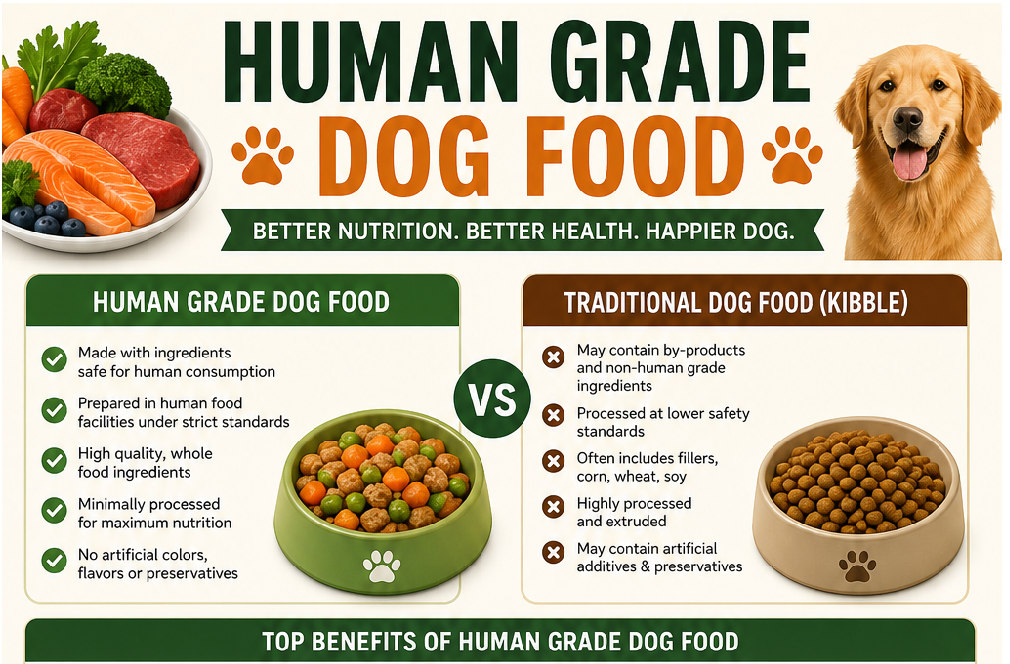
Human Grade vs Traditional Dog Food
Understanding the difference helps you make smarter decisions.
Human Grade Dog Food
- Made with fresh,whole ingredients
- Minimal processing
- No low quality by products
- Produced in human food facilities
Traditional Kibble
- Highly processed
- May include meat meals and by-products
- Longer shelf life
- Generally more affordable
While both can meet nutritional requirements,the quality and digestibility often differ.
Benefits of Human Grade Dog Food
1. High Quality Ingredients
One of the biggest advantages is ingredient quality.Human grade foods use real meat,vegetables and grains,avoiding questionable fillers.
This leads to:
- Better nutrient absorption
- Improved overall health
- Reduced risk of low quality contaminants
2. Better Digestibility
Human grade dog food is often easier to digest because it is less processed.
Research shows that dogs eating human grade diets may experience:
- Improved nutrient absorption
- Healthier gut microbiome
- Better stool quality
3. Improved Skin and Coat Health
Dogs fed human grade diets often develop:
- Shinier coats
- Healthier skin
- Reduced itching or dryness
Some studies suggest improvements in coat quality and inflammation levels when dogs switch to these diets.
4. Higher Palatability(Taste)
Let’s face it dogs love fresh food.
Human grade meals are:
- More flavorful
- Made with real ingredients
- Free from artificial preservatives
This makes them ideal for:
- Picky eaters
- Older dogs with reduced appetite
5. Supports Gut Health
A healthy gut means a healthier dog overall.
Human grade diets may:
- Promote beneficial gut bacteria
- Improve digestion
- Reduce bloating and gas
Some studies have observed positive changes in gut microbiota with human grade feeding.
6. Transparency and Safety
Pet owners feel more confident because:
- Ingredients are recognizable
- Production standards are stricter
- Food is prepared like human meals
Drawbacks of Human Grade Dog Food
Despite its benefits, it’s not perfect.
1. Higher Cost
Human grade dog food is significantly more expensive than kibble.
Reasons include:
- Premium ingredients
- Fresh preparation
- Refrigeration and delivery costs
This can make it less accessible for many pet owners.
2. Not Always Nutritionally Balanced
Just because food is“human grade”doesn’t mean it meets all of a dog’s nutritional needs.
Some diets may:
- Lack essential vitamins or minerals
- Require supplements
- Not meet official standards
Always look for food that meets AAFCO nutritional guidelines.
3. Shorter Shelf Life
Fresh food spoils faster than kibble.
This means:
- Refrigeration is required
- Frequent purchases are needed
- Less convenience
4. Not Ideal for All Dogs
Certain dogs may not benefit,including those with:
- Medical conditions
- Food allergies
- Special dietary needs
Always consult a veterinarian before switching diets.
Is Human Grade Dog Food Better Than Kibble?
The answer isn’t simple.
Human grade dog food offers:
- Better ingredient quality
- Improved digestibility
- Enhanced taste
However, high quality kibble can still:
- Provide complete nutrition
- Be more affordable
- Be convenient
Experts agree that nutritional balance matters more than ingredient label alone.
What Does Science Say?
Scientific research on human grade dog food is still evolving.
Key findings:
- Improved digestibility and gut health
- Potential improvements in skin and coat condition
- Better nutrient absorption due to minimal processing
However:
- Long-term studies are limited
- Results vary depending on formulation
How to Choose the Best Human Grade Dog Food
Not all human grade foods are equal.Here’s what to look for:
1. AAFCO Approval
Ensure the food meets complete and balanced nutrition standards.
2. Real Ingredients
Look for:
- Named protein sources(chicken, beef, fish)
- Whole vegetables
- Healthy fats
3. No Artificial Additives
Avoid:
- Artificial colors
- Preservatives
- Low quality fillers
4. Veterinary Formulation
Choose brands developed by:
- Veterinary nutritionists
- Certified pet nutrition experts
5. Customized Diet Options
Some brands offer personalized meal plans based on:
- Age
- Weight
- Activity level
Popular Human Grade Dog Food Brands
Some well known brands include:
- The Farmer’s Dog
- Ollie
- Just Food For Dogs
- Spot & Tango
These brands focus on:
- Fresh ingredients
- Customized meals
- High quality nutrition
How to Transition Your Dog to Human Grade Food
Switching diets should be gradual.
Step by step transition:
Day 1 to 3: 75% old food,25% new
Day 4 to 6: 50% old,50% new
Day 7 to 9: 25% old,75% new
Day 10: 100% new food
This helps avoid:
- Digestive upset
- Diarrhea
- Vomiting
Homemade vs Commercial Human Grade Dog Food
Homemade
Pros:
- Full control over ingredients
- Fresh and customizable
Cons:
- Risk of nutrient imbalance
- Time consuming
- Requires expert planning
Commercial
Pros:
- Balanced nutrition
- Convenient
- Professionally formulated
Cons:
- Expensive
- Less control
Common Myths About Human Grade Dog Food
Myth 1:It’s Always Healthier
Not true—nutritional balance matters more than ingredient grade.
Myth 2:Dogs Should Eat Like Humans
Dogs have different nutritional needs.
Myth 3:All Human Grade Food Is Equal
Quality varies widely between brands.
Is Human Grade Dog Food Worth It?
It depends on your situation.
It’s worth it if:
- You want premium nutrition
- Your dog is a picky eater
- You can afford it
It may not be necessary if:
- Your dog thrives on high quality kibble
- You’re on a budget
- Your dog has specific medical needs
FAQs About Human Grade Dog Food
1. Do vets recommend human grade dog food?
Yes,only if it meets complete nutritional standards.
2. Can puppies eat human grade dog food?
Yes, but it must be formulated for growth stages.
3. Is it safe long term?
Generally yes,if nutritionally balanced.
4. How much does it cost?
It’s usually more expensive than kibble due to premium ingredients.
5. Can I mix it with kibble?
Yes,many pet owners use it as a topper.