
Ultimate Guide to Pet Separation Anxiety: Proven Pet Care Tips to Improve Pet Behavior
Pet separation anxiety affects pet behavior and emotional health. Learn expert pet care tips, signs, causes, and easy home solutions to help anxious pets feel safe and calm.
Pet Separation Anxiety: How Proper Pet Care Improves Pet Behavior and Emotional Health
Pet separation anxiety is one of the most common yet misunderstood issues in modern pet care. Many pet owners notice sudden changes in their pet’s behavior when they leave home—such as excessive barking, destructive habits, or visible emotional distress. These actions are often labeled as “bad behavior,” but in reality, they are signs of emotional imbalance and anxiety, which can be worsened by daily habits where phones affect pet behavior through reduced interaction and attention.
Understanding pet separation anxiety, improving daily pet care routines, and recognizing how modern distractions—especially how phones affect pet behavior—influence emotional bonding can help pet parents create a calmer, healthier environment for their furry companions. This in-depth guide explains everything you need to know, from the causes and symptoms of pet separation anxiety to long-term solutions and prevention strategies.
Understanding Pet Separation Anxiety
Pet separation anxiety is an emotional condition where pets experience fear, stress, or panic when separated from their owners. Pets are social animals. They form strong emotional attachments, and when those bonds feel threatened, anxiety develops.
Unlike temporary boredom, pet separation anxiety causes intense emotional reactions that directly affect pet behavior. This condition can occur in dogs, cats, and even small pets such as rabbits, birds, and hamsters.
Why Pet Separation Anxiety Is Increasing Today
Modern lifestyles have unintentionally increased anxiety in pets.
1. Changes in Human Schedules
Remote work, frequent travel, and sudden routine changes can confuse pets and disrupt emotional stability.
2. Over-Attachment
Constant companionship without teaching independence can lead to emotional dependency.
3. Adoption & Rescue Backgrounds
Rescue pets often carry emotional trauma that affects pet behavior and trust.
4. Limited Mental Stimulation
Without proper mental engagement, pets develop stress and anxiety more easily.
How Pet Separation Anxiety Affects Pet Behavior
Changes in pet behavior are the most noticeable signs of separation anxiety. These behaviors are not intentional misbehavior — they are emotional responses.
Common Behavioral Signs
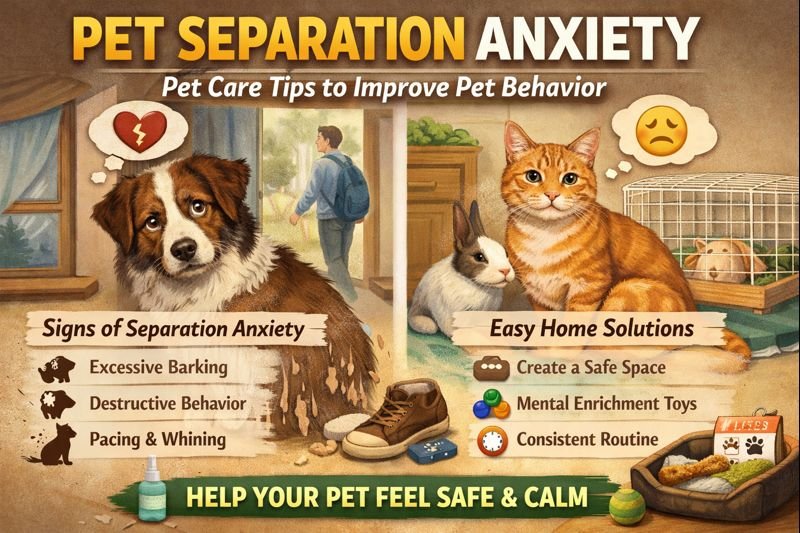
Excessive barking, whining, or meowing
Destructive chewing, scratching, or digging
Pacing, trembling, or restlessness
Indoor accidents despite proper training
Loss of appetite when left alone
Clingy behavior before you leave
Understanding this connection between anxiety and pet behavior is essential for effective pet care.
Signs of Pet Separation Anxiety in Different Pets
Dogs
Dogs often show separation anxiety through vocalization and destruction. Chewed doors, scratched walls, and nonstop barking are common indicators.
Cats
Cats may hide anxiety through subtle changes such as over-grooming, litter box issues, or excessive vocalization.
Small Pets
Small animals may stop eating, hide excessively, or become aggressive due to emotional stress.
Each species expresses anxiety differently, but the emotional root remains the same.
The Role of Pet Care in Managing Anxiety
Proper pet care goes beyond feeding and grooming. Emotional care is just as important as physical health.
Good pet care:
Builds emotional security
Reduces stress hormones
Improves pet behavior
Strengthens trust between pet and owner
When emotional needs are ignored, anxiety grows and behavior worsens.
Daily Pet Care Practices That Reduce Separation Anxiety
1. Establish a Predictable Routine
Pets thrive on consistency. Fixed feeding times, walks, and play sessions provide emotional reassurance.
A structured routine improves pet behavior by reducing uncertainty.
2. Encourage Independent Time
Teach pets that being alone is safe.
Start with short separations
Gradually increase alone time
Avoid dramatic goodbyes
This builds confidence and emotional independence.
3. Mental Stimulation Is Essential
Mental enrichment is a powerful pet care tool.
Puzzle toys
Treat-dispensing games
Snuffle mats
Interactive feeders
Mental activity prevents boredom and reduces anxiety-driven pet behavior.
4. Physical Exercise Before Leaving
A tired pet is a relaxed pet. Physical activity releases stress and improves emotional balance.
Exercise also prevents destructive pet behavior caused by excess energy.
5. Create a Safe & Comforting Space
Provide a calm environment with:
Comfortable bedding
Favorite toys
Familiar scents
This space becomes a security zone during alone time.
How Owner Behavior Influences Pet Anxiety
Pet behavior is closely connected to human emotions.
Mistakes That Increase Anxiety
Emotional goodbyes
Inconsistent routines
Punishing anxiety behaviors
Ignoring emotional signals
Healthy Owner Habits
Calm departures
Positive reinforcement
Patience and consistency
Your behavior directly shapes your pet’s emotional response.
Natural Pet Care Support for Separation Anxiety
Some pets benefit from natural calming support as part of their pet care routine.
Common Natural Options
Pheromone diffusers
Vet-approved calming supplements
Soft background music
Familiar scents
These aids support emotional balance but should never replace training or routine.
When Pet Separation Anxiety Becomes Severe
In severe cases, anxiety can lead to:
Self-injury
Aggression
Chronic stress
Digestive problems
If anxiety disrupts daily life, professional help is necessary.
Who Can Help
Veterinarians
Certified pet behaviorists
Early intervention improves long-term pet behavior and emotional health.
Training vs Emotional Healing
Many owners assume separation anxiety is a training issue. It is not.
Pet separation anxiety is an emotional condition, not disobedience. Training helps only when combined with emotional care and patience.
Long-Term Pet Care Strategies for Emotional Stability
1. Balance Attention
Avoid constant attention. Encourage pets to self-soothe.
2. Social Exposure
Safe social interaction builds confidence.
3. Environmental Enrichment
Rotate toys and activities to prevent boredom.
4. Monitor Emotional Changes
Sudden behavioral shifts may signal emotional stress or health issues.
Preventing Pet Separation Anxiety
Prevention is a critical part of responsible pet care.
Teach independence early
Avoid sudden routine changes
Encourage calm alone time
Provide mental stimulation daily
Healthy habits prevent anxiety before it begins.
The Emotional Bond Between Pets and Humans
Pets rely on humans for safety, comfort, and emotional stability. When that bond feels threatened, anxiety develops. Addressing emotional needs is a responsibility, not an option.
Pet care should always include:
Emotional awareness
Behavioral understanding
Patience and empathy
Final Thoughts
Pet separation anxiety is not a flaw in pet behavior — it is a cry for emotional security. With proper pet care, consistent routines, and compassionate understanding, anxiety can be reduced and managed effectively.
At PetNatureHub, we believe true pet care means nurturing both the body and the mind. By understanding your pet’s emotions and behavior, you build trust, confidence, and a lifelong bond.
Healthy emotions lead to healthy behavior — and a happier life for both you and your pet
FAQs: Pet Separation Anxiety
Is pet separation anxiety common?
Yes. It is one of the most common pet behavior issues worldwide.
Can proper pet care really reduce anxiety?
Absolutely. Consistent routines, mental stimulation, and emotional support significantly reduce anxiety.
Is punishment effective for anxiety behavior?
No. Punishment increases fear and worsens pet behavior.
How long does recovery take?
Improvement may take weeks or months depending on severity and consistency of care.
Pingback: Phones Affect Pet Behavior: How Digital Distraction Is Changing Your Pet’s Mind