
Phones Affect Pet Behavior: Shocking Ways Digital Distraction Is Changing Your Pet’s Mind
Phones affect pet behavior by reducing attention, disrupting routines, and increasing stress. Learn how screen habits impact your pet’s mental health.
Introduction
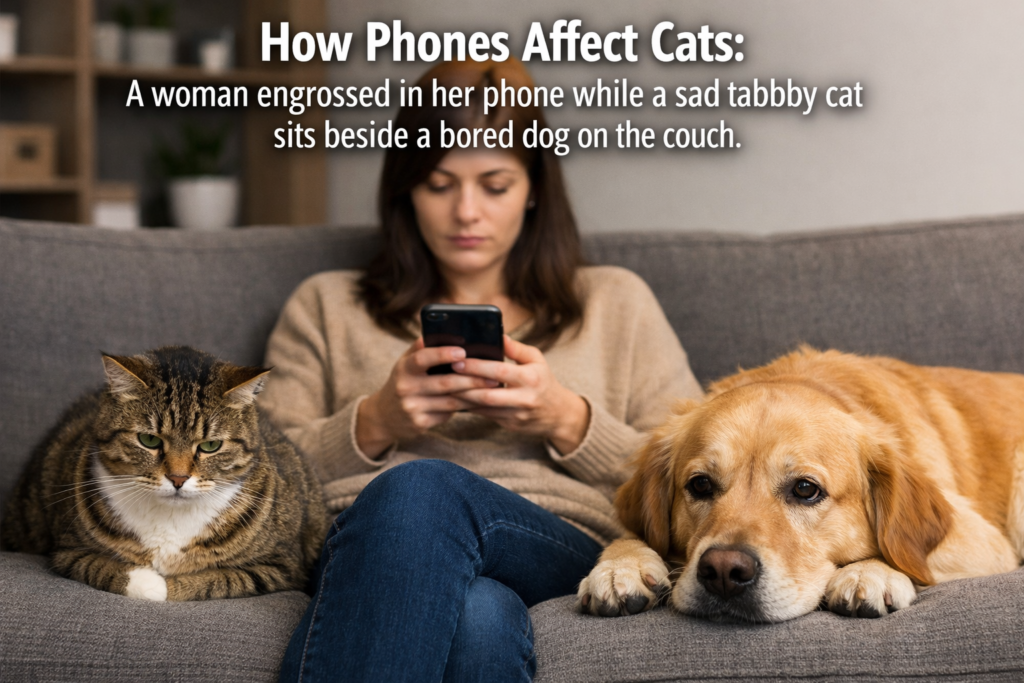
Phones affect pet behavior more than most pet owners realize. Smartphones are constantly in our hands, but pets notice when they take priority. When phones affect pet behavior, pets may feel ignored, stressed, or emotionally neglected. Understanding how phones affect pet behavior is essential for maintaining a healthy bond and protecting your pet’s mental health.
Why Pets Are Sensitive to Human Attention
Pets rely on human interaction to feel secure. Eye contact, tone of voice, touch, and play are crucial for emotional bonding. When phones affect pet behavior, pets may respond with anxiety, clinginess, or withdrawal—reactions closely linked to Pet Separation Anxiety. Emotional bonding suffers whenever attention is divided, making this a clear example of how phones affect pet behavior in everyday life and how it can unintentionally trigger separation-related stress in pets.
Reduced Interaction and Bonding
One of the main ways phones affect pet behavior is through reduced attention. Common issues include:
Ignored playtime requests
Delayed responses to cues
Skipped walks or feeding times
Pets quickly notice these lapses, leading to behavioral changes and frustration. This clearly shows how phones affect pet behavior emotionally.
Reduced Interaction and Emotional Distance
One of the main ways phones affect pet behavior is through reduced attention. Common issues include:
Ignored playtime requests
Delayed responses to cues
Skipped walks or feeding times
Pets quickly notice these lapses, which can lead to behavioral changes and frustration. This clearly shows how phones affect pet behavior emotionally.
Behavioral Changes Caused by Phone Use
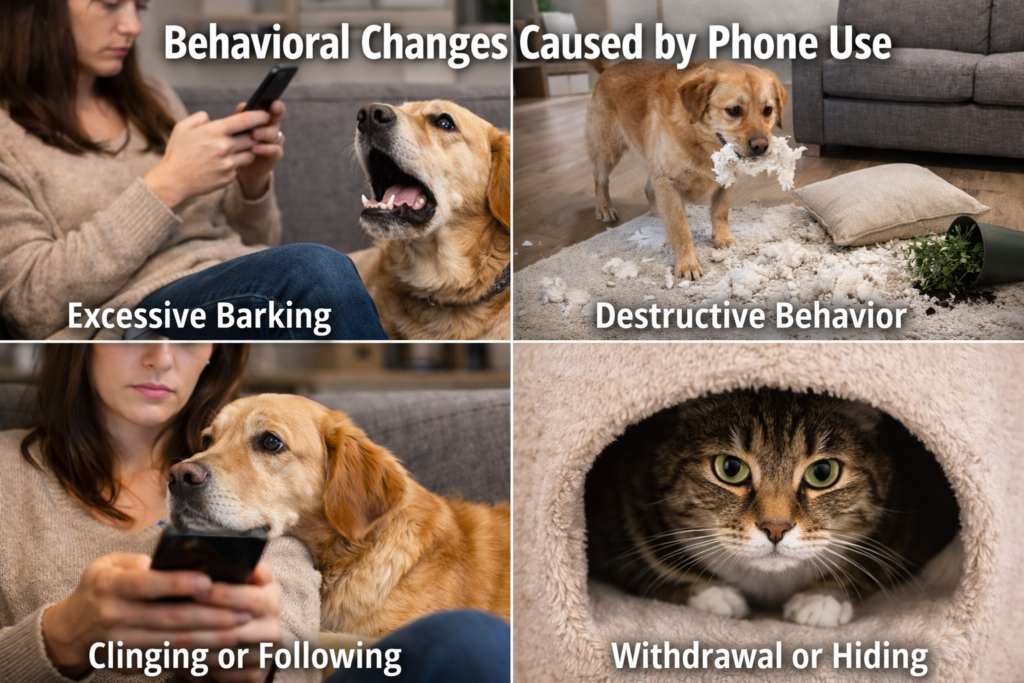
Phones affect pet behavior in subtle but significant ways:
Excessive barking or meowing
Destructive chewing or scratching
Clinginess or constant following
Withdrawal and low activity
These behaviors are emotional signals indicating that phones affect pet behavior, not just bad habits.
Mental Health Impact on Pets
Pets need mental stimulation and emotional care. Constant phone use reduces attention and engagement, causing stress. Experts confirm that phones affect pet behavior by creating emotional neglect, especially for indoor pets.
How Phones Affect Dogs
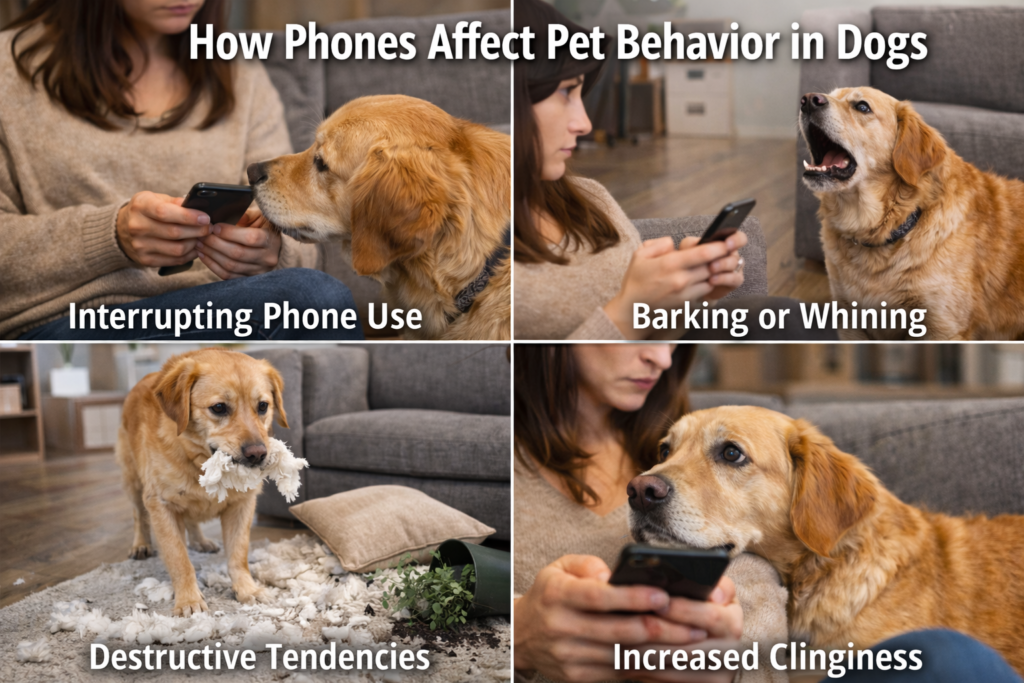
In today’s digital world, smartphones are everywhere, but their impact on dogs is often underestimated. Dogs are highly perceptive animals, sensitive to sounds, vibrations, and the attention of their owners. Excessive phone use can affect their behavior, mood, and overall well-being.
One major impact is reduced attention and interaction. When owners spend too much time on their phones, dogs may feel ignored, leading to anxiety, restlessness, or destructive behaviors such as chewing, barking, or scratching. Over time, this can affect the emotional bond between pet and owner.
Phones can also introduce stressful stimuli. Notifications, ringing tones, and vibrations can startle dogs, especially those prone to nervousness. Dogs may associate these sounds with discomfort, causing them to hide or avoid areas where phones are frequently used.
Additionally, constant photo sessions or video calls with bright screens and flashes can irritate or frighten some dogs. To maintain a happy and healthy pet, owners should balance phone use with interactive play, training, and quality bonding time. Minimizing phone distractions ensures dogs feel secure, loved, and mentally stimulated, promoting both their emotional and physical health.
How Phones Affect Cats
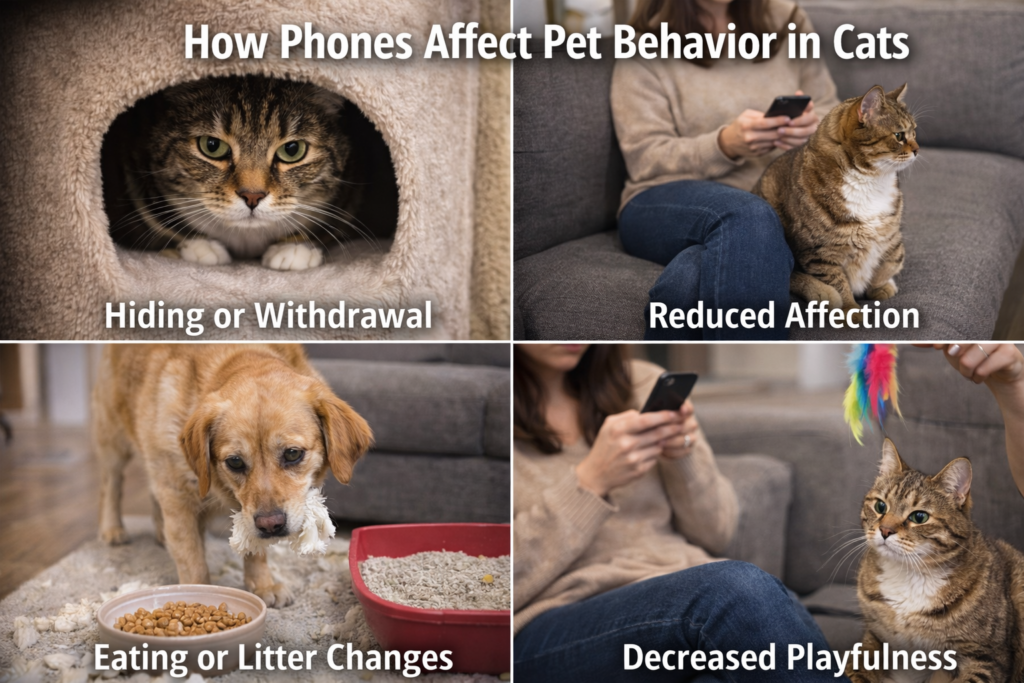
Smartphones have become an integral part of human life, but their impact on pets, especially cats, is often overlooked. Cats are sensitive to changes in their environment, and the presence of phones can influence their behavior and well-being.
One major effect is distraction and reduced interaction. When owners spend excessive time on their phones, cats may feel neglected, leading to anxiety, boredom, or attention-seeking behaviors like meowing, pawing, or knocking things over. Over time, this can affect their emotional health and weaken the bond between pet and owner.
Another concern is exposure to sounds and lights. Phone notifications, vibrations, and screen glare can startle or stress cats, particularly those that are timid or elderly. Some cats may avoid areas where phones are frequently used, disrupting their usual routines.
Additionally, phone-related habits such as using flash for photos or loud ringtones can trigger fear responses or aggression. To keep cats happy and healthy, it’s important for owners to balance screen time with quality interactions, playtime, and a calm environment. Limiting phone use around cats ensures they feel secure, loved, and mentally stimulated.
Screen Exposure and Overstimulation
Allowing pets near screens occasionally is harmless, but excessive exposure can cause:
Eye strain
Overstimulation
Reduced interest in active play
This is another way phones affect pet behavior without direct neglect.
Routine Disruption
Routine is crucial for pets. Phones affect pet behavior by interrupting schedules:
Delayed feeding
Shortened or skipped walks
Missed playtime
Consistency keeps pets emotionally balanced, and excessive phone use disrupts this, highlighting again how phones affect pet behavior.
Training and Learning Impact
Training requires attention, timing, and repetition. Phone distractions reduce:
Command consistency
Reward timing accuracy
Learning efficiency
Therefore, phones affect pet behavior by weakening discipline and slowing training progress.
Scientific Insights
Animal behavior research shows pets sense emotional unavailability. When owners are distracted, pets detect:
Flat vocal tones
Lack of eye contact
Delayed responses
These subtle cues explain why phones affect pet behavior even when owners are physically present.
FAQ – Phones Affect Pet Behavior
How do phones affect pet behavior daily?
Phones affect pet behavior by reducing the quality of interaction between pets and their owners. Pets rely on consistent attention, playtime, and communication to feel secure. When owners are constantly on their phones, pets may feel ignored or stressed. Daily distractions can lead to attention-seeking behavior, anxiety, or even withdrawal from interaction. Understanding how phones affect pet behavior helps owners prioritize moments of engagement and ensure pets feel emotionally supported and mentally stimulated.Can excessive phone use harm pets mentally?
Yes, excessive phone use can impact pets’ mental well-being. Research shows that phones affect pet behavior by decreasing emotional bonding and limiting mental stimulation. Pets that feel neglected while owners focus on screens may develop stress-related behaviors, such as destructive chewing, excessive barking, or avoiding interaction. Over time, chronic neglect caused by phone distractions can even lead to depression-like symptoms in dogs and cats. Recognizing how phones affect pet behavior mentally is crucial for maintaining a healthy, emotionally balanced pet.What are the signs that phones affect pet behavior?
The signs are often subtle but consistent. Key indicators that phones affect pet behavior include:
Pets frequently interrupting phone use
Increased vocalizations like barking or meowing
Clinginess or following the owner constantly
Withdrawal or hiding
Reduced interest in play or physical activity
Changes in eating or sleeping patterns
Monitoring these signs allows owners to address the negative effects of phones affect pet behavior before long-term behavioral issues develop.
How can I reduce the negative impact of phones on pets?
To minimize how phones affect pet behavior, create phone-free moments during playtime, meals, and walks. Engage pets with interactive activities, such as fetch, training, or puzzle toys, which provide both mental and physical stimulation. Maintaining a consistent routine and promptly responding to pets’ cues reduces anxiety and reinforces emotional bonding. Being mindful of how phones affect pet behavior ensures pets feel valued and emotionally secure.Do dogs and cats react differently to phone distraction?
Yes. Dogs, being social animals, may bark, paw, or follow their owners constantly when phones affect pet behavior. They seek attention actively to compensate for perceived neglect. Cats, on the other hand, may withdraw, hide, or reduce affection. While dogs express stress outwardly, cats often internalize it. Both reactions demonstrate how phones affect pet behavior differently depending on the species, requiring tailored attention from owners.Is screen exposure harmful for pets?
Occasional screen exposure is generally harmless, but prolonged exposure can overstimulate pets. Loud sounds, fast-moving visuals, or constant video content may reduce interest in physical activity and social interaction. This is another way phones affect pet behavior, even without direct neglect, highlighting the importance of real-world interaction over digital engagement.Can mindful phone use improve my pet’s well-being?
Absolutely. By limiting phone distractions and prioritizing face-to-face interaction, owners can minimize how phones affect pet behavior. Mindful engagement strengthens emotional bonds, reduces anxiety, and encourages healthy behavioral patterns. Consistent attention, play, and communication ensure pets feel valued and secure, ultimately improving their overall mental and emotional health.
Pingback: Ultimate Guide to Pet Separation Anxiety: Proven Pet Care Tips to Improve Pet Behavior