
 By Muntaha farid
Discover how AI pet health monitoring can track your pet’s behavior, activity, sleep, and health changes while supporting smarter pet care.
Introduction
Artificial intelligence is changing the way people manage many aspects of daily life, and pet care is no exception. New tech, from smart collars and activity trackers to health-monitoring apps and smart pet cameras, is helping pet parents learn about their animals in more detail than ever before. But can AI really help you keep tabs on your pet’s health? The short answer is yes with caveats.
AI pet health monitoring tools can analyze patterns in your pet’s activity, sleep, eating habits, movement, bathroom behavior, and sometimes even vocalizations or facial expressions. When these patterns change, technology may help alert owners that something is different. This can encourage earlier attention and better everyday pet care.
However, AI cannot replace a qualified veterinarian. These tools are best used as an additional source of information, not as a diagnosis or a substitute for professional veterinary advice.
In this guide, we will explain how AI pet health monitoring works, what AI can monitor, its benefits and limitations, and how pet owners can use technology responsibly as part of a complete pet care routine.
What Is AI Pet Health Monitoring?
AI pet health monitoring employs artificial intelligence, sensors, cameras, wearables, mobile apps, and data analysis to track changes in an animal’s usual behavior or physical activity.
Traditional pet care often relies on pet owners to identify visible symptoms. Unfortunately pets are good at hiding signs of sickness. A dog may become less active with no apparent pain. A cat might sleep more or spend less time at its food bowl. It can be hard to spot small changes, especially if you have a pet that lives in an active household.
AI systems can help by collecting data over time.
For example, an AI-enabled pet health system may examine the following:
- Levels of daily activity
- Sleep cycles.
- Eating and drinking behaviour
- Exercise and activity
- Scratching or licking activity
- Toilet habits
- Changes in weight
- Wearable measurements such as heart rate
- Vocalisations
- Facial expression
- Routine changes.
The basic idea is that an AI can build up a picture of your pet’s normal baseline. For example, if your dog is often roaming around the house but then suddenly becomes inactive for a few days, such a thing might be detected by an AI system.
This doesn’t mean your dog is automatically sick. But it can also encourage you to be more conscious of your pet and to reach out to a veterinarian if you notice other worrying symptoms.
How does AI monitor pet health?
When it comes to AI pet health monitoring, it usually means collecting tons of data and looking for trends.
A device or app may collect data from a wearable collar, camera, smart feeder, litter box, activity tracker, or information entered by the pet owner. The AI algorithms then take that information and compare it to past behavior.
1. Animal Trackers
Smart collars and wearable devices are the primary means for technology-based pet monitoring.
A wearable tracker may record the following, depending upon the device:
- Steps/Movements
- Interval of rest
- Workout time
- Sleep behaviour
- Place
- Changes in activity
This can be helpful, for example, if your dog is usually very active but suddenly becomes less active, the system may show a significant change in the daily pattern.
This type of information can be useful for pet care, as owners may not always realize changes that happen gradually. A small drop in activity each day may be more apparent when looking at a weekly or monthly trend.
2. Clever Pet Cameras
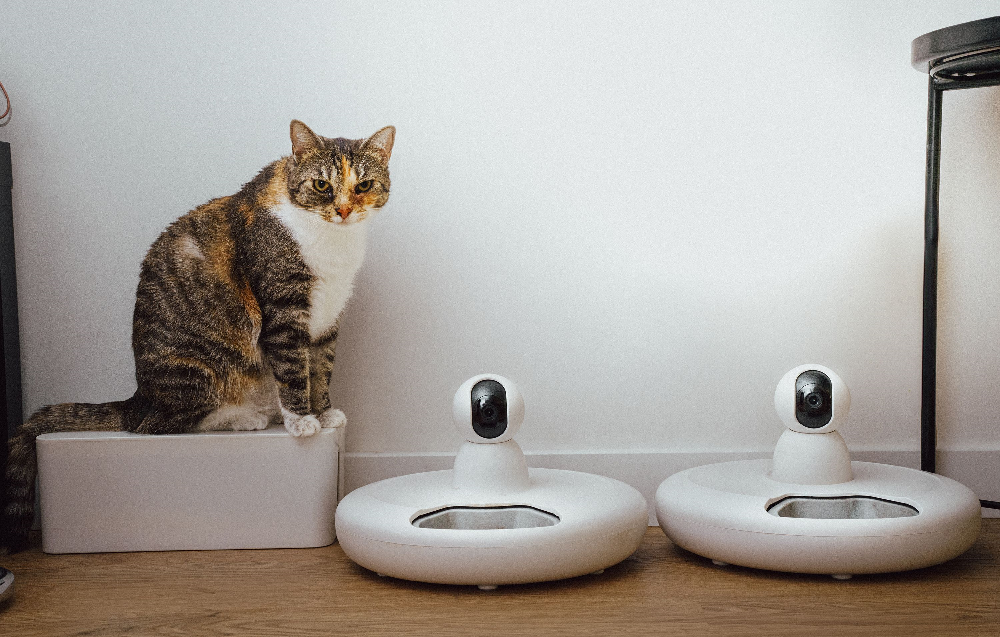
AI-powered pet cameras can do more than just video recording.
Some systems can analyze behavior like the following:
- Pacing too much
- Repetitive motion
- Extended periods of inactivity
- Separation-related behaviour
- Action to eat or drink
- Abnormal movement
For example, a pet camera might alert an owner that a dog gets anxious whenever the owner leaves the house. A different camera might show a cat spending an inordinate amount of time hiding.
These observations can help owners make better decisions regarding pet care, especially when owners are away from home for hours.
3. Intelligent Food and Water Monitoring
Changes in eating and drinking habits can sometimes be important signals that something is different with a pet.
Smart feeders and water-monitoring systems may monitor:
- How many times a pet eats
- How much food is eaten
- When the pet drinks water
- Alterations in normal eating patterns
If a pet suddenly stops eating normally, or begins drinking much more than usual, technology may help to illuminate the change.
But owners should never wait for an app notification if their pet is exhibiting serious symptoms. If there are any major changes in appetite or drinking, you should speak to your veterinarian.
4. AI and Behavior Analysis
One of the most interesting areas of AI pet health monitoring is behavioral analysis.
Artificial intelligence can identify patterns that can be hard for humans to measure consistently. These can include:
- Walking pace
- Patterns of movement
- Time for sleep
- Repetitive Actions
- Changes in standard routines
AI can also help identify changes in a pet’s behavior over time.
For example, an older dog can start to slow down over time. The change takes place over months and may go unnoticed by the owner. A tracking system would make the difference more obvious.
This is not proof that the dog has a particular health problem, but it can give useful information for a veterinary consultation.
Can AI Detect Pet Diseases?
AI can identify possible warning signs, but it can’t correctly diagnose all diseases.
This is a very important difference.
AI might notice that:
- Your dog is not as active.
- Your cat is sleeping more.
- Your pet is eating less.
- Your pet is drinking more water.
- Your dog has been scratching more often.
- Your cat is using the litter box differently.
- Your pet is acting strange
There are many possible reasons for these changes.
Here are some reasons why a pet may become less active:
- Warm weather
- Tension
- Age
- Ouch
- Damage
- Regular change
- A medical condition.
So, this is why AI should be seen as an early observation tool, not a diagnostic tool.
The easiest way is simply: use technology to see patterns, and then use professional veterinary care to interpret what those patterns might mean.
Advantages of AI Pet Health Monitoring
When used properly, AI technology can be of several benefits.
Early Identification of Behavioral Change
Pets cannot tell us when something doesn’t feel right. Owners have to rely on observation.
AI systems can assist in the creation of a record of normal behavior. This makes it easier to see the incremental changes.
Now to make it human:
“My dog has been less active for the last three days.”
is worth more than:
“My dog seems a little different.”
A record of activity, sleep or eating behavior can be helpful information for a veterinary appointment.
Helpful for Busy Pet Owners
Many people work long hours or are away from home.
A smart camera or activity tracker can help owners learn what their pets do when they’re gone.
This may help in caring better for a pet by helping owners in identifying the following:
- Separation-related behaviour
- No exercise
- Oversleeping
- Destructive behaviour
- Routine changes.
Technology is not a substitute for time with your pet, but it can provide you with more information when you’re not there.
Useful for Senior Pets
Older pets may experience gradual changes in movement, sleeping, or daily activity.
A tracking system can help owners monitor trends over time.
For example, an owner may notice that a senior dog:
- Walks less frequently
- Takes longer to stand
- Sleeps more
- Avoids stairs
- Moves differently
These observations can be useful to share with a veterinarian.
Supports Preventive Pet Care
Good pet care is not only about treating problems after they appear. It also includes prevention and regular observation.
AI tools may encourage owners to pay closer attention to the following:
- Daily routines
- Weight
- Exercise
- Sleep
- Food intake
- Behavior
This can support a more proactive approach to pet health.
Can AI watch over a dog’s health?
Yes, AI can help monitor various aspects of a dog’s daily health and behavior.
AI dog health monitoring tools can track the following:
- Exercise and
- Interval of rest
- Sleep.
- Workout
- Place
- Patterns of eating
- Behavioral changes
Some systems can also help owners spot unusual changes in movement.
For example, a dog that usually loves long walks but suddenly seems less active might be worth investigating.
But owners shouldn’t anticipate a health tracker to be able to identify the exact cause.
A small problem, environmental factors, stress or a serious medical problem could all be possible reasons for a drop in activity. If symptoms are persistent or concerning, a veterinary evaluation is recommended.
Can AI Track a Cat’s Health?
Cats can be very hard to monitor, as they tend to hide signs of discomfort.
AI technology can help to monitor the following:
- Action
- Sleep.
- Diet
- Drinking
- Litter box habits
- Weight : (
- Movement
Smart litter boxes are one good example. Some may help track changes in bathroom habits, frequency or weight.
Sometimes a sudden frequency, litter box behavior can be significant, especially if it is associated with other symptoms.
Technology, however, shouldn’t be used to diagnose a cat at home. If your cat has serious symptoms, take it to a vet immediately.
Can AI Detect Pain in Animals?
Pain recognition is one of the most promising, but also complicated, areas of AI research.
Animals can’t tell you they are hurting. Veterinarians and owners often depend on changes in:
- Posture 3.
- Movement
- Facial Expressions
- Conduct
- Desire
- Vocalization / Vocalisation
Some of these patterns can be analyzed by AI systems.
For example, research has looked at whether computer vision and machine learning can detect facial or behavioral changes associated with discomfort in animals.
But AI pain detection is not perfect. Interpretation can be difficult because of different breeds, species, ages, personalities and health conditions.
personalities,ld be seen as a tool to raise awareness, not as a final authority.
The Limitations of AI Pet Health Monitoring
AI technology is progressing quickly, but it has serious limitations.
AI can’t be a veterinarian
A veterinarian can do the following:
- Do a physical examination.
- Pose detailed questions
- Conduct tests for diagnosis
- Analyze laboratory results
- Medical history Take
- Develop a treatment plan.
“An app or smart collar can’t give a full medical assessment.
AI Could Give False Alarms
Sometimes, technology can detect a change that isn’t really a health issue.
For example, your dog could be less active because of the following:
- Outside it rains
- The weather is warm
- The family routine was not the same.
- Your pet had a very busy day. Before
A warning does not mean your pet is ill.
AI May Miss Key Problems
It can also be the opposite. A pet may have a serious health problem and not exhibit any big change in the activity you are tracking.
Some illnesses do not have immediate effects on movement or sleep.
That is why regular veterinary exams and daily observation remain an important part of responsible pet ownership.
Privacy & Data Security Are Important
Pet health apps can collect personal information about:
- Your pet
- Your house
- your position
- Your routines
- With the device
Pet owners should understand how data is collected, stored, and shared before they use a technology product.
Safe Use of AI for Pet Care
But the best way to use AI is as an addition to good pet care.
1. Establish Your Pet’s Regular Routine
To recognize a change in your pet, you must know what is normal for him.
Pay attention to:
- Normal appetite.
- normal activity
- Normal sleep:
- Regular bathroom routine
- Normal behavior
- Exercise programme
AI tools are more useful when they have the information to see patterns.
2. Find Trends, Not Just Daily Swings
One odd day doesn’t always mean anything.
Don’t freak out about one notification; look for recurring or significant shifts.
Now to make it human:
- One lazy afternoon might be normal.
- A few days of odd inactivity are worth a second look.
Always look at the big picture.
3. Marry Technology and Observation
Don’t rely on an app alone.
Meet your pet in person.
Ask yourself this:
- Is my pet eating regular?
- Is My Pet Drinking Fine?
- Is my pet happy?
- Is my pet acting normal?
- Is there anything you can see?
- Is my pet sick?
Technology and the human eye work best hand in hand.
4. Provide Your Veterinarian With Useful Data
If you notice a large change, data from an AI monitoring system could be useful at a vet appointment.
Share this:
- Activity diagrams
- Weight Logs
- Patterns of eating
- Sleep alterations
- Clips de video
- Behavioral observations
This information may help provide some context.
5. Do Not Delay Emergency Care
If your pet is struggling to breathe, is badly hurt, collapses, has seizures or shows another emergency symptom, don’t wait for an AI app to give you an answer.
Seek immediate professional veterinary assistance.
The Future of AI in Pet Wellness
In the future, AI pet health monitoring will probably become more sophisticated.
Future systems may include data from:
- Smart collars
- Indoor Cameras
- Food System
- Water monitor lizards
- Litter trays
- Vet Records
- Apps for mobile
AI may look at several patterns rather than just one piece of information.
For instance, an intelligent system could observe the following:
- Less activity.
- More water consumption
- Sleep problems
- Changed eating behavior
All of these changes together may give a more complete picture than any one measurement alone.
But more technology doesn’t automatically mean perfect accuracy.
“The most valuable systems of the future will probably be those that help pet owners to communicate more effectively with veterinary professionals rather than substitute them.
Is AI Pet Health Monitoring Worthwhile?
Many pet owners can find AI monitoring tools helpful.
They could be especially useful for:
- Busy owners
- Older Pets
- Pets with existing medical conditions
- Travelers who travel often
- Households with multiple pets
- Behavior Problems in Pets
But not all pets require expensive technology.
The foundation of good pet care continues to be a simple routine of proper nutrition, exercise, enrichment, preventive veterinary care, vaccinations, grooming and daily observation.
Technology should make it easier to be a responsible pet owner, not make owners reliant on an app for every decision.
Final Remarks:
So, can AI help keep tabs on your pet’s health?
AI can help monitor patterns in activity, sleep, eating, movement, behavior and other aspects of daily life. Such tools may allow owners to detect changes sooner and give useful information to discuss with a veterinarian.
But AI pet health monitoring isn’t a replacement for professional veterinary care.
The best approach is to use technology along with responsible observation. Leverage AI to understand your pet’s usual behavior, identify irregularities, and get professional assistance when you observe something out of the ordinary.
Ultimately, the best pet care is a combination of modern technology and something AI can’t replace: knowing your pet, spending time with them, and paying attention to their individual needs.
FAQ (Frequently Asked Questions)
Can AI actually keep tabs on my pet’s health?
Yes. AI can look at things like activity, sleep, movement, eating habits, and behavior. It helps to spot changes from your pet’s normal routine.
Can AI diagnose my pet dog or cat?
No. AI tools should never be used as a substitute for a veterinarian. They may be able to spot trends or potential problems, but only a qualified veterinary professional can give you a correct diagnosis.
Are pet health apps using AI accurate?
Accuracy is a function of the technology, device, data quality and the situation. AI tools can be helpful, but they can also give false alarms or miss serious health problems.
How should I best use AI for pet care?
Utilize AI as an extra monitoring tool. Use in conjunction with daily observation, preventative veterinary care, proper nutrition, exercise and professional advice.
Can AI see pain in animals?
There are some AI systems and research tools trying to analyze the behavioral or facial changes associated with discomfort. However, pain is difficult to detect and AI should not be used as a definitive diagnosis.
Is It Worth Buying an AI Pet Health Monitor?
This depends on your pet’s needs and your lifestyle. These tools can be useful for senior animals, animals with health problems, or owners who want to track long-term behaviour patterns. But basic care and routine veterinary checkups are still important.
[…] pet microchip is a small computer chip, about the same size as a grain of rice, that is placed under your pet’s skin, usually between […]