
 By Muntaha farid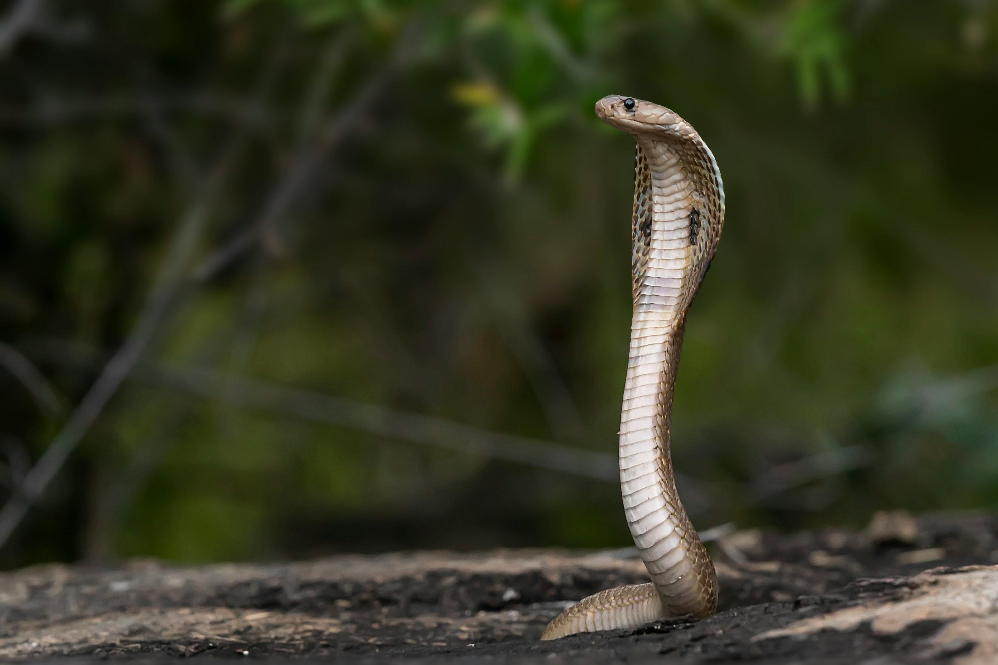
Discover everything about cobra snakes including habitat,venom,diet,behavior,species and safety tips.
Introduction
The Cobra Snake is one of the most iconic and feared reptiles in the world.Known for its distinctive hood,powerful venom and striking defensive posture,the cobra has fascinated humans for centuries.From ancient myths to modern wildlife documentaries,cobra snakes have always held a mysterious and powerful reputation.
Cobra snakes are not just dangerous predators they are also highly intelligent,adaptable and ecologically important animals.Found mainly in Asia and Africa they play a crucial role in controlling pest populations and maintaining balance in their ecosystems.
What Is a Cobra Snake?
The Cobra Snake is a group of venomous snakes belonging to the family Elapidae.Most cobras are classified under the genus Naja,although some related species like the king cobra belong to different genera.
One of the most famous species is the King Cobra,which is the longest venomous snake in the world.
Types of Cobra Snakes
There are many species of cobra snakes each with unique characteristics.
1. Indian Cobra
- Scientific name Naja naja
- Found in India,Pakistan and Sri Lanka
- Known for its“spectacle”mark on the hood
2. King Cobra
- Scientific name Ophiophagus hannah
- Can grow up to 18 feet
- Feeds mainly on other snakes
3. Egyptian Cobra
- Scientific name: Naja haje
- Found in North Africa
- Known from ancient Egyptian history
4. Spitting Cobras
- Found in Africa and Asia
- Can spray venom into the eyes of predators
Each cobra species has evolved unique survival strategies.

Physical Characteristics of Cobra Snake
The Cobra Snake has several distinct features that make it easily recognizable.
1. Hood Formation
The most iconic feature of a cobra is its hood.When threatened,the snake spreads its neck ribs to create a hood,making it appear larger and more intimidating.
2. Size and Length
- Most cobras range between 4 to 10 feet
- The King Cobra can exceed 18 feet
3. Color and Patterns
Cobra snakes come in a variety of colors
- Brown
- Black
- Yellow
- Olive
Some species,like the Naja naja have unique markings on their hood.
4. Eyes and Vision
Cobras have round pupils and good vision,allowing them to track moving prey effectively.
Habitat and Distribution
The Cobra Snake is widely distributed across:
- Asia (India,Pakistan,China,Southeast Asia)
- Africa (Egypt,South Africa,Kenya etc.)
Preferred Habitats
- Forests
- Grasslands
- Agricultural fields
- Urban areas(in some regions)
Cobras are highly adaptable and can survive in both wild and human populated areas.
Behavior and Lifestyle
1. Defensive Behavior
Cobras are famous for their defensive display
- Raising the front part of their body
- Spreading their hood
- Hissing loudly
This behavior is meant to warn predators,not attack immediately.
2. Activity Pattern
Most cobra snakes are
- Nocturnal(active at night)
- Sometimes active during the day depending on temperature
3. Intelligence
Cobras are considered more intelligent than many other snakes.They can
- Recognize threats
- Adapt to surroundings
- Exhibit complex hunting behavior
Diet and Hunting Strategy
The Cobra Snake is a carnivore.
What Do Cobras Eat?
- Rodents
- Birds
- Frogs
- Lizards
- Other snakes(especially king cobra)
Hunting Method
Cobras rely on venom rather than constriction.
- Strike quickly
- Inject venom
- Wait for prey to weaken
- Swallow whole
Cobra Venom
The venom of a Cobra Snake is highly potent and designed to immobilize prey.
Type of Venom
Cobra venom is primarily neurotoxic meaning it affects the nervous system.
Effects of Venom
- Paralysis
- Respiratory failure
- Severe pain
Without treatment,a cobra bite can be fatal.
Spitting Cobras Unique Defense Mechanism
Some cobras have evolved the ability to spit venom.
How It Works
- Targets the eyes of the attacker
- Causes intense pain and temporary blindness
This is a defensive mechanism,not a hunting tool.
Reproduction and Life Cycle
1. Egg Laying
Most cobra snakes are oviparous (egg laying).
- Lay 10 to 40 eggs
- Eggs hatch after several weeks
2. Parental Care
The King Cobra is unique because
- It builds nests
- Guards eggs until they hatch
3. Lifespan
- 15 to 20 years in the wild
- Longer in captivity
Are Cobra Snakes Dangerous?
Yes,the Cobra Snake is highly dangerous due to its venom.
When Do They Attack?
- When threatened
- When cornered
- When protecting eggs
Safety Tips
- Avoid provoking snakes
- Stay away from tall grass
- Wear protective footwear in snake prone areas
Cobra Snake and Humans
Cobras have a long history with humans.
Cultural Importance
In many cultures cobras are
- Worshipped
- Feared
- Featured in folklore
For example the Naja naja is associated with religious symbolism in South Asia.
Ecological Importance
The Cobra Snake plays a vital role in ecosystems.
Benefits
- Controls rodent populations
- Maintains ecological balance
- Prevents crop damage
Without cobras,pest populations could increase dramatically.
Conservation Status
Some cobra species are at risk due to
- Habitat destruction
- Illegal wildlife trade
- Human conflict
Conservation efforts are important to protect these reptiles.
Can Cobra Snakes Be Pets?
The Cobra Snake is not suitable as a pet.
Reasons
- Highly venomous
- Requires expert handling
- Illegal in many countries
Only licensed professionals should handle cobras.
Interesting Facts About Cobra Snake
- Can raise one third of its body off the ground
- Recognizes movement but not sound well
- Uses its tongue to smell
- King cobra eats other snakes
- Some cobras can spit venom accurately
Myths and Misconceptions
Myth 1: Cobras Chase Humans
Reality They prefer to escape rather than attack.
Myth 2: All Cobras Are the Same
Reality There are many species with different behaviors.
Myth 3: Music Controls Cobras
Reality Cobras respond to movement not music.
Conclusion
The Cobra Snake is one of the most fascinating yet dangerous reptiles on Earth.Its iconic hood,powerful venom and intelligent behavior make it a unique species in the animal kingdom.
While it deserves respect and caution,it also plays an essential role in maintaining ecological balance.Understanding cobra snakes helps reduce fear and promotes coexistence with wildlife.
FAQs About Cobra Snake
1. Is a cobra snake venomous?
Yes,cobra snakes are highly venomous.
2. What does a cobra eat?
They eat rodents,birds and other small animals.
3. How long do cobras live?
They live around 15 to 20 years.
4. Can cobras spit venom?
Yes,some species can.
5. Are cobra snakes aggressive?
They are defensive not naturally aggressive.
[…] proper corn snake care is essential if you want your pet to thrive.These snakes are not just beautiful they are also hardy,adaptable and forgiving of minor mistakes,which makes […]