
 By Muntaha farid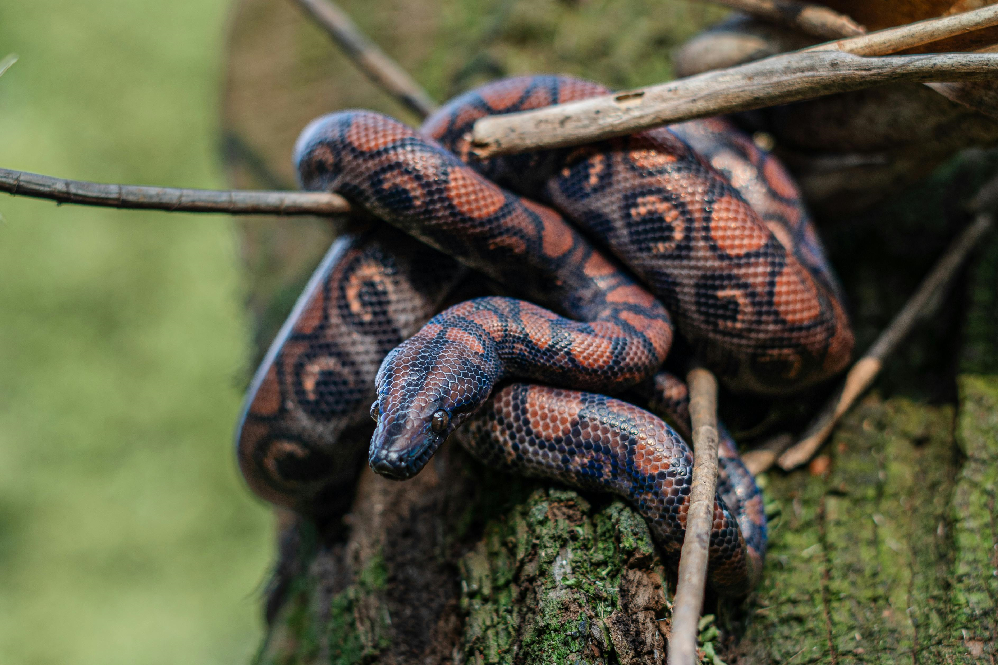
Explore a complete in-depth guide on the Boa Constrictor.Learn about its habitat,diet,behavior,lifespan,reproduction,care and amazing facts in detail.
Introduction
The Boa Constrictor is one of the most powerful,adaptable and fascinating snakes in the reptile world.Known for its muscular body and unique hunting technique,this snake has intrigued humans for centuries.Unlike venomous snakes,the Boa Constrictor relies entirely on strength,precision and patience to survive.
Native to the Americas,the Boa Constrictor thrives in a wide variety of environments from dense rainforests to dry savannas.Its ability to adapt combined with its calm temperament,has made it one of the most well known large snakes in both the wild and captivity.
In this extended and detailed guide,we will explore every aspect of the Boa Constrictor,including its anatomy,behavior,hunting strategy,reproduction,ecological importance and even pet care considerations.
What Is a Boa Constrictor?
The Boa Constrictor is a large,non venomous snake that belongs to the family Boidae.Its scientific name is Boa constrictor.
It is classified under the order Squamata which includes all snakes and lizards.Unlike many other snake species,boas are known for giving birth to live young instead of laying eggs.
Physical Characteristics of Boa Constrictor
1. Size,Length and Growth Patterns
The Boa Constrictor is considered a large snake,although its size varies depending on location and subspecies.On average
- Length 6 to 10 feet(can exceed 13 feet)
- Weight 20 to 60 pounds or more
- Females Larger and heavier than males
Growth is slow but steady and boas continue to grow throughout their lives,especially in their early years.
2. Muscular Body and Strength
The most defining feature of the Boa Constrictor is its muscular body.Its strength allows it to overpower prey much larger than its head size might suggest.The body is thick and cylindrical,enabling efficient constriction.
Each muscle works in coordination,giving the snake precise control during movement and hunting.
3. Skin,Patterns and Camouflage
The Boa Constrictor’s skin is not just beautiful it is functional.It usually has
- Light brown,gray or tan base color
- Dark saddle shaped patterns along the back
- A reddish or rust colored tail(especially in some subspecies)
These patterns act as camouflage allowing the snake to blend perfectly into forest floors,branches or leaf litter.
4. Head Structure and Sensory Abilities
The head of a Boa Constrictor is triangular and clearly distinct from its body.It contains several specialized features
- Backward curved teeth for gripping prey
- Heat sensing pits to detect warm animals
- Excellent sense of smell using its forked tongue
These features make the Boa Constrictor a highly efficient predator,even in complete darkness.
Habitat and Distribution
The Boa Constrictor is one of the most geographically widespread large snakes.
Natural Habitats
- Tropical rainforests
- Semi arid regions
- Grasslands
- Swamps and wetlands
- Agricultural areas
This adaptability is one reason the Boa Constrictor has survived so successfully.
Geographic Range
The Boa constrictor can be found across
- Mexico
- Central America(Belize,Costa Rica,Panama)
- South America(Brazil,Colombia,Venezuela,Peru,Argentina)
Each region may host slightly different subspecies with unique colors and sizes.

Behavior and Lifestyle
1. Solitary Nature
The Boa Constrictor is a solitary animal.It prefers to live alone and only interacts with others during mating season.
2. Nocturnal and Ambush Lifestyle
Most Boa Constrictors are nocturnal.They hunt at night when temperatures are cooler and prey is more active.During the day they hide under logs,in burrows or within dense vegetation.
3. Arboreal vs Terrestrial Behavior
- Young boas Spend more time in trees(arboreal)
- Adult boas Mostly ground dwelling(terrestrial)
This shift occurs because larger snakes are heavier and less suited for climbing.
4. Movement and Locomotion
The Boa Constrictor uses muscular contractions to move.This allows it to:
- Climb trees
- Swim in water
- Glide silently on land
Diet and Hunting Strategy
1. Diet Based on Size
The diet of a Boa Constrictor changes as it grows
- Juveniles Insects,small lizards,frogs
- Sub adults Rodents,birds
- Adults Rabbits,monkeys,bats,wild pigs
2. Ambush Hunting Technique
The Boa Constrictor is not a chaser it is a patient hunter.It hides and waits for prey to come within striking distance.
Once close enough,it strikes with lightning speed.
3. Constriction Process(Scientific Insight)
After biting its prey,the Boa Constrictor wraps its body around it.Contrary to myth,it does not crush bones.
Instead it
- Applies pressure with each heartbeat
- Stops blood circulation
- Causes rapid unconsciousness
This method is highly efficient and reduces risk of injury to the snake.
4. Swallowing Prey
After killing prey,the Boa Constrictor swallows it whole.Its flexible jaws and stretchy ligaments allow it to consume animals much larger than its head.
Digestion can take several days or even weeks.
Reproduction and Life Cycle
1. Mating Behavior
During breeding season,males compete for females by
- Wrestling
- Displaying strength
Females choose the strongest mate.
2. Live Birth(Ovoviviparous)
Unlike many reptiles,the Boa Constrictor gives birth to live young.Eggs develop inside the female’s body.
3. Birth and Independence
- Litter size 10 to 65 babies
- Babies are fully independent from birth
- No parental care is provided
4. Growth Stages
- Rapid growth in first 2 to 3 years
- Slower growth after maturity
- Lifespan up to 40 years in captivity
Boa Constrictor and Humans
Are They Dangerous?
The Boa Constrictor is not venomous and rarely attacks humans.However
- Large individuals can be dangerous
- Improper handling increases risk
Most boas prefer to avoid humans.
Boa Constrictor as a Pet
Why People Keep Them
- Calm temperament
- Beautiful patterns
- Long lifespan
Care Requirements
- Large enclosure(very important)
- Controlled temperature(25 to 32°C)
- Proper humidity levels
- Regular feeding
Challenges
- Size management
- Long term commitment
- Handling experience required
This is not a beginner pet.
Ecological Importance
The Boa Constrictor plays a vital role in ecosystems.
Key Roles
- Controls rodent populations
- Maintains balance in food chain
- Prevents overpopulation of pests
Without boas,ecosystems could face imbalance.
Conservation and Threats
The Boa constrictor is not endangered globally but faces local threats.
Major Threats
- Deforestation
- Illegal pet trade
- Hunting for skin
- Human fear
Conservation awareness is essential.
Fascinating Facts About Boa Constrictor
- Can detect heat even in darkness
- Can survive months without food
- Has hundreds of flexible vertebrae
- Sheds skin regularly as it grows
- Excellent swimmers
Conclusion
The Boa Constrictor is a powerful,intelligent and highly adaptable snake that plays an essential role in nature.Its unique hunting style,impressive strength and calm nature make it one of the most fascinating reptiles on Earth.
By understanding and respecting the Boa Constrictor,we can reduce fear and promote conservation.Whether in the wild or captivity,this snake remains a symbol of strength,survival and balance in the natural world.
FAQs About Boa Constrictor
1. Is a Boa Constrictor venomous?
No,it is non venomous and kills by constriction.
2. How big does a Boa Constrictor get?
It can grow up to 13 feet long.
3. What does a Boa Constrictor eat?
It eats rodents,birds and mammals.
4. Can beginners keep a Boa Constrictor?
No,it requires experience and proper care.
5. Where is the Boa Constrictor found?
It is found in Central and South America.
[…] Cobra Snake is a group of venomous snakes belonging to the family Elapidae.Most cobras are classified under the genus Naja,although some […]
[…] term Dragon Lizard may sound mythical but in reality,it refers to several fascinating reptiles that resemble dragons in appearance,behavior or size.These lizards are among the most unique and […]
[…] are often confused with boas but they belong to different families and have distinct biological […]